


What businesses expect from the 2026 election

As Bangladesh approaches the 2026 national election, the business community is examining political manifestos with greater urgency and realism. Years of inflationary pressure, foreign exchange stress, tighter credit and weakened investor confidence have taken a visible toll on enterprises and jobs. Against this backdrop, businesses are not persuaded by populist rhetoric or lofty slogans. What they want are credible, reform-driven commitments that can restore confidence and place the economy on a sustainable growth path.
At the top of business expectations is political stability anchored in a credible and peaceful election. For the private sector, uncertainty is not just a political inconvenience. It is a direct economic cost. Policy unpredictability delays investment, weakens risk appetite and disrupts long term planning. Business leaders, therefore, look for firm commitments to the rule of law, institutional integrity and continuity in economic policymaking. Without these foundations, even the most ambitious development agendas will fall short.

Reducing the cost of doing business has emerged as a defining priority. Logistics costs in Bangladesh, estimated at 15-20 percent of GDP, are almost double the global average of 8-10 percent. This structural weakness undermines export competitiveness, raises domestic prices and discourages diversification. Election manifestos need to move beyond generic infrastructure pledges and set out time-bound reforms, including better port efficiency, lower congestion and modernised customs operations.
In this context, measures such as expanding rail and inland waterway transport, strengthening multimodal connectivity, introducing round-the-clock customs clearance and fully digitising trade processes are no longer optional. They are economic imperatives.
Ease of doing business remains another major concern. Enterprises continue to face a range of obstacles. Those include cumbersome licensing systems, overlapping regulations, discretionary enforcement and persistent delays in VAT refunds.
Frequent and abrupt changes in tax policy further undermine confidence and complicate financial planning. The business community is not asking for preferential treatment. What it needs is a rational, transparent and predictable regulatory environment. Policy consistency and simpler compliance matter far more than short-lived incentives.
Macroeconomic stability is equally central to business expectations. Persistent inflation has eroded purchasing power and pushed up input costs, while exchange rate volatility has complicated trade, pricing and debt management. Businesses expect clear commitments to fiscal discipline, effective inflation control and a more predictable exchange rate framework. Just as urgent is comprehensive reform of the banking sector. Weak governance and high levels of non-performing loans continue to restrict credit and raise systemic risk, with small and medium enterprises bearing the brunt despite their role in job creation.
Energy security remains a non-negotiable condition for growth. Reliable and competitively priced electricity and gas are essential for industrial productivity, export performance and future investment. Election manifestos must address not only generation capacity, but also efficiency, pricing transparency, timely connections and long-term planning aligned with industrial demand.
Ultimately, the business community expects manifestos to move beyond ambition and rhetoric. Credibility will be judged by clarity, coherence and execution.
Clear policy roadmaps, measurable targets, realistic timelines and mechanisms for accountability will determine whether political commitments are taken seriously. Businesses in Bangladesh are ready to invest, innovate and create jobs. What they seek from the 2026 election is decisive leadership and a genuine partnership for competitiveness, stability and long-term economic transformation.
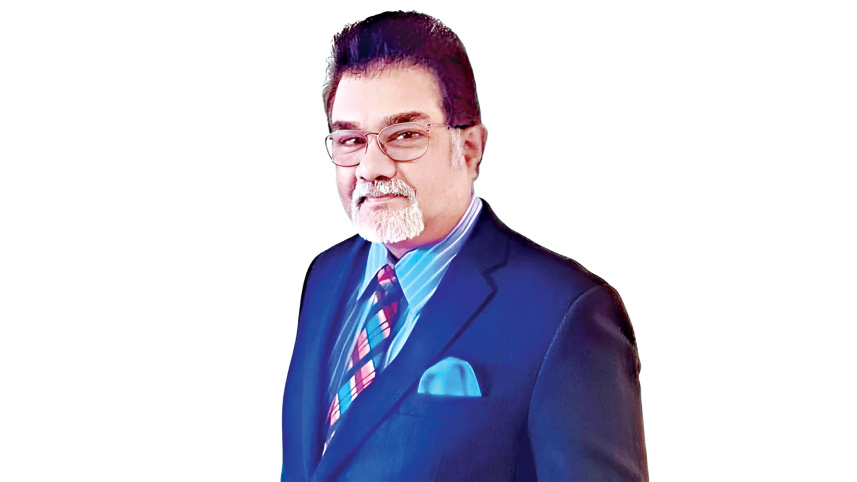
The writer is a former president of the Dhaka Chamber of Commerce and Industry
 For all latest news, follow The Daily Star's Google News channel.
Comments