


Bangladesh power situation to improve within 15 days, says State Minister
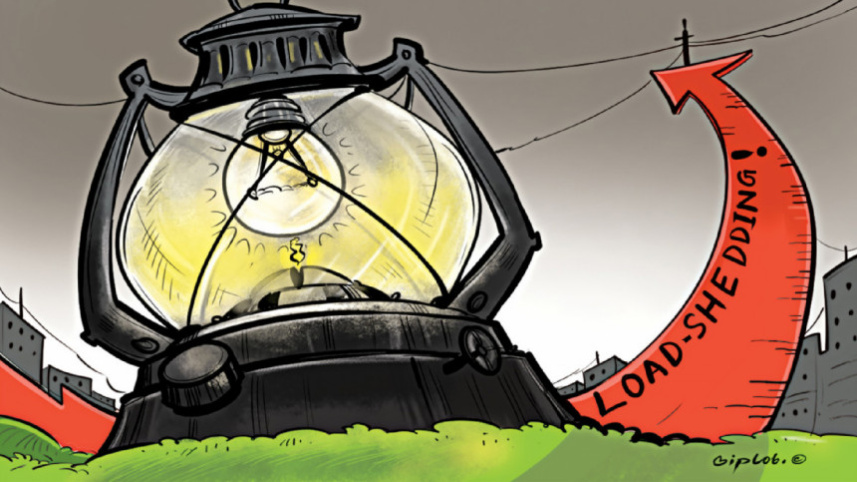
State Minister for Power and Energy Aninda Islam Amit today expressed hope that the country’s power situation would improve noticeably within the next 15 days.
He said the government was making every effort to ensure that the power and gas shortages that caused public suffering in August were not repeated in September.

“I once again apologise to the nation. But I assure you with responsibility that the government is making every effort to overcome this situation. People should remain patient and keep faith in Prime Minister Tarique Rahman. This crisis will ease soon,” he said in reply to a supplementary question from opposition MP Nurul Islam Bulbul at the parliament this evening.
Amit said he did not want to hide the truth, acknowledging that people across Bangladesh had been recently suffering due to shortages of electricity and gas.
He said the current crisis was the inevitable result of long-standing policy failures in the power and energy sector, compounded by recent tensions in the Middle East.
Highlighting the limitations of over-reliance on gas for power generation, the state minister said gas-fired power plants had a combined capacity of about 12,000MW and required 1,900 million cubic feet of gas a day.
However, domestic production and imported LNG together allow only 2,300-2,700 million cubic feet to be supplied daily, he said. This creates the risk of disruptions to industrial and residential gas supplies, requiring a balance between the needs of power generation, industry and households.
Amit also said several power plants were currently offline. One 616MW unit of the Payra Power Plant was shut due to technical faults, while another unit of the Matarbari Power Plant was closed for maintenance.
He said Bangladesh was also not receiving the full amount of contracted electricity from India’s Adani Group. Although 1,600MW had been agreed upon, only 900-1,100MW was being supplied daily.
In addition, technical faults in two floating storage regasification units (FSRUs) had disrupted LNG supplies, putting major pressure on the energy system. The fault, which emerged on July 21, took 21-22 days to repair, affecting power generation.
However, Amit claimed that about 88 percent of the crisis had since been resolved.
The state minister stressed the need to restart the closed Payra and Matarbari units quickly and expressed optimism that the electricity situation would improve within 15 days.
For next summer, he said the government was pursuing long-term initiatives, including rooftop solar projects. He also stressed the need to diversify energy imports, saying Bangladesh’s reliance solely on Middle Eastern sources had worsened the crisis.
“Despite repeated tenders, LNG supply has not met demand. If imports were diversified, the crisis could have been resolved. We are now focusing on diversifying sources,” he said.
The minister claimed that previous governments had taken no effective steps in the energy sector, while effective measures were now being taken under Prime Minister Tarique Rahman’s leadership.
In another supplementary question, Jamaat MP Mahfuza Hannan raised concerns over unusually high electricity bills.
“Where does this phantom bill come from? If electricity is supplied, bills will come, but why do they fluctuate so strangely?” she asked.
In reply, Amit said such complaints had been more frequent two months ago but had since declined.
He said separate desks, a hotline and focal points had been established at customer service centres to address billing complaints.
 For all latest news, follow The Daily Star's Google News channel.
 “I will not say there are no isolated incidents or faults. There were and still are some errors,” he admitted.
He said the only permanent solution was to install smart prepaid meters nationwide.
Comments