


Bangladesh’s renewed democratic chance
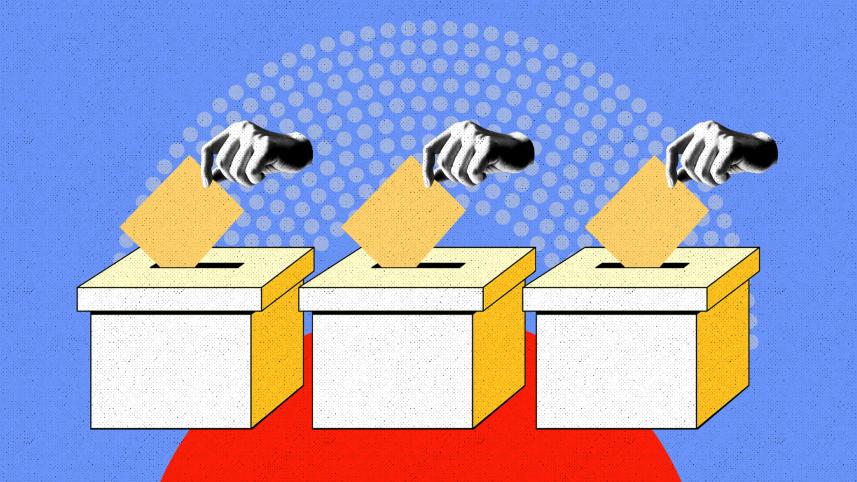
The road to Bangladesh’s next general election, due on February 12, could decide far more than who governs next. It could determine whether the country restores its democratic soul or slips further into polarisation.
When I began researching my new book, Democracy’s Heartland: Inside the Battle for Power in South Asia, I thought I knew the Bangladesh story—partition, language struggle, liberation war, military rule, the long duel between Awami League and BNP. But what I discovered in the process was more hopeful: a people who, time and again, have reclaimed democracy from those who tried to close it off.

Bangladesh’s democratic instinct runs deep. The 1952 language movement, when students gave their lives defending Bangla, turned a linguistic demand into a national awakening, so much so that the world now marks February 21 as the International Mother Language Day. The 1971 Liberation War, triggered by the denial of an electoral mandate, produced a constitution that spoke the language of secularism, social justice, and people’s sovereignty. For a moment, the world saw a poor, war-torn, Muslim-majority nation proving that democracy and faith could coexist.
The decades that followed were uneven—coups, military rule, and political revenge scarred the system. Yet each time it seemed sealed shut, people forced it open again: against Ershad in 1990, during the caretaker crisis of 2007-08, and most recently in 2024, when students and young job-seekers poured into the streets demanding fairness and dignity.
From an election manager’s perspective, Bangladesh has been both a warning and an inspiration. Few countries have experimented so boldly with electoral design. The caretaker government system, introduced in the 1990s, was an ingenious attempt to ensure credible polls when parties distrusted each other. It worked for a while. The 1991, 1996, and 2001 elections are still cited as the fairest in memory. But the very need for such a mechanism was also a warning that when politics becomes a zero-sum war, no legal framework can compensate for the absence of mutual trust.
Once that system was scrapped in 2011, old mistrust resurfaced. The 2014, 2018, and 2024 polls were widely criticised as one-sided. By mid-2024, public frustration had reached a boiling point. The year’s student protests were not just about job quotas; they were about the belief that the system had stopped listening. When the army refused to fire on demonstrators and the Hasina government fell, the spirit of 1952 and 1971 seemed to return.
The interim administration led by Nobel laureate Muhammad Yunus has by now opened a small but crucial window. It cannot solve everything, but it can help rebuild faith. For that, the basics must come first. Elections must be credible—whether through the renewed caretaker model, a stronger Election Commission, or a hybrid approach that all parties sign on to. The state machinery—police, bureaucracy, and lower judiciary—must be freed from partisan control. Civic space must reopen: journalists, NGOs, and student unions should be able to operate without fear. And Bangladesh must protect its minorities; how it treats them will show whether it still honours its founding promise of inclusion.
Bangladesh’s economic story has been extraordinary. From famine to food security, from “basket case” to global garment hub, it is now the world’s second-largest garment exporter and a regional leader in female employment and social progress. But “development first, democracy later” is a risky bargain. Authoritarian efficiency works until, suddenly, it does not. Growth without accountability creates brittle success.
What makes Bangladesh remarkable is that the demand for change came from its youth. A generation raised in an era of growth and global connection is now insisting that prosperity without dignity is not enough. They are the true heirs of the language martyrs and freedom fighters; their protest is democratic renewal in action.
South Asia, as I argue in Democracy’s Heartland, is not a democratic periphery; it is the democratic core of the world. Nearly 40 percent of all people living in democracies are South Asian, and Bangladesh lies at the heart of that story. From the ballots that delivered independence in 1970-71 to the ballots that must now restore trust in 2026, it has shown that democracy here is not imported. It is indigenous and hard-earned.
The path ahead will be difficult. The temptation to return to one-party dominance will persist; political vendettas may return. But Bangladesh has a rare advantage: it has overthrown authoritarian rulers before without descending into civil war. That memory can be its compass again.
If it can now combine economic dynamism with fair elections, stronger institutions, and an inclusive national identity, Bangladesh will not just repair its own democracy; it will also inspire a region struggling with democratic fatigue. For a country born of language, liberation, and people’s power, there could be no better second act.
S.Y. Quraishi is former Chief Election Commissioner of India and author of Democracy’s Heartland: Inside the Battle for Power in South Asia.
Views expressed in this article are the author's own.
Follow The Daily Star Opinion on Facebook for the latest opinions, commentaries, and analyses by experts and professionals. To contribute your article or letter to The Daily Star Opinion, see our guidelines for submission.
 For all latest news, follow The Daily Star's Google News channel.
Comments