


Politics now an instrument of material gains
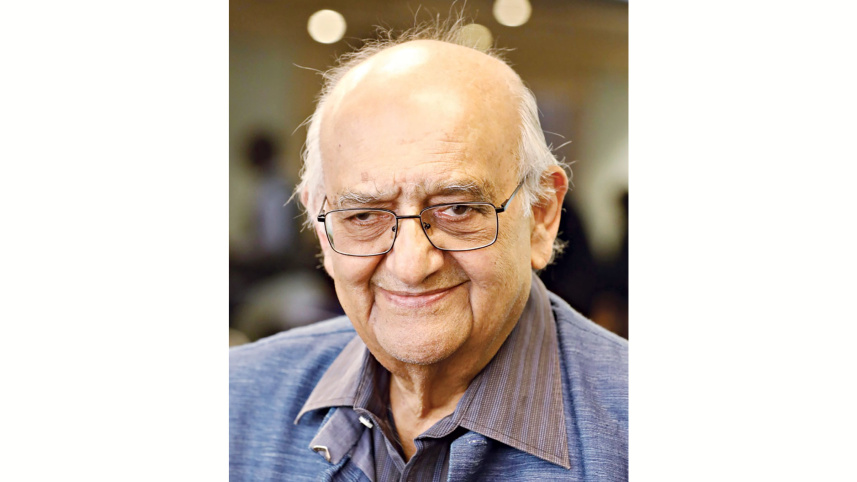
People in politics now consider it an instrument of their advancement, eminent economist Prof Rehman Sobhan said yesterday.
"When politics itself and parliament itself become instrumental in perpetuating someone's business fortune, the whole dynamic of politics then becomes not public service but material advancement and this is what led to a major breakdown in the system," he said, speaking in English.

Prof Rehman made the remarks at a seminar titled "Politics is broken: How do we fix it" organised by English daily Dhaka Tribune in association with the Royal Norwegian Embassy at a city hotel yesterday.
Talking about the politicisation of the administration, he said, "Now, here this has been a continuous process, which began long ago, but became worse with each successive period.
"And even after you moved into a system of relatively free and fair elections, the politicisation process continued … . The compulsion of a particular regime when it comes into power not to reverse the wrongs of what its predecessors did by institutionally correcting it, but by perpetuating that system. The way in which the psychology actually works is that this regime came and manipulated the placements in the judiciary by putting in people who are sympathetic to their politics."
Brigadier General (retd) M Sakhawat Hussain blamed the faulty democratic process and faulty political system and culture for the current situation.
He said no political parties practise democracy within themselves.
"We have polluted the entire election system and there is a lack of faith. We don't have faith; we don't have institutions," said Sakhawat, who was an election commissioner in the commission that held the much-praised 2008 national election.
"When we talk about an independent Election Commission, it is supported by various institutions, but unfortunately, our institutions have not been able to grow or we have broken all our institutions," he said, also speaking in English.
"If there is no free and fair election accepted by international standards, I am afraid that we will see many more disasters in the country," he added.
Stressing the importance of healthy politics, Sharmeen Murshid, election observer and CEO of Brotee, an NGO, said, "Perhaps politics is not broken, but certainly it needs repair."
Talking about the dominance of businesspeople in politics, she said politics is now commercialised and commoditised, and it has become a matter of profit and loss.
BNP leader Tabith Awal said, "The state and the way it's being managed are certainly broken. That's why the BNP proposed a 31-point solution to mend the state."
Manisha Chakrabarty, a central member of the Bangladesh Samajtrantrik Dal, said, "Politics is never broken. What we witness in Bangladesh is a broken system that can lead to a troubling transition of power from one party to another.
"We believe the [politicians'] commitment to people has been replaced by a commitment to power. They are committed to staying in power. This is the problem in our politics."
Dhaka-17 lawmaker Mohammad A Arafat, also a member of the Awami League central committee, said politicians need honesty and genuine intentions to sit down together to find solutions for the problems in politics and the electoral process.
The seminar was moderated by Dhaka Tribune Editor Zafar Sobhan where BNP leader Tabith Awal, Bangladesh Samajtantrik Dal's central committee member Manisha Chakrabarty and Awami League lawmaker Mohammad A Arafat also spoke.
Norway's Ambassador to Bangladesh Espen Rikter-Svendsen delivered the welcome speech at the seminar.
 For all latest news, follow The Daily Star's Google News channel.
Comments