


National Dialogue Positions Eye Health as a National Development Priority and Launch of Barishal Vision 2030
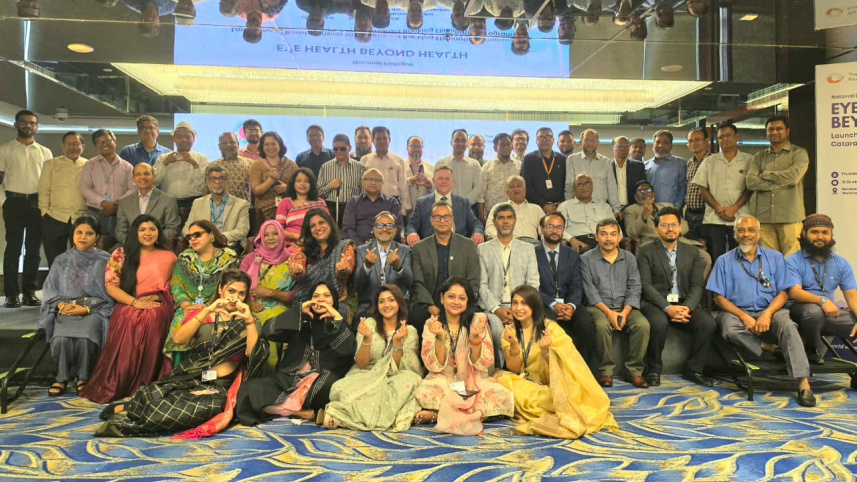
The Fred Hollows Foundation Bangladesh convened a high-level National Dialogue titled "Eye Health Beyond Health: Partnerships, Evidence and Innovation in Action", bringing together senior representatives from government, United Nations agencies, development partners, academia, professional bodies, civil society and the private sector to strengthen collaboration for universal eye health in Bangladesh.
Held during the visit of Ross Piper, Chief Executive Officer of The Fred Hollows Foundation, the dialogue highlighted Bangladesh's growing leadership in advancing people-centred eye health and served as a platform to showcase innovative partnerships, evidence and collective action. The event also marked the launch of Barishal Vision 2030, a regional initiative aimed at eliminating the cataract backlog across the five districts of Barishal through coordinated action among government, development partners, healthcare providers and communities.

Delivering the welcome address, Musabbir Alam, Cluster Director – South Asia and Middle East, The Fred Hollows Foundation, reaffirmed the Foundation's commitment to working alongside the Government of Bangladesh and partners to strengthen health systems and ensure equitable access to quality eye care for all.
The dialogue was graced by Prof. Dr. M. A. Muhit, Hon'ble State Minister for Health and Family Welfare, as Chief Guest. In his keynote address, he emphasised that eye health is a national development priority, closely linked to education, employment, productivity and social inclusion. He reaffirmed the Government's commitment to expanding equitable eye care services and announced that Bangladesh will undertake a nationwide Rapid Assessment of Avoidable Blindness (RAAB) to guide the country's next five-year eye health strategy. He also highlighted Bangladesh's opportunity to co-host the upcoming Global Summit on Eye Health as recognition of the country's growing leadership in advancing eye health globally.
"Eye health should not be confined to the health sector. It must be linked with education, workplaces, economic productivity and national development. Every citizen, regardless of where they live, has the right to quality eye care," said Prof. Dr. M. A. Muhit, Hon'ble State Minister for Health and Family Welfare.
The dialogue explored how stronger partnerships, evidence-based planning and innovation can accelerate progress towards universal eye health. Participants also highlighted Bangladesh's progress in developing the National Multisectoral Action Plan on Eye Health, initiated by The Fred Hollows Foundation through the collaborative efforts of the Ministry of Health and Family Welfare, UNDP Bangladesh, members of the Eye Health INGO Forum and multisectoral stakeholders. Dr. Munir Ahmed, Country Director, Orbis International Bangladesh, presented the roadmap for the National Rapid Assessment of Avoidable Blindness (RAAB), emphasising its importance in generating the evidence needed to shape future policy, investment and service delivery.
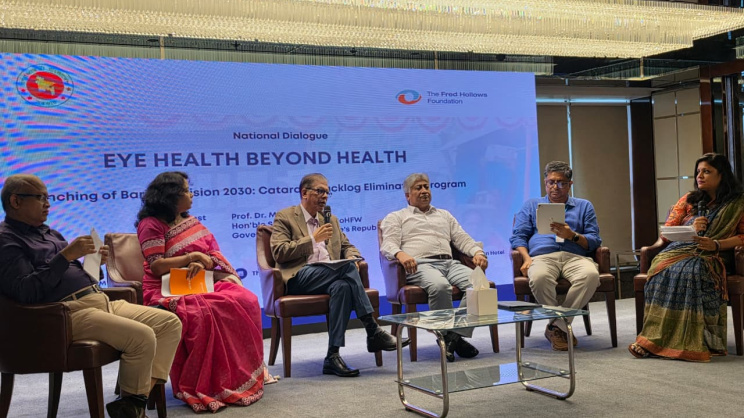
A high-level panel discussion, moderated by The Fred Hollows Foundation, explored practical approaches to strengthening multisectoral collaboration for eye health. The panel featured Anowarul Haq, Assistant Resident Representative, UNDP Bangladesh; Prof. Dr. A. S. M. M. Quadir, Director, National Institute of Ophthalmology and Hospital (NIO&H); Amrita Regina Rozario, Chair, Eye Health INGO Forum; Inamul Haq Khan, Senior Vice President, Bangladesh Garment Manufacturers and Exporters Association (BGMEA); and Prof. Dr. Md. Zinnu Rain (Newton), General Secretary, Ophthalmological Society of Bangladesh. Panellists emphasised that achieving universal eye health requires stronger partnerships, a skilled eye health workforce, workplace and community-based initiatives, and coordinated action across sectors to ensure equitable access to quality eye care for all.
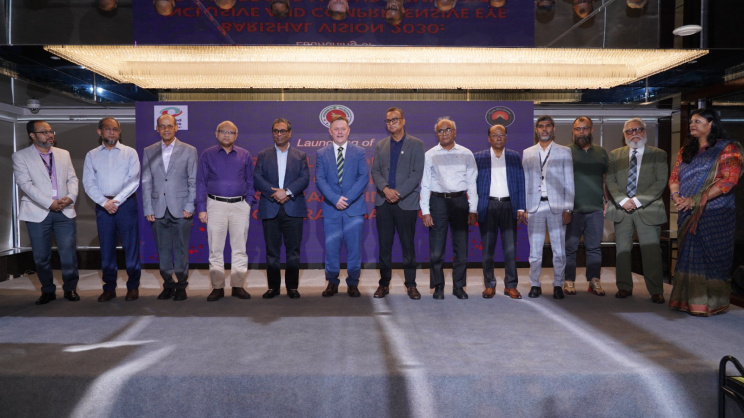
Building on the dialogue, Barishal Vision 2030, supported by the Cure Blindness Project, aims to eliminate the cataract backlog across the five districts of Barishal through a coordinated, systems-based approach involving government, development partners, healthcare providers and communities. By strengthening comprehensive eye care services and referral systems, the initiative is expected to serve as a scalable model for addressing avoidable blindness in other parts of Bangladesh.
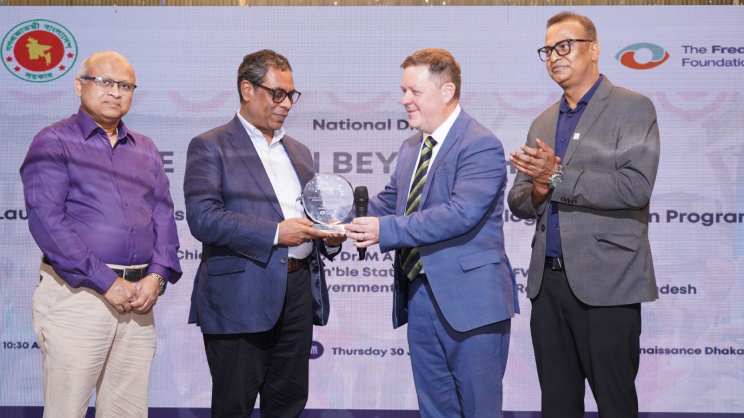
"Bangladesh has demonstrated what is possible when strong leadership is matched by effective partnerships. Investing in eye health is one of the smartest investments a country can make. Good vision supports learning, productivity and independence, while reducing poverty and inequality," said Ross Piper, Chief Executive Officer, The Fred Hollows Foundation.
The dialogue concluded with a shared commitment from stakeholders to strengthen collaboration and accelerate implementation of the National Multisectoral Action Plan on Eye Health. Participants reaffirmed that investing in eye health contributes not only to better health outcomes, but also to improved educational achievement, workforce participation, gender equality and inclusive economic development. They called for continued collaboration across government, United Nations agencies, development partners, professional bodies, civil society and the private sector to ensure that avoidable blindness no longer remains a barrier to opportunity and wellbeing for people across Bangladesh.
 For all latest news, follow The Daily Star's Google News channel.
Comments