


Salahuddin Sumon and stories a map cannot tell

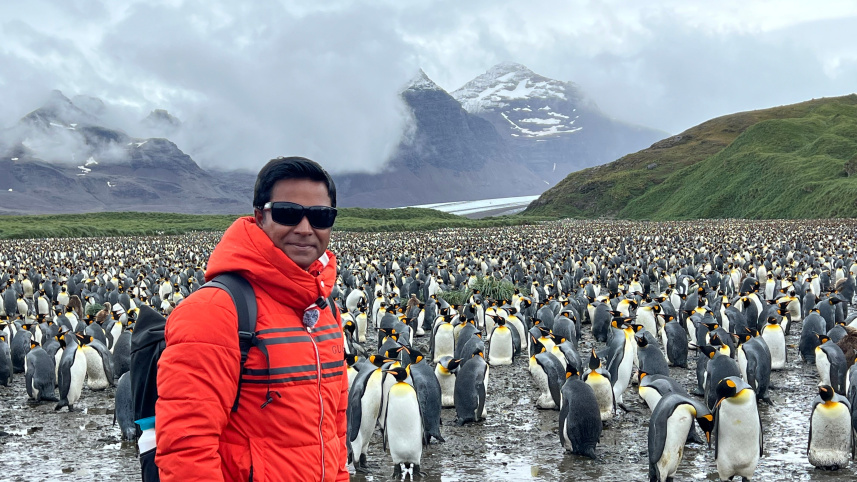
Before travel reels took over our screens, the bug of exploring the world had already bitten me. During long, chaotic commutes across Dhaka, I often daydreamed about telling stories from my travels through a camera.
A decade later, much has changed, including me. However, daydreaming remains my refuge. I have travelled quite a bit over the years, sure, but never made an honest attempt to tell the stories I wanted to share.

One evening after work, I visited my parents. After the usual pleasantries, they returned to their seats and resumed watching television.
Naturally, I asked what they were watching.
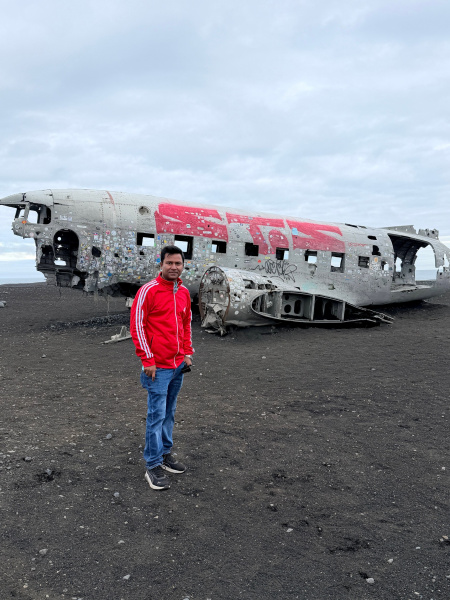
“We’ve been watching Salahuddin Sumon’s travel vlogs,” my mother replied gleefully. “He was a journalist before he started telling stories about places he finds interesting.”
Their excitement encouraged me to sit down and watch. It did not take long to realise that Sumon was doing what I had been longing to do for years.
When I finally spoke to Sumon, I expected us to begin with Antarctica, the Amazon, or one of those forgotten corners of Bangladesh that most of us know only after he points a camera at it. Instead, we began with time, or the lack of it!
In television journalism, he told me, seven days of reporting might eventually become a story of two minutes. On his own channel, that wall is gone. Yet, freedom does not mean throwing everything at the audience.
“I do not want to waste even one second of a viewer’s time by including something that does not need to be there,” he said.
That line stayed with me. Sumon might have forty minutes of material and still cut it to thirty. He looks at his work as a creator, then sits in what he calls the viewer’s chair. The old newsroom instinct remains, even without the stopwatch.
It also explains why people like my parents remain invested. He does not simply show them a road, an old building, or a grave. He gives the place a human face.
When Sumon planned to combine travel with history, a colleague warned that nobody would watch. His work on the descendants of Mir Jafar proved otherwise. Dates can feel distant, even when they belong to our own past. Put a living person connected to that history on camera and the old story comes close. Not simpler, necessarily, but alive.
Fame has made natural moments harder to capture.
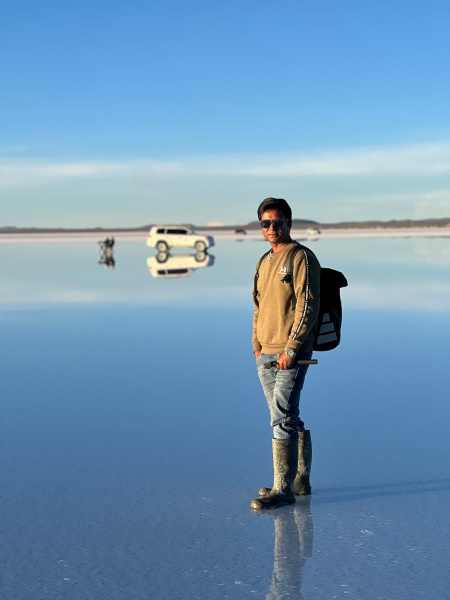
Once, Sumon could enter a village unknown, and people behaved normally. Now his arrival can become an event. Recognition feels good to him as a person, he said, but “from the perspective of a creator, however, it can feel unfortunate”.
So, he does not announce where he is going or call a crowd in advance. He does not want to create excitement first and present it as reality.
There is adventure in his stories, of course, but he does not perform fearlessness. In the Amazon, animal calls once frightened him enough to phone his travelling companion Niloy and ask him to come over.
“On another night, our guide took us out in a small boat. We could see what looked like countless fireflies. But the guide corrected us by pointing out that those were reflected eyes of crocodiles. Sitting in such a small boat, I kept thinking that a crocodile could overturn it,” he said plainly.
 For all latest news, follow The Daily Star's Google News channel.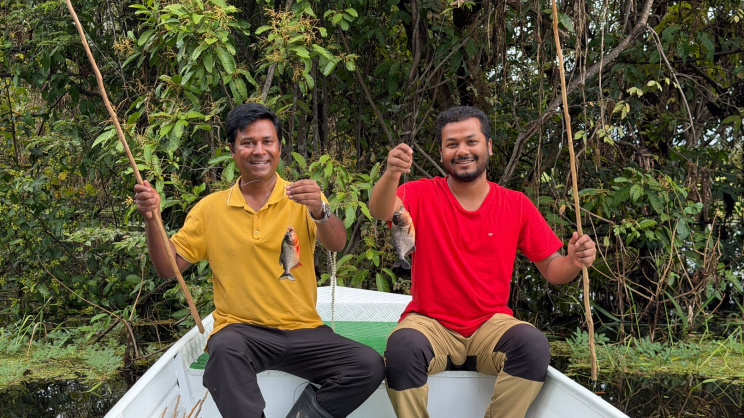
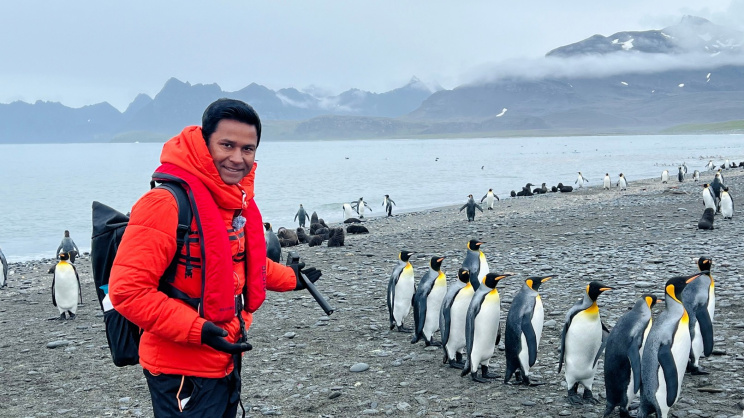
The Drake Passage was kinder than expected. Then, in Brazil, his iPhone was stolen along with footage from Antarctica and a day in the Amazon.
“It was a nightmare. To go through that ordeal and capture the famous Drake Passage, gone,” he said.
Our conversation became more uncomfortable when it turned towards Bangladesh.
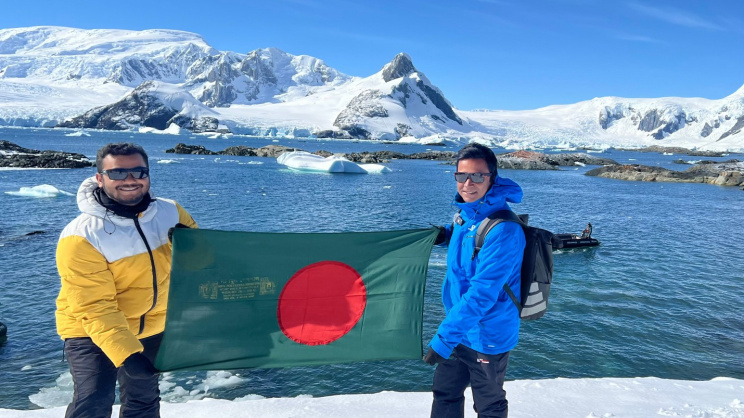
During the Antarctica expedition, a German passenger asked how people from a poor country like ours could afford to be there. Instead of anger, Sumon considered the limited picture many foreigners carry of us. He does not deny our poverty, nor accept it as the only honest image.
“I am not ashamed that my country has less money. Poverty itself is not shameful. I explained that Bangladesh is not economically equal to the world’s wealthiest countries. However, that is not the whole picture. We have land that produces food, abundant water, fish and agriculture. Some wealthier countries have money but very little capacity to produce their own food. Prosperity can be understood from more than one angle,” he said.
He was sharper about Bangladeshis who misuse tourist visas. Their actions, he argued, place suspicion on everybody holding the same passport.
He expressed his dismay, “What embarrasses me is behaviour that damages the reputation of every Bangladeshi traveller.
“Some people enter another country on a tourist visa and then disappear or overstay.
Immigration officers consequently look at all of us with suspicion. They may assume that a Bangladeshi visitor has no intention of returning home. That is humiliating.”
It is uncomfortable to hear, but a national image is shaped by how we behave when nobody back home is watching.
Sumon is equally uneasy about his own influence.
A palm-lined road in Niamatpur, Naogaon, became a tourist attraction after his video. Years later, stalls had started to cover the view people came to see. He understands why locals want to earn, but unmanaged attention can consume a place.
Creators can warn people, he said, but local authorities must decide where shops go, how waste is handled, and what must remain protected. The answer included his responsibility without casting him as a saviour.
The same caution guides the sponsors he accepts. He avoids promotions involving overseas recruitment, student placement, certain real-estate schemes, and health products where a trusted face might lead someone into serious trouble.
“Trust matters more than the size of the fee,” he said.
It sounds obvious. In practice, especially in our corner of the internet, it is a position that costs money.
Near the end, Sumon spoke about Indonesia’s remote islands. His curiosity remains attached to people, history and how life continues somewhere unfamiliar.
The interview did not magically turn me into the storyteller I have spent years imagining during Dhaka traffic. However, it made my excuses feel smaller.
Sumon reminded me that a story is not hiding at the farthest edge of the map. It begins when we notice the people inside a place and care about what remains after the camera leaves.
Photo: Courtesy
Comments