


The art of SARI draping
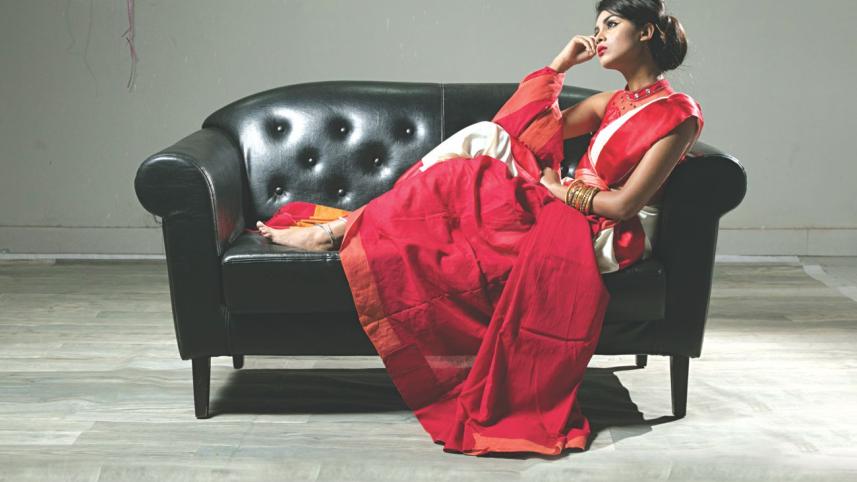
The sari has been long-associated with grace and glamour of the South-Asian women. With roots that can be traced back to the Indus Valley Civilisation, the sari has evolved through many stages. The final form has remained the same for many years now but the way it is worn varies from culture to culture.
Bengali women are complimented all over the world for their beauty. Their splendour is further augmented by the striking traditional garb – the sari. The newly wedded wife or the 'Deshi bou' is often gifted with a lot of saris. Armed with a trousseau that includes the most amazing wardrobe one must feel compelled to be able to style it and wear it in different ways possible.

The traditional way
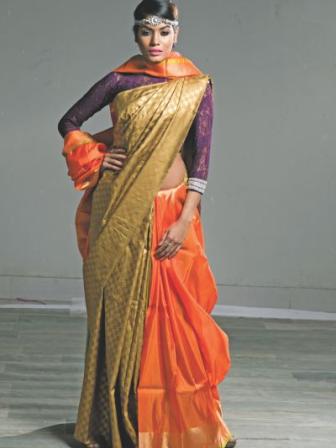
The traditional way to drape the sari is to twist the piece around the waist one time and then make pleats in the centre, tucking it in the petticoat firmly and then flinging the leftover material called the 'anchal' over the left shoulder. The easiest way to recognise an anchal is to locate the portion of the sari that has a lot of designs and motifs. If the sari is of one solid colour and has no specific designs on it then the blouse is often made the highlight of the attire by getting it stitched into modern cuts or having intricate designs embroidered onto it.
To get a distinction in the traditional look one can wear a 'kamar bund' or waist belts over the sari. Another way is to wear a designer jacket, often made of zari material over the sari and the blouse. The jacket must have some semblance with the rest of the apparel.
The Bengali style
The pure Bengali style of draping a sari is to make two large pleats around the waist, covering the torso and getting hold of the anchal from under the right shoulder before flinging it back again over the same shoulder. This traditional method requires a large key ring with keys to be tied at the end of the anchal to hold it down and perfect the look. The Bengali style is best worn with cotton saris and handloom material.
The lehenga style
In the case of a close one's wedding, people are always on the lookout to wear something new and exclusive in order to stand out amongst the crowd. Many ladies opt for wearing a 'lehenga' as a celebratory dress. Our suggestion is to wear the same old sari, which is already in your wardrobe, in the lehenga style to prevent spending extra money on new purchases but still look exceptionally gorgeous and unique.
With several pleats tucked around the waist, this form of sari draping gives out the image of a lehenga. The anchal is then folded together carefully and brought from the back of the shoulders to the front. The folds of the anchal can be spread in the front or worn as a closely tucked in 'orna – dupatta' style.
The Devi style
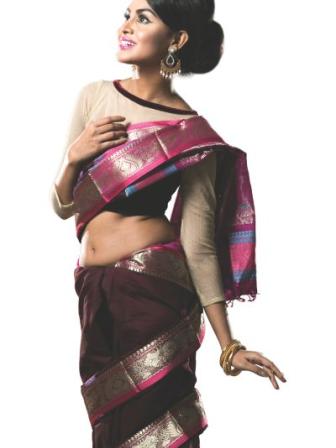
Typically called the Marathi style, it is very popular with the Brahmin women of Maharashtra. This does not mean we cannot copy their style and make heads turn in our own programmes.
This sort of sari draping style is very unique and looks very appealing when worn properly. In the Marathi style no petticoat is required; the sari is draped in a way that the center of the sari is neatly placed at the back of the waist and the ends of the sari are tied securely in the front, and then the two ends are wrapped around the legs. The decorative ends are then draped over the shoulder and the upper body.
Mumtaz style
My personal favourite is the Mumtaz style where the sari is worn with a retro look. The style involves draping the sari tightly around the lower body several times to highlight the figure as best as possible. The anchal is placed over the shoulders in a regular way as in the traditional sari.
This might not be the most comfortable way to wear a sari but is surely one of the best ways to attract oodles of attention. To perfect the look of this style the sari worn must be of light and soft material such as silk, chiffon or georgette.
The tribal style
The sari is cut into two pieces. One piece is worn around the waist as a skirt while the other piece is used to cover the upper part of the body. When wearing this sort of sari the tribal women also wear many ornaments to complete the look. Similarly if anyone wanted to copy and recreate the same look as the tribal women of the hill-tracts they must also adorn themselves with enough ornaments.
Cotton saris are best suited for this sort of sari draping which is skilfully placed over the hips so that the figure is graceful in every movement.
The Roman style
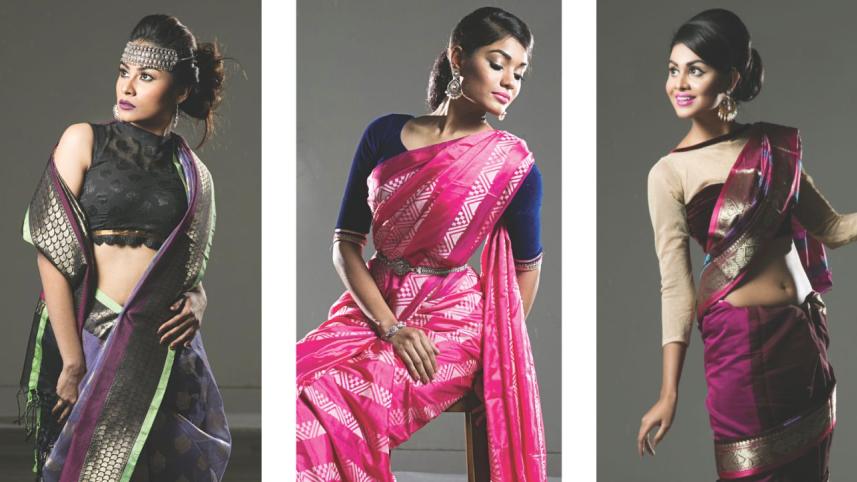
This is also called the double sari draping style inspired by the Roman era and the Greek style of wearing flowing garbs. This style is most attractive and well suited with contrasting coloured saris.
First, one of the coloured saris is draped in the lehenga style and then the second sari is folded appropriately in equal sections; the pleats of the second sari need to be tucked besides the first sari pleats and the leftover material thrown back over the shoulders from the back to the front. The end look will have both the sari anchals in the front, each side with a different coloured anchal.
This is definitely a head turner style of wearing the sari. If you wanted to make everyone look at you with genuine admiration then this is definitely something you need to try out.
The modern skirt style
This is for the very modern ladies where the entire sari is folded into two and then draped around the waist only. The two ends of the sari are then tied into a bow. It is an extremely modern way of wearing the sari and is best matched when worn with a glitzy and shimmering top.
 For all latest news, follow The Daily Star's Google News channel.
 Only few styles have been mentioned here, there are plenty more which can be researched and tried. You can even try to invent your own unique way of wearing the stunning apparel. The basic idea is to be able to appreciate the true beauty of the sari and pay respect to the garb that has been draping South Asian beauties for so many years.
By Mehrin Mubdi Chowdhury
Photo: Sazzad Ibne Sayed
Model: Isha, Meghla, Mashiat
Jewellery/Wardrobe: Aarong
Photoshoot coordinator: Isha Yeasmin
Comments