


Why Raka Nower’s journey inspires every young Bangladeshi creator today
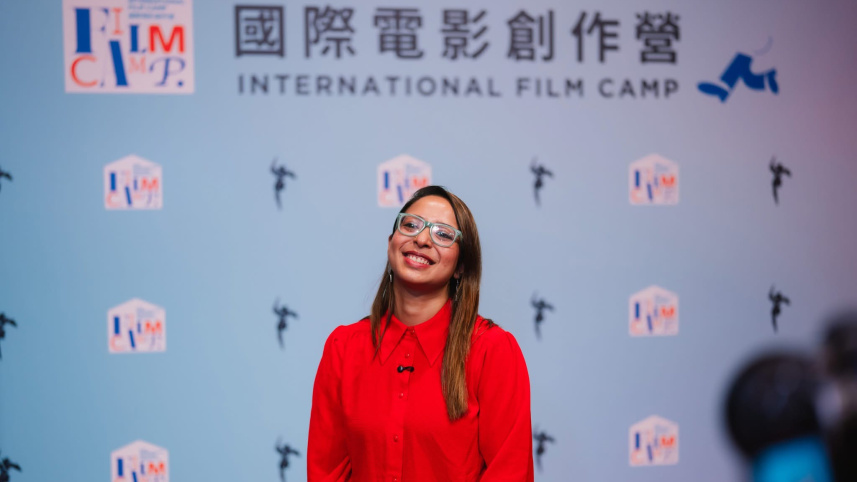
Raka Noshin Nower did not enter filmmaking through film school. She entered it through observation.
An engineering student with no formal connection to cinema, she began her career at Applebox Films, where she spent nearly a decade working across roles. What began as a responsibility in casting gradually turned into something else.

“If someone is smart, you can pick up things that aren’t even being taught,” she says. She learned editing on her own. She made short films that, in her words, might have seemed “crazy” at the time. She shot travel videos. She experimented quietly.
“That time was like my school — a school of joy, a school of film, a school of discipline,” she recalls. Those 10 years became her formation period. The experience gave her what she calls “a proper base” and, more importantly, the confidence to visualise a future beyond employment.
A studio with intent
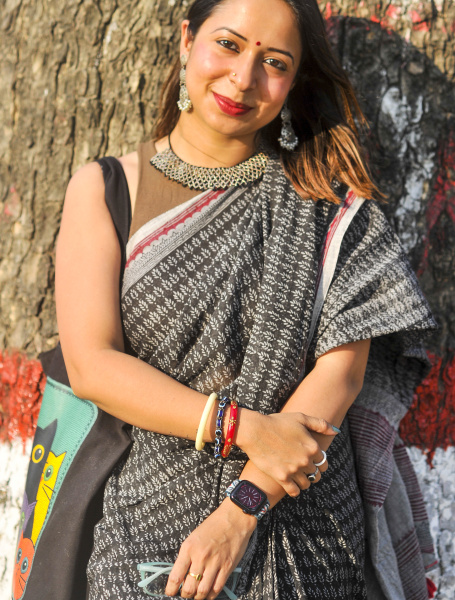
Studio Yellow Something Limited began as a solo venture. But she never envisioned it as just a production house. “I never wanted to just make ads or just do business all day,” she says. “I wanted to create a creative hub where people come to practice creativity.”
For her, creativity is not limited to filmmaking. It is the ability to bring internal imagination into external form. It could be music, poetry, architecture, law — any discipline where ideas are shaped into reality.
Under that philosophy, the studio hosted a photo exhibition, titled Phultokka, and launched an educational initiative called the “Equanimity Session,” a non-profit programme where professionals from diverse industries share lived experiences with young creatives. “Connecting with people and connecting with different communities is everything to me,” she says.
Her team reflects that diversity. Associates have backgrounds in business, architecture, medicine, and NGOs. Some left stable jobs to work with her. “Maybe there will be less money, but the effort will be greater,” she says. Financial scale was never her primary measure of success.
The discipline of advertising
Despite expanding into fiction, Nower remains committed to advertising. She describes commercials as a compressed art form. “When you are given one page, and you have to write the equivalent of 50 pages, that’s difficult,” she explains. “You’ll think a lot and write those five valuable lines.”
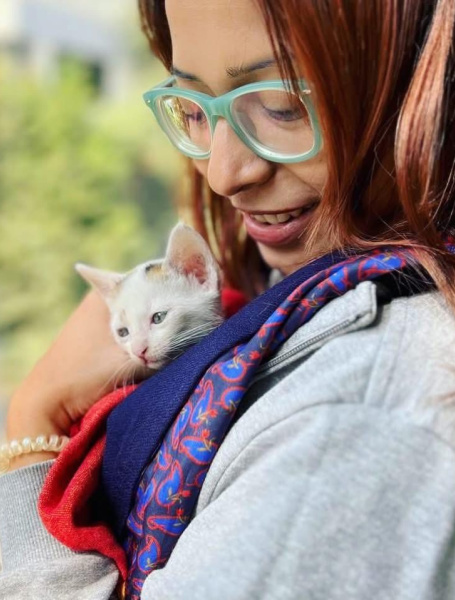
That philosophy shaped her Grameenphone advertisement, told from a dog’s perspective — a project she describes as deeply personal. “This is exactly the kind of work I want to do,” she says. Animal-centric storytelling aligns with her own life; she owns a cat and is vocal about animal welfare.
Her debut telefiction Aar Theko Na Dure (2022), followed by another Closeup-backed project in 2023, marked her entry into longer storytelling formats. “A heartfelt thought can be said in five seconds or in five minutes, but the emotion should stay tight,” she says. That remains her creative exercise — adapting emotional density to duration.
Gender, access, and perspective
Nower does not frame her work explicitly as activism, but gender informs her practice. “Women’s participation itself is rare,” she says of the industry. Merit, she suggests, is often secondary to access.
“Perspective is very important,” she says. “We’ve seen many films from a male perspective for ages.” While acknowledging that many male directors portray women thoughtfully, she insists that a woman’s lens offers different angles — even when the subject is not explicitly female.
“I want to tell stories from a woman’s perspective — whether the subject is a woman or a man,” she says. She also expresses interest in exploring male psychology, admitting she grew up in a household of women and has rarely observed men closely.
Expanding the role: From Director to producer
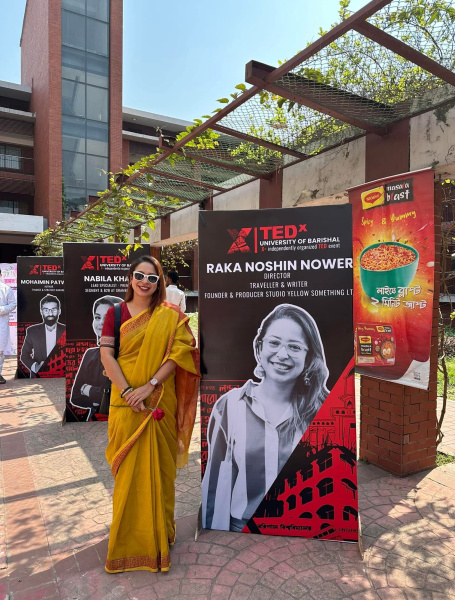
In 2025, Nower was selected for the Asian Film Awards Academy’s international film camp in Macau with her short film project Fish and Milk, centred on her mother and her cat. The seven-day scholarship workshop connected her with filmmakers across Asia and shifted her professional focus.
Mentors encouraged her to consider producing. Though she had been effectively producing through running her company, she sought formal training and applied to the Busan Asian Film School’s seven-month Producing Fellowship.
She was selected as one of two fellows from Bangladesh, and the first Bangladeshi woman admitted into that programme.
“I want to learn properly and return,” she says. Her goal is to support emerging directors who struggle with trust, funding, and production barriers. “I want to empower those kids with their crazy ideas,” she adds.
Relentless application
Rejection is a recurring theme in her process. She applied to numerous film labs and festivals before receiving acceptance. “I got rejected many times,” she says. But the process strengthened her pitch decks and sharpened her projects.
One such project, Mangsho Kom, received a Bangladesh government grant. The story addresses taboos and body-related trauma. “I never thought they would give me a grant for this subject,” she admits. The approval, she says, renewed her faith in institutional openness to diverse narratives.
 For all latest news, follow The Daily Star's Google News channel.
 The film has completed shooting and is now in post-production. “I think I’m in the unstoppable category,” she says, half in jest. “Stopping feels very secondary to me. We only lead one life.”
For now, she is not choosing between ads, fiction, animals, or women’s stories. She is building capacity — technical, institutional, emotional — to hold them all.
And she is not waiting for permission.
Photo Courtesy: Shadab Shahrokh Hai, Asian Film Awards Academy & SYS team
Comments