


Lionel Messi and the art of letting go
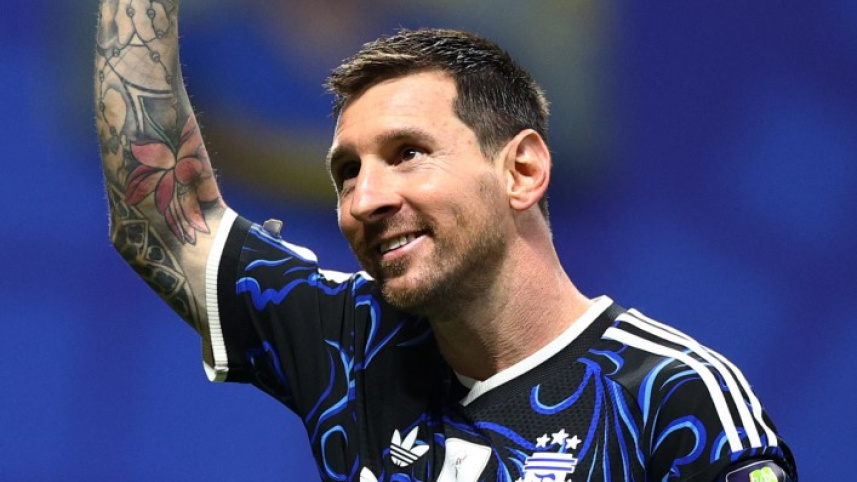
Lionel Messi has spent much of his career chasing something that, eventually, every great athlete has to confront: the moment when there is nothing left to chase.
On 31st August, Messi announced his retirement from international football, bringing an end to a magical relationship with Argentina. At 39, he leaves the national team as its record appearance-maker and top scorer, with a World Cup, two Copa América titles, and a lifetime of memories in the blue and white.

But perhaps the hardest part was never winning. It was letting go.
After the 2022 World Cup, Messi could have walked away. There could hardly have been a better ending. After years of heartbreak with Argentina, he finally lifted the trophy that had followed him everywhere. The boy from Rosario who had been compared with Diego Maradona for most of his career finally had his World Cup. Qatar gave him the fairy-tale ending every footballer dream of.
And yet, he stayed.
Then came the 2024 Copa América. Another trophy, another piece of history, another perfectly reasonable moment to say, “That’s enough.” He could have left international football as a champion again. Instead, he kept returning to Argentina, kept putting on the shirt, and kept playing.
Maybe even Messi struggled with letting go.
Because there is a difference between knowing something should end and actually being ready for it. Argentina was never just another team for him. It was the shirt he had spent years trying to make peace with. It was the source of some of the deepest disappointments of his career and, eventually, some of its greatest joy.
Then came 2026.
The World Cup offered Messi another chance at an impossible ending. Argentina reached the final again, with Messi one game away from another world title. This time, however, the fairy tale stopped short.
Spain beat Argentina, leaving Messi with a runner-up medal instead of another trophy. Two days after that defeat, Messi said he had already written his retirement statement. But life had something heavier waiting for him.
Weeks later, his father, Jorge Messi, died at 68. Jorge had been far more than Messi’s father. He was his agent, his early guide and one of the people who had been beside him long before the world knew his name.
There was no choice in that goodbye.
That is perhaps what makes Messi’s retirement now feel different.
Losing his father was a kind of letting go that life demanded from him. There was no trophy to win, no final to replay, no extra time to buy. He simply had to accept that someone he loved would no longer be there.
Walking away from Argentina is different. This time, Messi is choosing to let go.
And that may be the hardest goodbye of all.
He has said the decision hurts, but that he understands the time has come. He leaves knowing he has given everything he had to the national team and that a younger generation deserves its turn.
There is something quietly beautiful about that.
Messi spent years refusing to let go of Argentina. Now, after finally giving the country everything he could, he is choosing to release it.
 For all latest news, follow The Daily Star's Google News channel.
 And perhaps we have to do the same.
For more than two decades, we have watched Messi in that shirt. We watched him fail, cry, lose finals, win trophies, lift the World Cup and become the player Argentina had waited for. For many of us, Messi in blue and white is not simply a football memory. It is part of growing up.
Now he is letting go of Argentina.
And we are, in our own way, letting go of him.
Comments