


How much gold is enough to survive your family’s judgment?

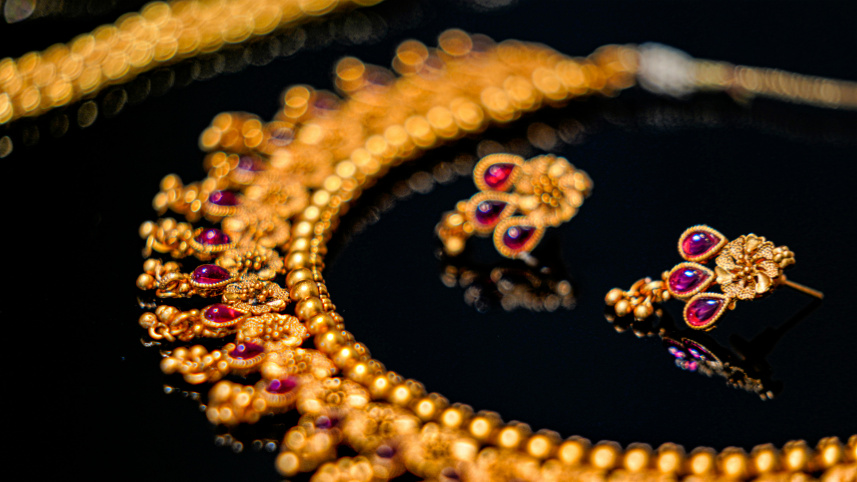
Nothing reveals the emotional stability of a family quite like the price of gold before wedding season. Forget inflation reports. Forget stock markets. Forget economic indicators. If you really want to understand the psychological condition of the Bangladeshi middle class, walk into a jewellery shop in Dhaka and watch a mother of the bride stare at a necklace set like she is negotiating a hostage release.
Gold in South Asia is not just jewellery. Gold is emotion. Gold is reputation. Gold is maternal anxiety solidified into metal form. A Bengali wedding without gold is treated with the same concern usually reserved for national emergencies. People will whisper. Elderly relatives will develop investigative journalism skills. Someone’s khala will lower her voice and ask, “They only gave this much?” This is how entire families end up emotionally blackmailed by a mineral!

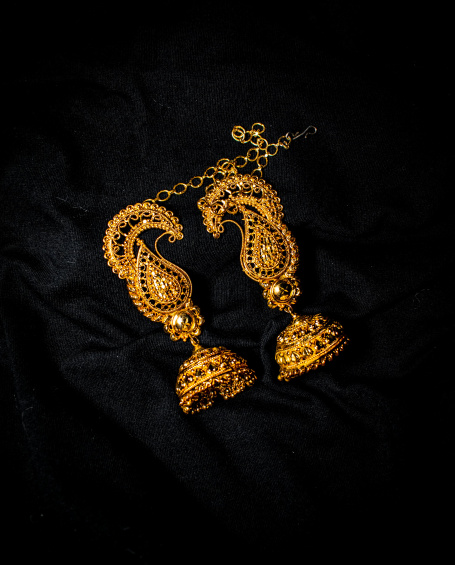
Officially, weddings are about love, blessings, and two souls becoming one. Unofficially, they are also about whether the bride received enough gold to satisfy relatives who contributed absolutely nothing except criticism and acid reflux. The problem is that gold prices now resemble cryptocurrency charts designed by Satan himself. Every few weeks, another headline appears announcing that gold prices have risen again, and somewhere across Bangladesh, fathers silently recalculate their blood pressure medication doses.
Meanwhile, jewellery stores continue glowing with the seductive confidence of institutions that know desperation is profitable. Walk into one, and you will hear phrases like “lightweight collection” used to describe something that costs the equivalent of a small agricultural economy. The saleswoman smiles gently. “This one is very simple.”
Simple! The necklace looks capable of funding infrastructure development. And yet weddings continue.
As Bangladeshi society has mastered the art of financially traumatising itself for aesthetics, families who cannot afford therapy, retirement planning, or proper savings accounts will somehow produce fourteen trays of jewellery for a wedding because social embarrassment remains our most stable national currency.
There is also something uniquely theatrical about how gold functions in marriage negotiations. Nobody directly says the bride must bring gold because that would sound crude and transactional. Instead, everyone performs cultural ballet around the subject — “It’s just tradition. We are not demanding anything. We only want what they give willingly.”
Women, of course, carry the burden of this performance most heavily. A groom can arrive with mediocre emotional intelligence and a LinkedIn profile describing him as “passionate about leadership”. The bride, meanwhile, must arrive shimmering like a walking reserve bank. Gold bangles. Gold chain. Gold earrings. Gold dignity. Somewhere along the way, we decided that women should literally wear family wealth on their bodies while simultaneously being denied equal access to actual financial power.
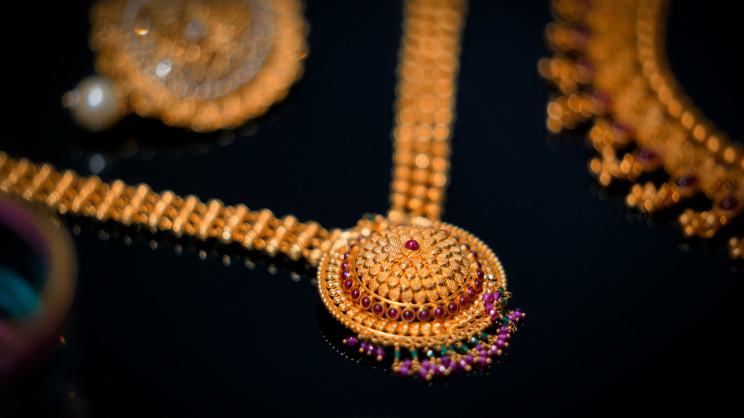
Many brides own gold but not property. Own jewellery but not land. Own wedding sets but not economic security. And still, mothers continue buying gold for daughters with genuine love and fear intertwined together.
For many women across South Asia, gold has historically functioned as emergency security in unstable marriages or financial crises. That history matters. In societies where women lacked inheritance rights or independent income, jewellery became portable survival. However, modern Bangladesh has transformed this survival mechanism into competitive performance art. Now weddings resemble luxury exhibitions sponsored by generational anxiety. The stage decorations look like royal coronations. The bride can barely breathe under ten kilograms of embroidery. Guests analyse jewellery with forensic precision: “22 carat? No, maybe 21.”
Humans once wrote poetry about love. We now conduct metallurgical assessments over kachchi biryani.
And, perhaps, that is the real tragedy of the modern Bangladeshi wedding economy. Somewhere beneath the gold, the lighting, the choreography, and the carefully curated Instagram reels, marriage itself has become secondary to presentation. How did two people deciding to build a life together become a full-scale production involving financial warfare, social performance, and enough gold to alarm central banks?
Nobody knows! What we do know is this: next wedding season, despite the rising prices, despite the economic pressure, despite everyone complaining dramatically in family WhatsApp groups, the jewellery stores will remain full. Because in Bangladesh, love may be priceless, but apparently marriage comes with market rates.
 For all latest news, follow The Daily Star's Google News channel.
Comments