


Chowrasta brings Bangladesh’s hip-hop community together
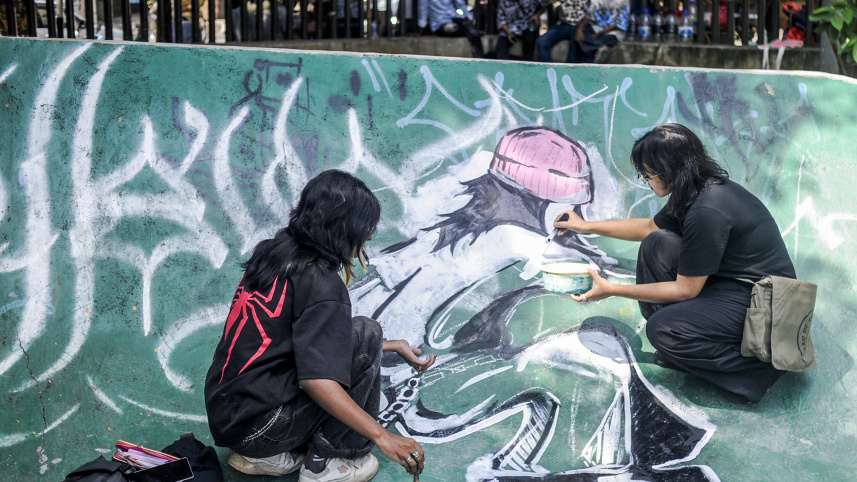
On a wall, a name becomes an identity. Over a beat, words become a voice. On an open floor, movement becomes a language. For Bijoya Das, known in the graffiti scene as Bijoygraff and in rap as Young E, these different forms of expression belong to the same cultural conversation: hip-hop.
That conversation forms the foundation of Chowrasta, a two-day hip-hop gathering organised on 10 and 11 August by Street Spirit, an organisation run by Bijoya Das and Sketch. Timed around hip-hop’s 53rd anniversary, Chowrasta brings together graffiti artists, rappers, breakers, and DJs, while creating space for both established figures and a younger generation discovering the culture.

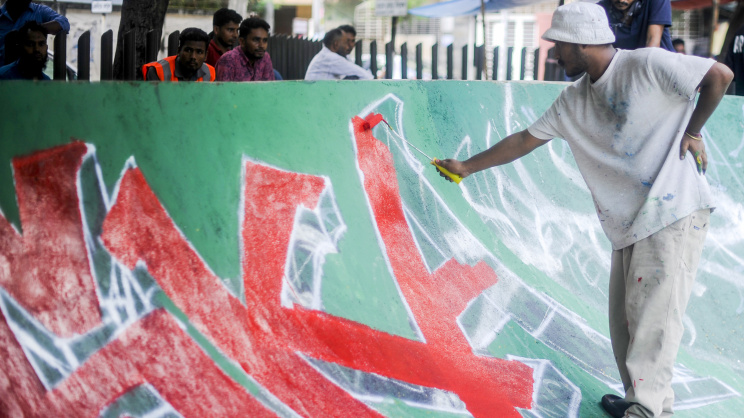
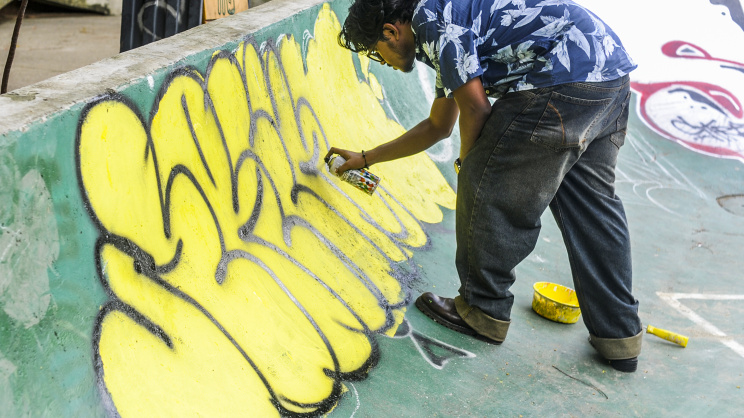
“We organised it to represent the four elements of hip-hop,” Das explains. The first day focuses on graffiti, including painting and “Black Book” sessions where artists share sketches and ideas. On the second day, the other elements converge through rap and cypher sessions, breaking and DJ performances.
The date carries historical significance.
On 11 August 1973, DJ Kool Herc and his sister Cindy Campbell hosted a party at 1520 Sedgwick Avenue in the Bronx, New York, an event widely associated with hip-hop’s beginnings. The Smithsonian identifies DJing, MCing, breakdancing and graffiti as hip-hop’s four pillars and documents Kool Herc’s influential practice of extending the instrumental “breaks” in records.
For Das, Chowrasta is a way of returning to that history without simply reproducing it.
The name Chowrasta, or crossroads, feels appropriate. Different disciplines meet here, but so do different generations of Bangladesh’s hip-hop community.
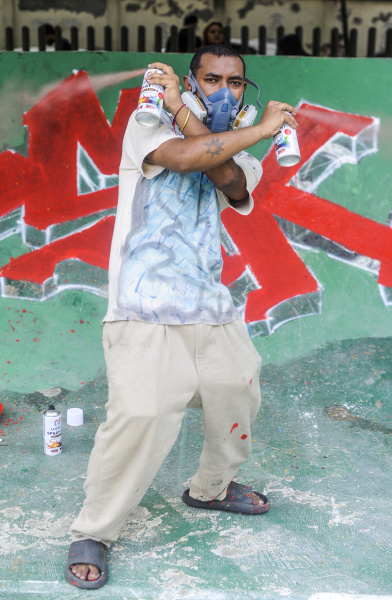
Das says the gathering will include “OGs” who have represented the culture for years alongside artists who have moved from underground spaces towards greater mainstream recognition.
Das’s own journey began in 2015. Over the past decade, graffiti and rap have become two sides of his creative identity.
As Bijoygraff, he works with walls, lettering and images. As Young E, he works with language. “I love to draw and play with words,” he explains.
His experience also challenges the assumption that Bangladeshi hip-hop exists almost exclusively in Dhaka. According to Das, active communities can also be found in Chattogram, Noakhali, and particularly Comilla.
What remains difficult, he argues, is perception. Hip-hop can still be dismissed as a “degenerate culture”, associated primarily with profanity or unfamiliar lifestyles. “In our society, we often feel threatened by anything new,” he says.
Yet, historically, hip-hop itself emerged from communities using accessible forms of creativity to articulate their circumstances. The Smithsonian describes its early development among Black and Latino youth in the Bronx and its eventual transformation into a global cultural phenomenon.
Das sees a similar principle of adaptation in Bangladesh.
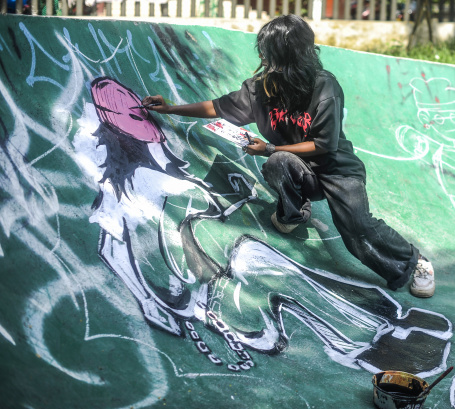
“My style is a bit more ‘Modern Graffiti’, influenced by New York because I practise hip-hop culture,” he remarks. “But even though I practise New York-based culture, my surroundings are not New York. My surroundings are Bangladesh.”
That distinction is crucial. He points to Bangladesh’s streets, inequality, anger and corruption as part of the environment informing his work. Hip-hop, in his interpretation, is not something imported intact. It becomes meaningful when artists use its vocabulary to speak about where they actually live.
 For all latest news, follow The Daily Star's Google News channel.
 He also sees connections between contemporary graffiti and Bangladesh’s older traditions of writing on walls. He is interested in tracing that history and discovering who Bangladesh’s early graffiti practitioners were, long before the terminology of modern graffiti became familiar.
Perhaps Chowrasta’s most significant idea, then, is not performance but accessibility. Beyond the four familiar elements, Das speaks about a fifth: knowledge. Through Street Spirit, he conducts graffiti workshops and works to pass what he has learned to others.
“No one taught us,” he recalls. “We explored it ourselves, learned it on our own.”
For a new generation, Chowrasta attempts to make that journey a little less solitary. Hip-hop does not necessarily begin with expensive equipment or formal training. Sometimes, as Das puts it, rap can begin simply with “knowledge and poetry”, a few words, an idea and the confidence to make yourself heard.
Comments