


The middle-class gutted by inflation

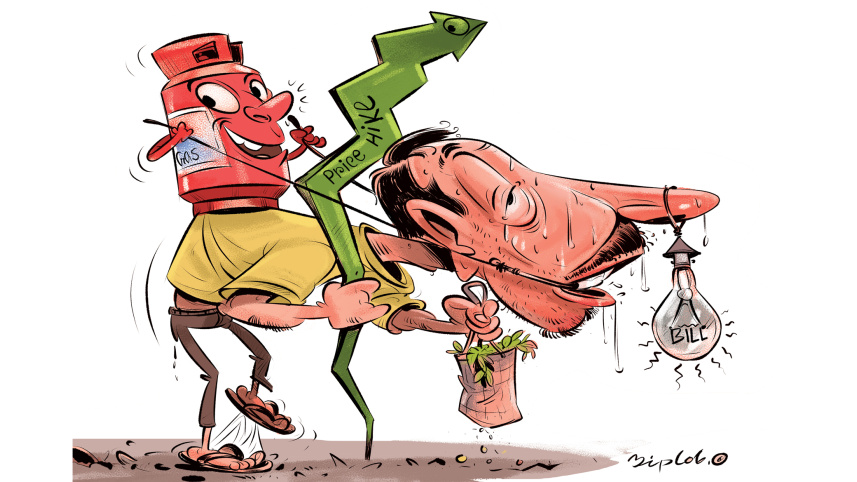
For many middle-class families, life is built around some common characteristics.
Live close enough to urban workplaces without too much trouble. Rent or buy a small flat. Own an air conditioner, perhaps a motorbike or a small car. Eat out once in a while on the weekend. Pay the bills and, if possible, put some money aside at the end of the month.

It is not a life of luxury. It is a life of managing what you have and hoping there is enough left over.
That calculation is now becoming harder to make as the defining characteristics of middle-class people come under attack from the rising cost of living.
Take Rezwana Rahman, a resident of Mohammadpur area in Dhaka. On an overcast morning in August, she unfolded her monthly electricity bill expecting it to be lower than usual.
July had been noticeably cooler than the stifling heat of early summer, so the family’s lone air conditioner had barely been used. The pipeline gas supply, which often suffers sudden drops in pressure, had also remained stable. That meant she could cook on the gas stove instead of using the power-hungry induction stove.
Rezwana had done the maths. She expected the post-paid bill for her small two-bedroom flat to be comfortably below Tk 2,000. Instead, it was more than Tk 3,000.
“The only reason I can think of behind this high bill is the latest unit charge raise,” Rezwana said.
Economists have a name for the problem facing Rezwana and millions of others -- sticky and stubborn inflation.
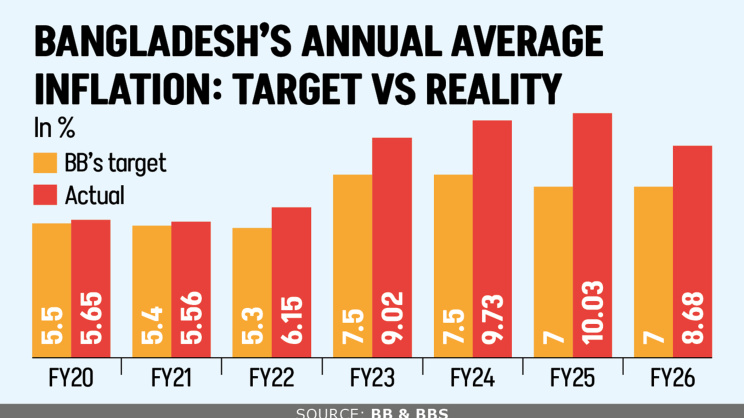
The rate has been far above the comfort zone for years, despite repeated government measures and rounds of threats by politicians against the price pressure.
The pressure is visible in many ways. Queues for subsidised essential items have grown longer. Reports from multilateral lenders have shown millions of people falling below the poverty line. And for middle-class families who once managed to save a little each month, those savings are increasingly being used to pay for everyday expenses.
None of those appeared to be a problem for the rich. They would always be fine. On the other hand, the poor have government support programmes to fall back on. But the middle class often finds itself in between, with too much income to qualify for government support but too little financial room to absorb repeated price shocks.
For the rich, the question is: can I afford it? For the middle class, it is: how can I afford it without giving up something else or dipping into my savings?
Years of rising prices have steadily eroded that family savings buffer. For Rezwana and millions like her, the monthly maths is no longer adding up.
In May, when temperatures soared and a fortnight-long gas outage forced her to run both the air conditioner and the induction stove almost non-stop, her electricity bill came to Tk 2,000.
So, when the bill rose by a third in July, despite her using far less electricity, she found it difficult to make sense of it.
When she raised the discrepancy with her landlord, the response was dismissive.
“He told me to lodge a formal complaint,” she said. “But that would be nothing but a waste of time and effort.”
 For all latest news, follow The Daily Star's Google News channel.
 THE SQUEEZE GETS WIDER
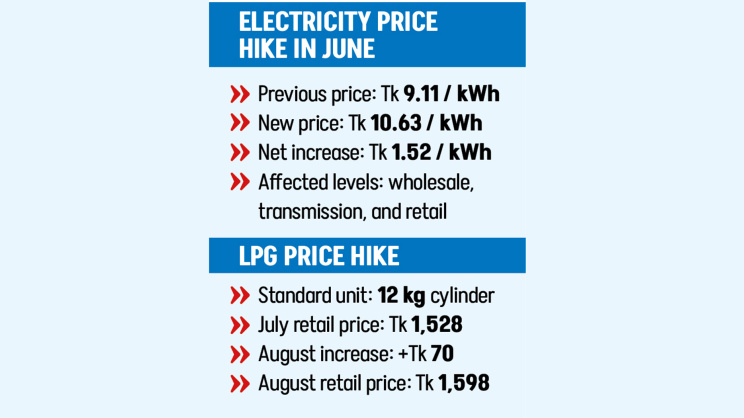
Following the Iran war that began in February, the government raised the prices of fuel, power and liquefied petroleum gas (LPG).
The impact was immediate for already struggling middle-income households. The squeeze came from every direction -- higher electricity bills, more expensive commutes, pricier food as transport costs rose from farms to city markets, and higher costs of cooking it.
Economists, think-tanks and civil society groups warned the government about these pressures beforehand.
Following two earlier rounds of fuel price increases, the Centre for Policy Dialogue (CPD) cautioned in June that higher power tariffs would worsen an already severe inflationary environment.
CPD’s fears have now materialised. In its quarterly Inflation Dynamics in Bangladesh report for the fourth quarter (April-June) of fiscal year 2025-26, the Bangladesh Bank identified energy inflation as the main driver of average headline inflation, which rose to 9.21 percent.
The pressure is compounded by a widespread shortage of piped gas, leaving many urban kitchens with too little pressure for basic cooking, such as rice or daal.
Families are increasingly being forced to turn to electric burners or LPG cylinders, both costly alternatives. Frequent power cuts make the switch even harder.
“Cooking becomes almost impossible on weekends or national holidays,” said Mahmuda Kamal, a resident of Pallabi area in the capital. “On those days, we have no choice but to rely on electrical appliances like rice cookers or air fryers.”
A private sector employee, Mahmuda considered buying an induction cooker to get around the gas shortages, but shelved the idea because she feared her electricity bill would skyrocket.
Meanwhile, Lalantika Piasi, a resident in Faridpur city, said her expenditure on LPG cylinders has gone up significantly. “I have had to trim other household spending just to manage.”
FOOD BILLS KEEP CLIMBING
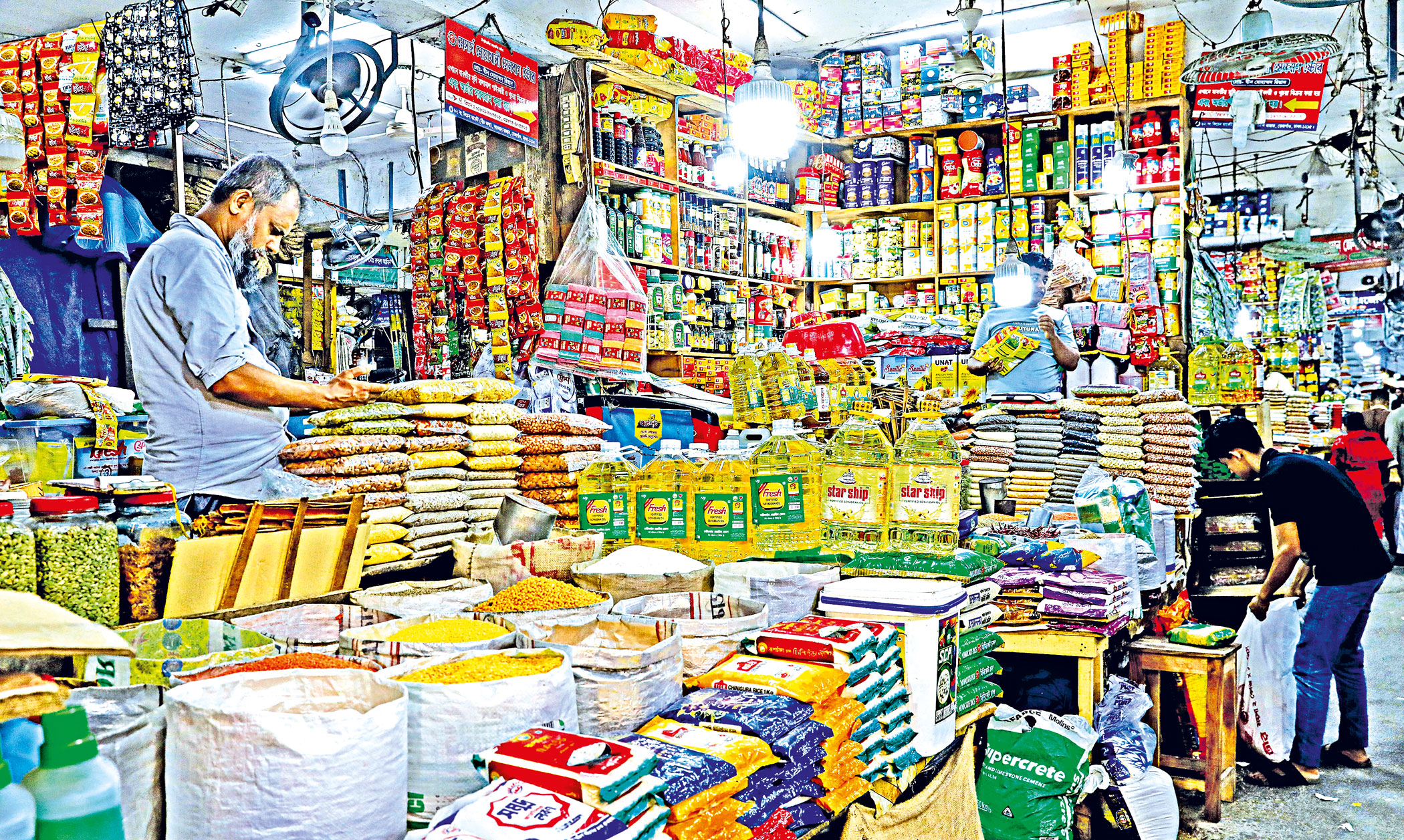
The strain extends well beyond energy bills. As food inflation continues to rise and the prices of basic goods fluctuate, routine trips to the market have become an exercise in deciding what a family can afford to leave out.
Central bank statistics show food inflation rising through the second quarter of this year.
After reaching 8.24 percent in March this year, food inflation accelerated to 8.7 percent in June, up from 7.71 percent in December last year. The increase was driven by steep rises in the prices of meat, fish, fruit, vegetables and spices.
“Whenever I go shopping for essentials, I find the price of yet another item has gone up,” said Rezwana.
The government also raised retail petroleum prices. Raqibul Hasan, a resident of Dhaka’s Basila area who commutes to work by motorcycle, has felt the impact directly.
“The price of octane increased quite a bit, leaving a good dent in my monthly budget,” the private sector worker said.
Raqib said he had recently received a salary increase, allowing him to absorb some of the higher costs. But wage growth in general has failed to keep pace with inflation.
In June, CPD Executive Director Fahmida Khatun said wage growth continued to lag behind inflation, eroding household purchasing power, particularly among low and fixed-income groups.
The gap between wage growth and consumer prices widened further in the last quarter of FY26, according to BB data. Wage growth stood at 8.2 percent in June, below headline inflation of 9.2 percent.
THE SAVINGS CUSHION DISAPPEARS
Persistent inflation has become more than a temporary cost-of-living shock for the lower-middle and middle-income families. The prolonged rise in prices is steadily eating into both the purchasing power and saving capacity of low and middle-income households.
Selim Raihan, executive director of the South Asian Network on Economic Modeling (Sanem), said that after more than three years of elevated prices, repeated increases in the cost of food, rent, transport, utilities, healthcare and education have steadily eroded real incomes.
“Even households whose nominal earnings have risen may be poorer in practical terms because wages have failed to match the cumulative rise in living costs,” said the economist.
Rezwana’s experience echoes that wider trend. Running a household of four on a single income, her husband’s, was always a careful balancing act. But they managed.
Until recently, Rezwana took pride in putting aside a small safety net of Tk 500 each month. Around six months ago, as prices continued to rise, that small cushion disappeared entirely.
“It has become so difficult just to survive,” she said, gesturing around her home. “How can I possibly make any savings?”
“Do these families still have a cushion? Increasingly, no,” Selim said.
Many have already drawn down their deposits, cut discretionary spending, switched to cheaper goods, postponed healthcare and education expenses, or borrowed to maintain basic living standards, he added.
According to him, the middle class is particularly exposed because it often falls outside targeted social protection while carrying substantial housing, education and family costs.
“With growth weak and incomes under pressure, rebuilding those savings has become increasingly difficult. Persistent inflation is therefore creating not just temporary hardship, but the risk of lasting downward mobility,” he warned.
HOUSEHOLD PAIN HITS THE ECONOMY
The country’s sticky and stubbornly high inflation is no longer simply a byproduct of global market shocks. It has exposed deep structural weaknesses in the domestic economy.
Towfiqul Islam Khan, additional director of research at CPD, said the sheer duration of the squeeze is what makes it so dangerous.
“With basic food items taking up most of poorer families’ budgets, falling real wages have left them with almost no room to manoeuvre,” he said.
AHM Shafiquzzaman, president of the Consumers Association of Bangladesh (CAB), said inflation has reached every corner of people’s lives, particularly through food prices.
He said the damage goes beyond household budgets. High costs and weak consumer demand are discouraging private investment, forcing factories to scale back operations and limiting new job creation.
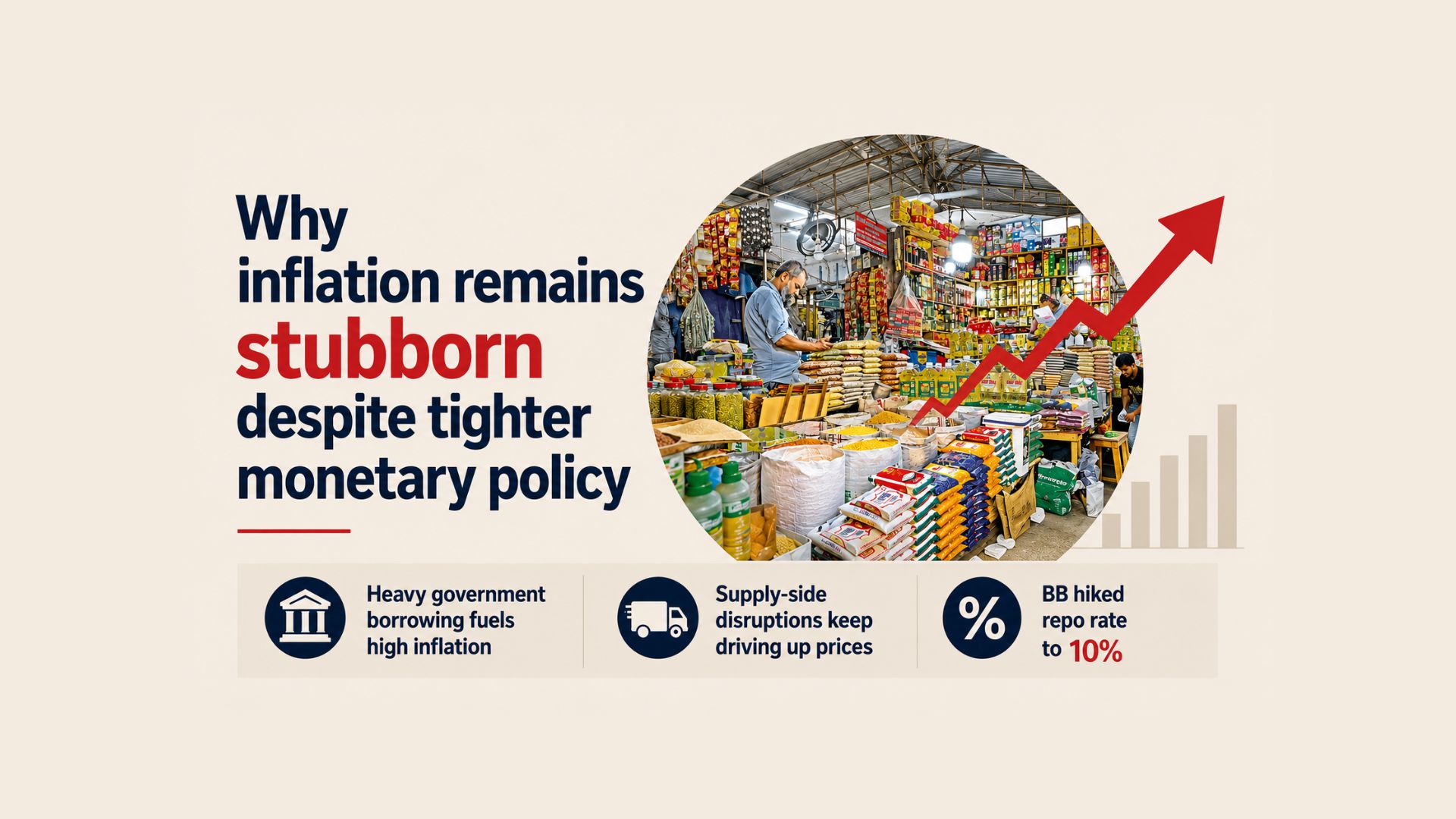
Economist Selim Raihan believes conventional monetary tightening is poorly suited to the price pressure crisis driven largely by supply disruptions, market imperfections and distribution bottlenecks.
“The policy response must recognise that inflation has been predominantly supply-driven,” he said, adding that dampening demand in a sluggish economy risks causing further harm without addressing the root causes of high prices.
Comments