


Mosabbir Alok Nibash giving cancer patients a home
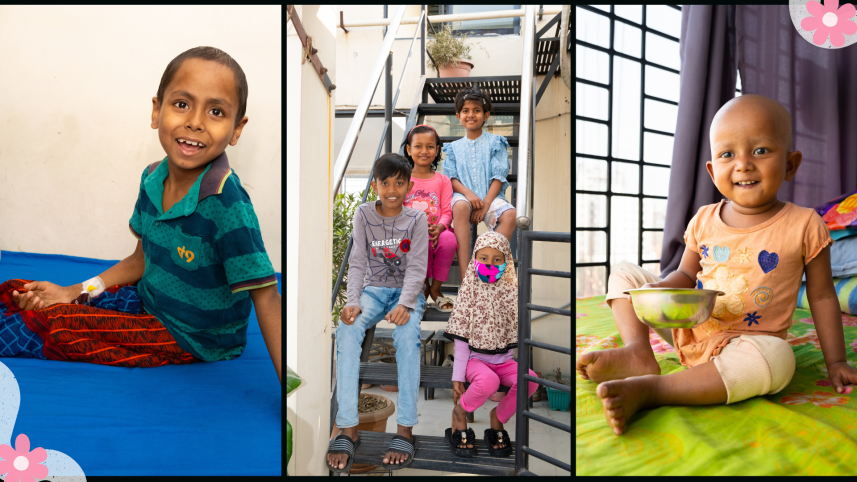
When Momena Begum first came to Dhaka from Gopalganj, she did not arrive at a hospital. She arrived at uncertainty.
Her son, Yamin, was eleven when he was diagnosed with Acute Lymphoblastic Leukaemia. Treatment meant moving to a city that did not belong to them. They rented a space in a slum in Dakshinkhan because it was the only place they could afford.

“What else could I do?” she says quietly. “His father passed away nine years ago.”
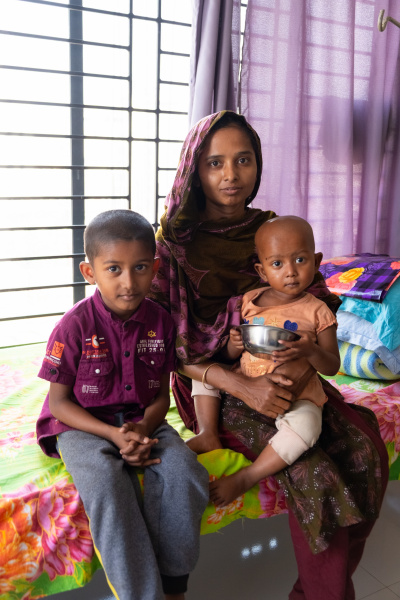
The logistics of cancer became heavier than the diagnosis itself. Rent. Food. Transport. Daily hospital visits. And the quiet exhaustion of having nowhere stable to return to at night.
Everything changed when another patient — someone she had shared a hospital ward with — told her about a place called Mosabbir Alok Nibash.
“Since coming here, I really like this place,” Momena says. “The food, the staying arrangements, and the environment with everyone make me feel good. For the last three and a half years, I have been coming and going from here.”
For families like hers, Mosabbir Alok Nibash is not charity. It is continuity.
A response to a question most people never ask
Cancer care in Bangladesh is concentrated in Dhaka. Patients travel from districts like Moulvibazar, Mymensingh, or Gopalganj, often with no relatives or housing options.
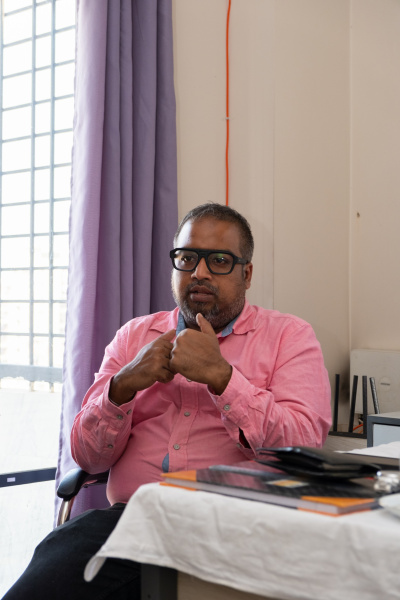
Rebeka Akter, patient coordinator at Mosabbir Alok Nibash, sees this reality every day.
“Patients coming from outside Dhaka usually don’t have a place to stay or eat,” she explains. “Here, they can stay free of charge. We provide accommodation, food, and transport for both the patient and their attendant.”
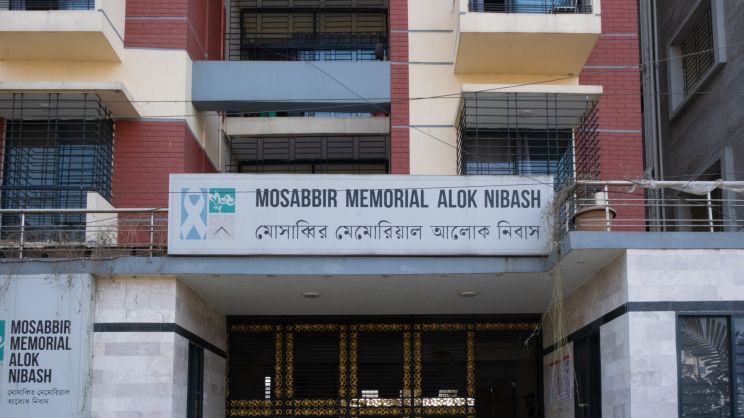
She often visits government hospitals herself, searching for those sleeping on floors or verandas. “They tell doctors, ‘How will we get treatment? We have no place to stay, no food arrangements.’ That’s how they find us.”
For Salma, who came from Moulvibazar for her child’s treatment, hospital floors had become home. “It was very difficult,” she says simply. “I had to stay on the floor.” At Mosabbir Alok Nibash, she now has a bed, meals, and transport to the hospital. “It feels good. Very good. Whatever is provided, I am grateful,” she shares.
Gratitude, here, often begins with something as basic as stability.
The system behind the shelter
Mosabbir Alok Nibash was founded by cancer survivor and entrepreneur Najmus Ahmed Albab, after he witnessed how patients without financial support were forced to live in slums during treatment.
Saad M Ahmed, Facility Manager overseeing operations, describes the scale of what happens inside.
“My daily responsibility is ensuring nutritious food,” he says. “We deliver 600 meals every day. That is 18,000 meals every month.” Meals are designed according to the nutritionists and doctors. “We follow strict diet charts. Sugary foods are forbidden. If a child needs specific nutrition, we try to provide it.”
But food is only one part of the system.
The facility houses patients and attendants, provides transportation, and maintains strict hygiene protocols to protect patients with compromised immune systems. “When patients return from hospitals, they must refresh themselves before entering,” Saad explains. “Government hospitals are often very dirty, and infections spread easily. We separate blood cancer patients because they are more sensitive.”
 For all latest news, follow The Daily Star's Google News channel.
 The numbers reflect the demand.
“Between both units, including patients and attendants, we have capacity for around 180 to 190 people,” he says. “Sometimes we exceed that because patients want to stay here. Mosabbir Alok Nibash has become a trustworthy place for them.”
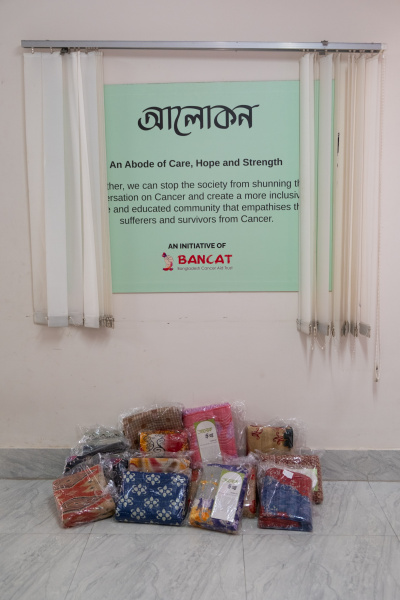
Care that extends beyond infrastructure
For many patients, Mosabbir Alok Nibash replaces not just housing, but isolation.
Shumi Akter, a cancer patient from Mymensingh, arrived seeking treatment for her child. Then she received her own diagnosis. Now both mother and child live at the facility together.
Stories like hers are not unusual.
Saad recalls moments that define his work. “One child asked me for a pomegranate,” he says. “They call me ‘Mama.’ Pomegranate costs TK 400 per kilo. They cannot afford it. When someone donates, I arrange the fruit and give them quietly.”
These gestures exist outside formal healthcare. They exist inside care.
The larger vision
Mosabbir Alok Nibash continues to expand. Plans are underway to build a 250-bed cancer care unit.
“It has to include primary diagnostic and healthcare, cancer screening, supportive care, terminal care, accommodation and its related services,” he says. “Because patients from rural areas struggle the most.” The current model has already served over a thousand patients. Each one arrives carrying not just illness, but displacement.
Cancer narratives often focus on treatment — chemotherapy, radiation and surgery. Mosabbir Alok Nibash focuses on everything around treatment.
Momena Begum understands this difference more than anyone. “If we go to a relative’s house, even for one day, they make a face,” she says. “But here, we feel free,” she plainly says.
Mosabbir Alok Nibash may not be able to cure cancer completely, but it removes one of the quietest and most devastating burdens patients carry; having nowhere to live while fighting to stay alive.
Essentials: For Zakat or Sadaqa support during Ramadan
Bank Account: Bangladesh Cancer Aid Trust, Bank Asia Ltd (Scotia Branch),
Account No: 00733004894, Routing No: 070276130
bKash: +8801612226223
Visit https://www.facebook.com/BANCATcares for more information.
Comments