


Shababa Rashid champions authentic beauty in social media’s filter era
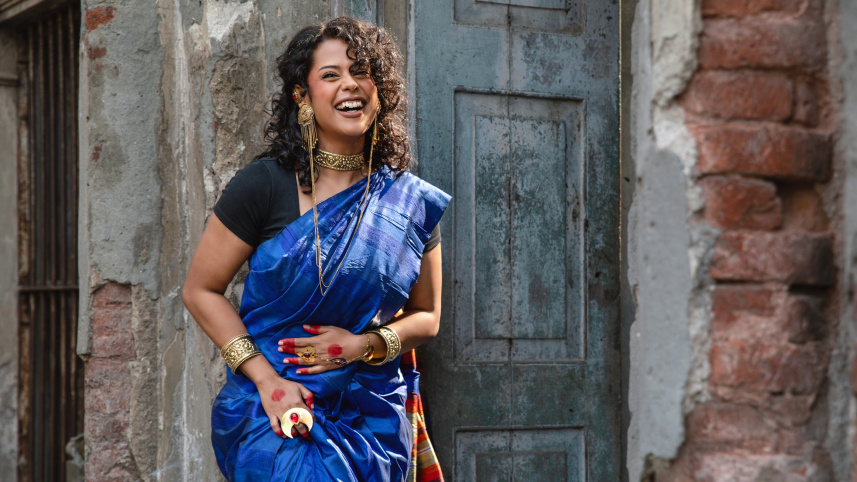
At a time when beauty filters are sharpening jawlines, smoothing skin into artificial perfection, and convincing people they need to resemble edited versions of themselves, Rashid’s excitement over something as simple as looking natural feels surprisingly radical.
“I can’t explain how happy I feel when a client asks for clean girl makeup,” shares Shababa Rashid. “What better trend is there than one where you still look like yourself?”

The Dhaka-based freelance makeup artist and stylist has quietly built a reputation around enhancement rather than transformation. Her clients do not come to her to become unrecognisable. Most of them, she says, come with the opposite request: “Please keep me in my own colour.”
That philosophy sits at the centre of Rashid’s growing presence in Bangladesh’s beauty and editorial industry. Known for versatile styling, soft glam, and fashion-forward, yet wearable makeup, she represents a generation of artists reshaping how beauty is approached locally.
Nevertheless, her entry into the profession did not begin inside a salon or beauty academy.
“My makeup journey started during COVID, specifically around Halloween in 2020,” she recalls. “I used to create skeleton looks and dramatic character makeup. At that time, I had no idea this would eventually become my career.”
Back then, Rashid was between jobs and trying to navigate the strange stillness of lockdown life. Makeup became both experimentation and escape. What began as unconventional artistic expression soon evolved into something more serious, encouraged by family and friends.
“They kept telling me, ‘You’re good at this. Why don’t you try doing it professionally?” she explains. “And honestly, I thought, why not start something new during such a difficult time?”
That idea of reinvention eventually became the foundation of her venture, AnewMakeover by Shababa Rashid. The name itself reflects the emotional context in which it was created.
“It basically means starting afresh,” she explains. “COVID felt like a moment where everything had stopped. I wanted to create a new identity for myself.”
Unlike many beauty businesses built around large salons or commercial studios, Rashid’s operation remains intentionally small and personal. She works primarily from a room in her Dhaka home while also travelling extensively for editorial shoots, bridal appointments, and styling work.
“We’re basically a team of two,” she says, referring to herself and the hairstylist she regularly collaborates with. “Sometimes clients come to my place, and sometimes we go to theirs, carrying everything with us.”
That freelance structure has allowed Rashid to move fluidly across different creative spaces. One day she may be preparing a bride, and the next she may be working on an editorial shoot. Yet, despite the variation, a recurring theme defines her work: resisting sameness in an industry often built around imitation.
“Most clients tell me they want to look like themselves,” she says. Instead of masking freckles, texture, or deeper skin tones, Rashid focuses on subtle enhancement. She carefully matches foundation shades through trial and observation rather than defaulting to lighter tones, something still deeply embedded in South Asian beauty culture.
Rashid also speaks openly about the growing pressure created by AI-enhanced beauty imagery and social media aesthetics. Clients frequently arrive with edited reference photos that blur the line between makeup and digital manipulation.
“Sometimes the pictures people show me are not even realistic anymore,” she says. “The skin is too smooth; the eyes are too sharp. I never dismiss what they want, but I try to explain that every face is different.”
Her approach to beauty is also deeply tied to geography. Rashid believes many Bangladeshi consumers are still trying to replicate Western beauty standards without considering climate, skin texture, or local realities.
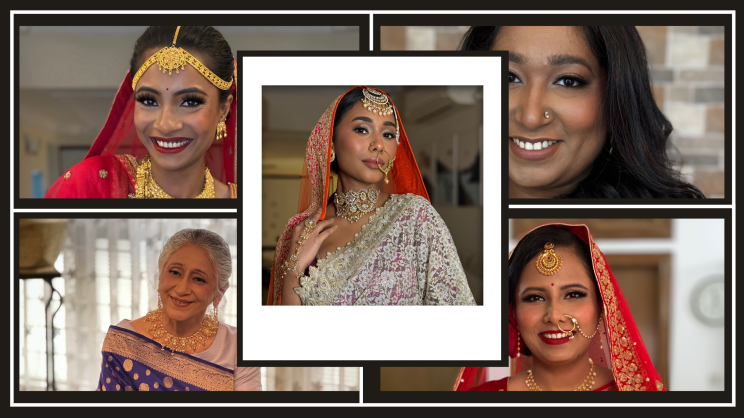
“We are a tropical country,” she says. “Something that works in Europe or North America might not work here at all. People need to understand their own skin and environment more.”
Like many freelance creatives in Bangladesh, Rashid faces challenges that are often practical rather than glamorous. Logistics, she says laughingly, remain one of the most exhausting parts of her profession.
 For all latest news, follow The Daily Star's Google News channel.
 “People think makeup is just a few brushes and lipsticks,” she says. “In reality, there are so many products and tools to carry around constantly.”
Still, she views freelancing as part of a longer process rather than a limitation. Rashid eventually hopes to open her own studio and grow AnewMakeover by Shababa Rashid into a widely recognised name.
“I don’t only want celebrities to know my name,” she says. “I equally want ordinary people to think of me naturally when they need makeup. I want to become part of people’s lives.”
For someone who entered the industry by painting skeleton faces during lockdown, that ambition no longer sounds unrealistic. In many ways, Shababa Rashid represents a new kind of beauty professional emerging in Dhaka today: digitally shaped, self-built, editorially aware, and increasingly interested in authenticity over perfection.
Photo: Courtesy
Comments