


How colours define every festival in Bangladeshi culture
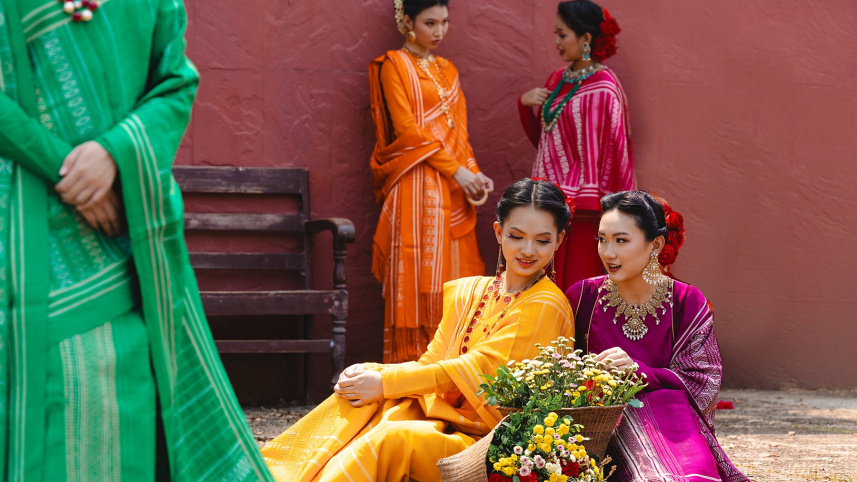
In Bangladesh, celebration arrives layered in colours; bold, expressive, and deeply intertwined with emotion, memory, and identity. Festivals here are experienced through a spectrum that feels almost instinctive. Whether it is the soft bloom of spring, the electric energy of Bengali new year, or the luminous nights of Eid and Puja, colour becomes both the language and the mood of festivity.
The cycle begins with Falgun, where the country gently eases into celebration. There is a softness to its palette — yellows that mirror mustard fields, marigold orange, and greens that hint at new life. Unlike other festivals, Falgun feels as though it has been borrowed directly from the landscape. The festivities bring the kind of optimism that can be expected from the warmth of the sun after a cold winter. It is less about spectacle and more about renewal, where colour reflects nature rather than outshining it.

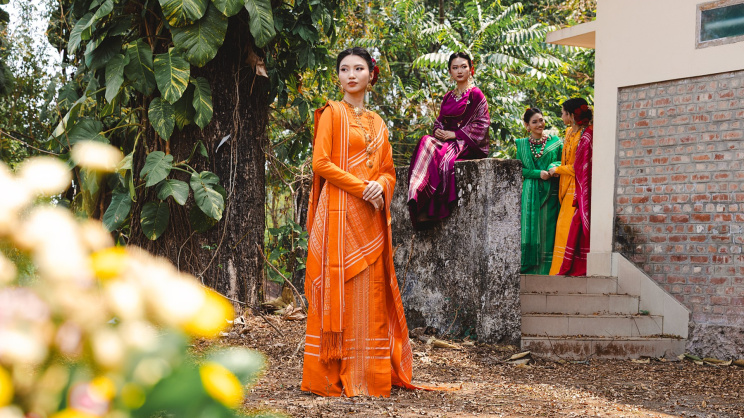
That restraint dissolves entirely with Pahela Baishakh.
If Falgun is a whisper, Baishakh is a declaration. Traditionally, red and white have held a symbolic stronghold, representing purity, hope, and the cyclical promise of beginnings. Yet, over time, Baishakh has expanded beyond this classic pairing into something far more dynamic. Today, it is brightness that defines the festival more than any singular colour scheme.
The streets transform into moving canvases, where vivid yellows, blues, striking oranges and lush greens compete for attention. Processions and public celebrations embrace an almost maximalist approach, drawing inspiration from folk art and everyday visual culture. It is no longer just about adhering to tradition, but about amplifying it. In that sense, Baishakh has become a reflection of contemporary Bangladesh itself.
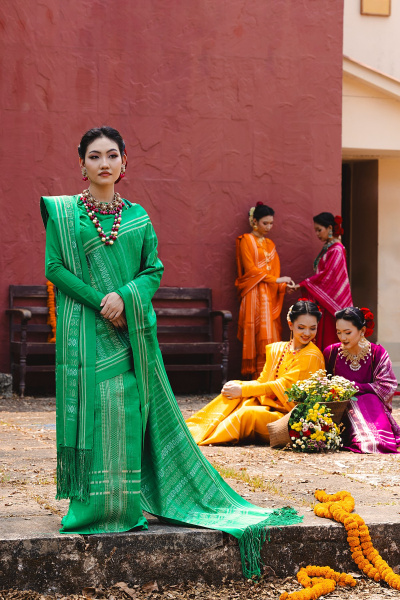
Running parallel to this season of renewal is the lesser-highlighted yet equally evocative Boishabi festival of the indigenous communities in the Chittagong Hill Tracts. Unlike the structured palettes of mainstream celebrations, Boishabi feels fluid in its use of colour. It is shaped by water, flowers, and the surrounding hills, where splashes appear in fleeting, almost playful forms.
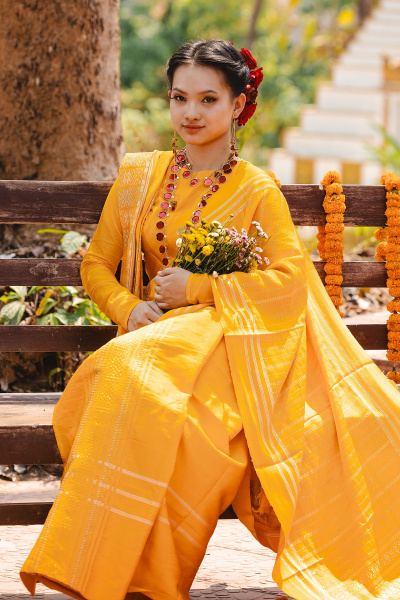
The vibrancy here is lived in every moment, emerging through rituals that celebrate cleansing, transition, and harmony with nature. It quietly reinforces a recurring theme across Bangladeshi festivals: colour is never artificial; it is always connected to the land.
As the year unfolds, Eid introduces a different kind of chromatic expression. If Baishakh thrives in daylight brilliance, Eid belongs to the glow of evening.
Its colours are richer, deeper, and more indulgent — think jewel tones that catch the light, metallic accents that shimmer after dusk, and an overall sense of warmth. There is a tactile quality to Eid’s palette, where colour feels almost luxurious. It mirrors the mood of the festival itself: celebratory, intimate, and layered with a sense of occasion.
Durga Puja, on the other hand, is perhaps one of the most visually immersive festivals in Bangladesh. Its colour palette is intricate, blending sacred symbolism with artistic grandeur.
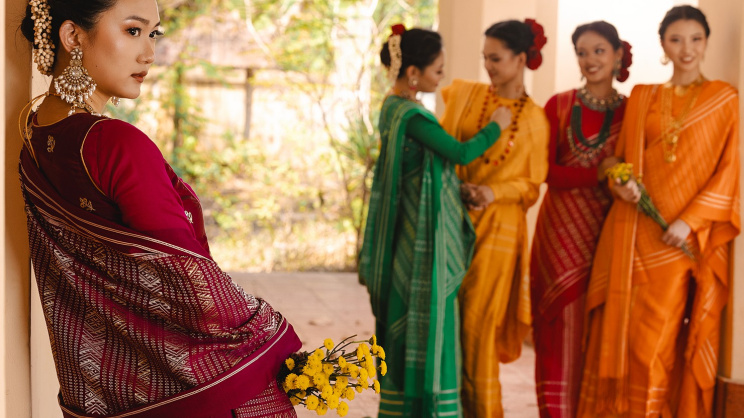
The deep reds representing sindoor, the golds of ornate decorations, and the kaleidoscopic hues of pandals come together to create an atmosphere that is both devotional and theatrical. Colour here moves, shifts, and transforms with each ritual, each day of celebration.
Christmas has perhaps seen the biggest rise in its popularity in the last decade or so in Bangladesh. Festive colours take on a universal language — reds, greens, whites, and touches of gold that feel instantly recognisable, yet seamlessly adapted into the local context. There is a warmth to it, a sense of festivity that transcends boundaries. It blends global influences with local sensibilities, much like the festival itself.
What is perhaps most striking across all these celebrations is their shared accessibility.
In Bangladesh, festivals rarely remain confined within religious lines. They spill over, inviting participation, admiration, and connection from people of all backgrounds. A Muslim family may revel in the colours of Puja, just as a Hindu household might embrace the vibrancy of Eid or Baishakh. This fluidity creates a cultural landscape where colour becomes a unifying force — an unspoken bridge between communities.
Underlying this shared celebration is a deep-rooted connection to nature. The colours that dominate festivals are rarely arbitrary. They echo seasonal shifts, agricultural rhythms, and the natural world that shapes everyday life. From the yellows of spring blossoms to the fiery reds of summer heat, from the earthy tones of harvest to the cool hues of winter evenings, there is a continuity that ties festivity to environment. It is this connection that gives Bangladeshi celebrations their authenticity — an ability to feel both grounded and exuberant at once.
In the end, the colours of Bangladesh’s festivals always tell stories of change and continuity, of individuality and unity, of tradition and reinvention. They remind us that celebration, at its core, is about feeling — about marking moments in ways that are vivid, memorable, and shared.
 For all latest news, follow The Daily Star's Google News channel.
 And in Bangladesh, nothing captures that spirit quite like colour.
Models: Anushka Chakma, Samudra Chakma, Kreesti Dewan, Riddhi Tanchangya, Shreejani Chakma
Fashion Direction: Salek Bin Taher
Wardrobe: Sozpodor by Tenzing
Makeup: Nimmi Chakma
Jewellery: 6 Yards Story
Photo Assistant: Maruf
Production: Saleclicks
Comments