


Effortlessly style every skirt cut for any occasion
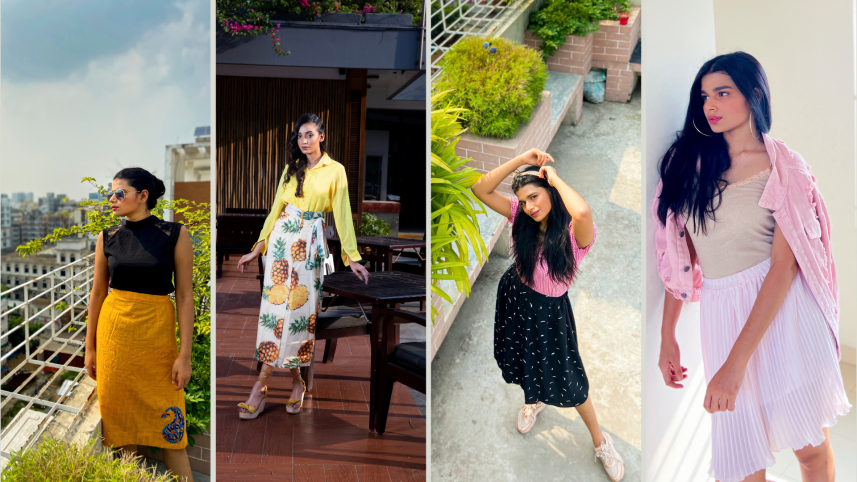
Transforming a garment from formal office wear to a relaxed weekend look is simpler than you think. By pairing structured pencil skirts with tucked tops or matching asymmetric hemlines with minimalist bases, you can elevate any outfit instantly.
Rumoured to have been around since prehistoric times, there are very few garments quite as versatile as skirts. Their evolution should be proof enough of their diversity in fashion.

Despite their potential for enhancing almost every outfit, they often remain neglected, a big reason for which is not knowing what kind of skirt is the right pick and the outfits each type of skirt flourishes in.
Starting off with the basics, the classic A-line is quite literally shaped as the letter “A”. It is fitted at the waist and grows outwards, usually staying above the ankles or even shorter, though longer maxi versions are seen too.
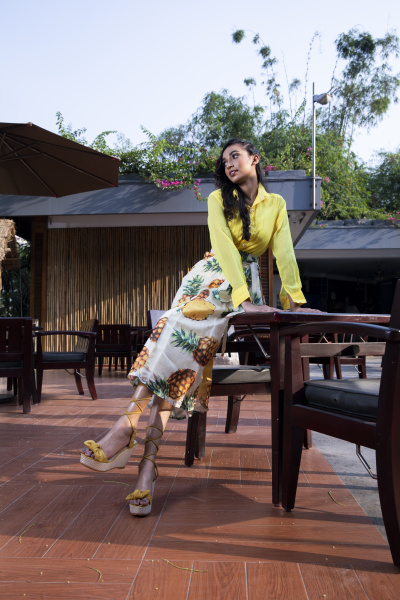
Often closer in looks to the A-line, the bell and godet offer similar features but are distinctive at the same time. The bell skirt is also fitted at the waist, but it “puffs” out and flares into outward pleats, mimicking a bell shape, while the godet skirt remains fitted till the hip-line and then grows outwards, usually with pleats. Both are more flowy than the A-line and offer dramatic movement below the waist.
All three of these skirts are usually relatively short in length, often seen in popular Hollywood depictions of girls’ school uniforms. They pair well with short tops, sweaters, or tucked-in shirts.
A fan favourite and very popular in the fashion world, you can never really go wrong with a sleek pencil skirt. It is associated with being very narrow and straight-cut, outlining and hugging the body from the waist to below the knees, though shorter versions also exist.
From formal office-wear to party outfits, pencil skirts can be styled with nearly any top, as long as it is short or tucked in, allowing the waistline and hourglass silhouette to steal the show. It is not flowy, and designers often recommend this type for curvy figures.
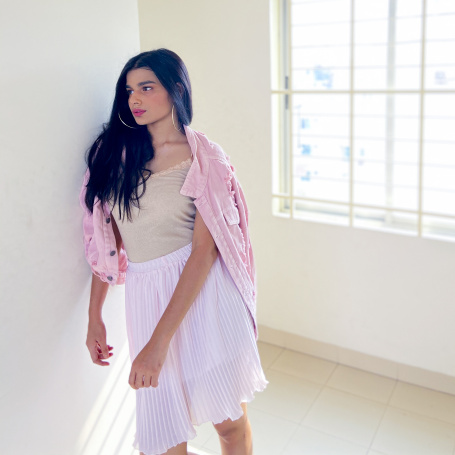
Another widely known and loved skirt variant, miniskirts have always remained in fashion and can be a classy addition to any outfit. Staying above the knee length, they may easily be one of the most versatile skirts, pairing well with both fitted and relaxed tops, tucked in or short in length. Jackets or blazers can also be styled with them, sometimes coming in matching sets too. Similar to the pencil skirt, miniskirts can also effortlessly handle both formal and festive looks.
Known for their length and comfort, midi skirts are considered a wardrobe staple, especially for people who style skirts in everyday outfits. They are usually below the knee, reaching only as far as the calf, and offer incredible flow and movement. They can be straight from the waist down or grow a little outward, often coming with relaxed pleats.
Unlike most other skirts, they pair well with longer and baggy tops such as those below the waistline and can be styled with cardigans and sweaters too.
Widely seen during summer at music festivals and carnivals, asymmetric skirts are a bold choice among the younger generation. Unlike other skirts with their rigid designs and fabrics, asymmetric skirts come in hemlines of unequal length and offer a diverse range of fabrics, colours, patterns and designs, with more room for styling. They usually speak for the entire outfit and can be paired with minimal base-colour tops or short blouses.
Aside from cuts, the fabric and design also classify skirts into different types. They can be lace-trimmed and made of silk or satin for an elegant look, while leather pencil skirts or denim miniskirts can easily add a bold touch to an outfit. Heavy georgette can be ideal for formal straight skirts, while lighter georgette in bright colours makes vibrant long pleated skirts.
To the average individual, most skirts may look the same. While the differences in each type of skirt can be harder to spot at first glance, a big reason why they are always so restrictively categorised is due to the differences in methods of stitching.
Both pleated skirts and bell or godet skirts have frequent, vertical pleats, but pleated skirts are stitched by repeated folding of fabric, while the others are made using flared fabric cut-outs and triangular inserts. A generalisation would therefore be a great dishonour to the craftsmanship of fashion designers and garment workers.
 For all latest news, follow The Daily Star's Google News channel.
Comments