A crude lesson: How war on Iran is reviving fears of another global oil meltdown

History has an uncanny way of reappearing when the world least desires it. More than half a century after the Arab-Israeli war of 1973 convulsed the global energy system, the US-Israel war on Iran has once again placed oil at the centre of geopolitics.
Brent crude surged beyond $100 a barrel amid fears that hostilities could choke off energy flows from the Persian Gulf. Prices spiked to levels never seen since the coronavirus pandemic disrupted markets in 2020.

The concern extends beyond price volatility. It centres on the risk of a systemic energy shock. The Strait of Hormuz -- the narrow maritime artery through which a vast share of the world’s oil passes -- has become a potential battlefield.
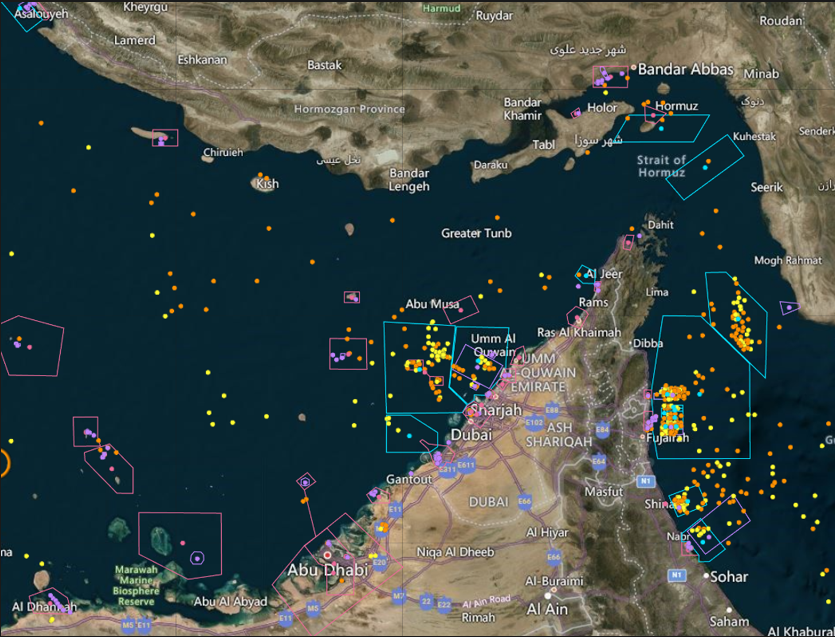
Reports from the BBC suggest Iranian forces have targeted vessels attempting to traverse the strait, forcing shipping firms to reconsider transit routes.
During the Yom Kippur War in 1973, Arab members of the Organization of Arab Petroleum Exporting Countries imposed an oil embargo on nations supporting Israel, particularly the United States and several Western allies.
Production cuts and export bans triggered a dramatic supply squeeze across industrial economies. Oil prices nearly quadrupled, rising from about $3 per barrel to roughly $12 within months.
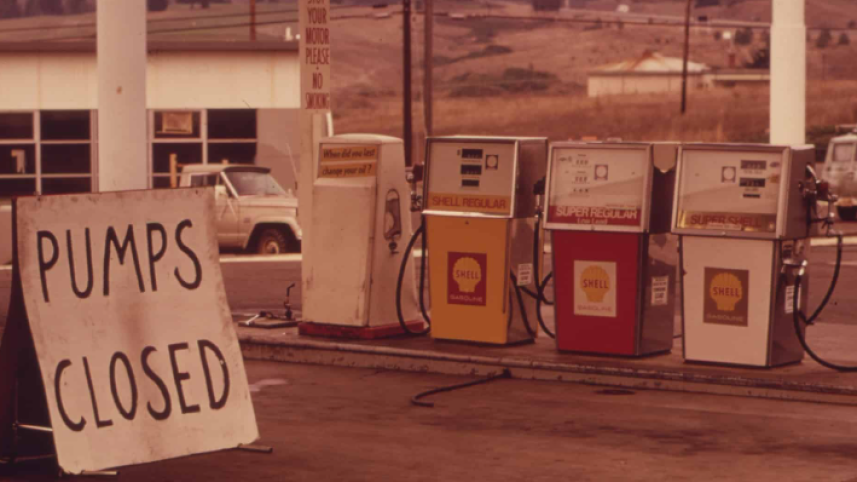
The surge rippled through economies dependent on Middle Eastern crude. In the United States, petrol shortages became a daily ordeal as long queues formed at service stations. Governments imposed emergency measures, including lower speed limits, to reduce fuel consumption.
Western economies soon faced stagflation -- a combination of stagnant growth and soaring inflation. The crisis reshaped energy policy, pushing governments to build strategic petroleum reserves and diversify supply. The International Energy Agency itself emerged from the turmoil in 1974 to coordinate responses to supply disruptions.
Today’s crisis stems from a different dynamic. Unlike 1973, when oil producers deliberately weaponised supply through an embargo, the current turmoil arises from physical disruption caused by war.

The attack on Iran has pushed the Strait of Hormuz into strategic danger. The passage linking the Persian Gulf to the Arabian Sea carries roughly a fifth of global oil supply and a similar share of liquefied natural gas shipments.
If the corridor closes, the consequences would ripple through global energy markets.
Energy economist Bruce Kasman of JPMorgan warned, in comments reported by Reuters, that prices could reach $120 a barrel if the conflict persists. Such levels would put immediate pressure on global growth and consumer prices.
Even temporary disruptions carry serious implications. More than 90 percent of global transport still depends on oil -- from aircraft fuel to container shipping.
When oil tightens, the entire economic bloodstream constricts.
Oil remains embedded in the cost structure of nearly everything people consume. Transport, plastics, heating and electricity generation all rely directly or indirectly on petroleum or natural gas.
Reuters notes that prolonged disruptions could shave about 0.6 percentage points off global economic growth while pushing consumer prices higher. In the worst scenario, economists warn of renewed stagflation.
Asia would be particularly exposed. Countries such as India, South Korea and Japan rely heavily on Gulf energy supplies.
Natural gas markets may prove even more vulnerable, as global LNG capacity has less spare supply than oil markets.
 For all latest news, follow The Daily Star's Google News channel.
If the crisis of 1973 reshaped global energy policy, the turmoil of 2026 may accelerate another transformation already underway.
The earlier shock pushed nations to diversify supply, build reserves and improve efficiency. Today’s disruption could speed up the shift towards renewable energy and electrification.
Yet the geopolitical geography of oil has changed little. The Persian Gulf still supplies a critical share of the world’s energy, and the Strait of Hormuz remains a narrow hinge on which global commerce can pivot or collapse.
12kg LPG price jumps by Tk 252; consumers already pay far above official rate

Update / Uranium shipment reaches Rooppur under tight security
Uranium for Rooppur Nuclear Power Plant arrives in Dhaka from Russia
Rooppur Unit 1 clears key safety test after technical fault stalled commissioning

Tuku apologises to Magura consumer over Tk 506 crore electricity bill; Palli Bidyut GM suspended
Govt asks DCs to investigate complaints of LPG shortages, overcharging

Bangladesh, US sign civil nuclear cooperation deal
45% of FY27 power, LNG subsidies spent in just 3 months
Bangladesh LNG supply drops 300 mmcfd due to bad weather at Moheshkhali