


What will happen to the world and Bangladesh if the Strait of Hormuz gets shut down?

On February 28, 2026, as soon as the US and Israeli aircraft had struck the Iranian cities, Iran’s Islamic Revolutionary Guards Corp (IRGC) began reportedly broadcasting warnings that, “No ship is allowed to pass the Strait of Hormuz.” Tanker operators suspended transits. As of March 2, 2026, Brent crude, the global benchmark for oil prices, surged to a seven-month high, to around $82 per barrel. What those numbers exhibit is not merely an energy story but a question of geopolitical architecture and which economies absorb the shockwave when a global chokepoint carries roughly one-fifth of the world’s daily oil supply. The Strait of Hormuz has always been a point of vulnerability. The US-Iran war has altered it into a weapon now.
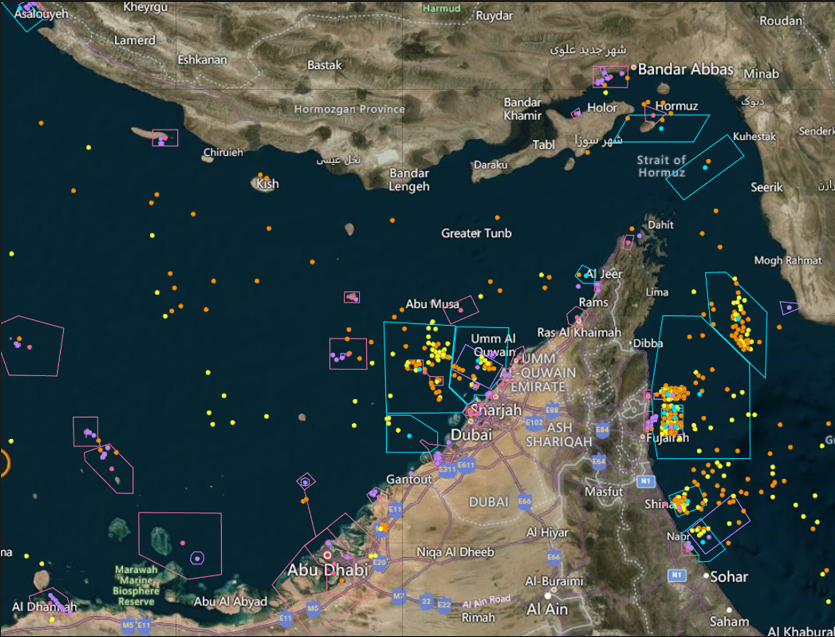
Approximately 20 million barrels of crude oil passed through Hormuz in 2024. Close to 27 percent of all global maritime petroleum trade passed through the strait in the first quarter of 2025. The strait is a critical, narrow chokepoint, with a 33-39 kilometers waterway between Oman and Iran. The most consequential chokepoint in the world has a shipping lane which is roughly 3 kilometers wide in either direction. Western planners long dismissed possibilities of a closure because Iran itself also exported roughly 1-1.7million barrels per day through the strait. However, that calculus collapsed the moment sustained bombardment targeted Iran’s nuclear sites, command infrastructure, and killed its supreme leader. A state fighting for survival retains little interest in preserving the global economic normalcy that the Strait of Hormuz holds.
Under the United Nations Convention on the Law of the Sea, countries must allow “innocent passage” of foreign vessels through these territorial waters and must not impede “innocent” or “transit passage” through straits used for international navigation. While Iran signed this treaty in 1982, it hasn’t been ratified by the nation’s parliament. Therefore, threats of naval blockade from the Iranian parliament to fully shut off the strait is possible. Though it would undoubtedly be met with sharp condemnation from the West, particularly the US — Iranian political will is no longer in question.
What makes this moment categorically more perilous than prior Hormuz crises is the convergence of Iranian political anger with demonstrated military capacity. Bob McNally of Rapidan Energy Group noted that Iran holds large stockpiles of naval mines and short-range missiles which markets have consistently underpriced. The IRGC has already struck Qatar, Kuwait, the UAE, Bahrain, Saudi Arabia, and Oman. A formal blockade on the strait may not even be necessary. Analysis by Wasel & Wasel observed, sustained pressure on insurers to abandon Hormuz coverage could achieve economically what a kinetic blockade cannot achieve militarily in the near term.
The global cost of a closed strait
A prolonged closure of the strait can be as three times more severe than the combined impact of the 1970 Arab oil embargo and the Iranian revolution. According to analysts, prolonged Hormuz closure might even provoke a recession. Saudi Arabia’s east-west pipeline to the Red Sea operates around a capacity of 5 million barrels a day. But this route cannot fully compensate for a Hormuz closure, and would create a vulnerability gap of 7 million barrels a day. The UAE’s alternative Habshan-Fujairah pipeline, handles only 1.5 to 1.8 million barrels per day. Data from Kpler recorded that approximately 13 to 14 million barrels per day of crude oil passed through the strait in 2025; only a marginal fraction of this volume can be rerouted through alternative pathways, leaving a vast majority of oil at risk during a shutdown.
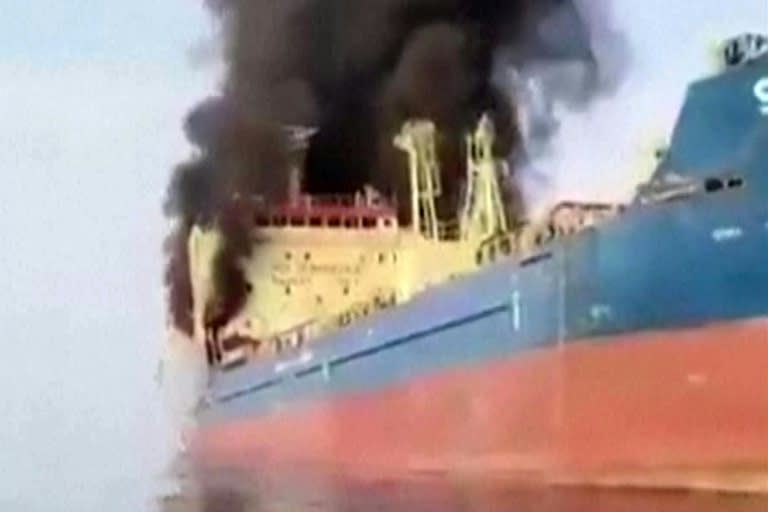
The LNG dimension hones the crisis further. Roughly 20 percent of global LNG exports transit Hormuz, predominantly from Qatar, the world’s largest exporter. For European wholesale gas prices, it could triple to $100 per megawatt hour were the strait to close entirely for approximately three months. Analysts warned that closing shipping in the Middle East and high gas prices resulting from this would be detrimental to inflation and have similar impacts to the economy during Russia’s invasion of Ukraine in 2022.
Analysts predict that Asia would be impacted most. China, India, Japan and South Korea accounted for a combined 69 percent intake of all crude oil and condensate flows through the strait last year. Though China does not disclose its exact figures of oil it imports from Iran, 40-50 percent of China’s imported oil comes from Gulf states, and nearly all of it flows through the Strait of Hormuz. Any possible closure would be shocking for China.
Ali Waez, International Crisis Group’s director of the Iran project, has argued that prices would not merely spike but gap violently upward on fear alone, with reverberations through financial conditions, inflation, and the fiscal positions of fragile economies in a matter of weeks.
Iran’s deterrence and the logic of asymmetric retaliation
Iran’s posture toward Hormuz is not reckless. It is the terminal expression of a deterrence strategy that has exhausted every other instrument. For four decades the Islamic Republic confronted sanctions, covert sabotage, the assassination of senior commanders, and episodic strikes without weaponising the one asymmetric capability that could impose prohibitive costs on its adversaries. The February 2026 campaign dissolved whatever residual strategic patience Tehran possessed.
However, Iran cannot defeat the joint US-Israeli force conventionally, nor reconstitute its nuclear programme. Whatever the missile and arsenal capacities, what grave coin it has left and can do is to make the global economy a battlefield. In this respect, Hormuz closure would give rise to gasoline price spikes corrosive to Trump’s domestic standing and confront Europe with a fresh energy shock. Iran’s leverage is not symmetry of force. It is the capacity to make the political sustainability of continued operations untenable in every capital dependent on Gulf energy.
It is true that self-destructive dimension is real. Iran’s own oil exports also transit the strait. Nevertheless, a state fighting for survival works out under a different cost-benefit framework than one managing routine deterrence. IRGC warnings are already deterring commercial traffic. And, each additional day of strikes against Iranian territory condenses the political cost of taking the final step.
Bangladesh on the fault line
Bangladesh is a net hydrocarbon importer with negligible domestic reserves. The country’s balance of payments is reliant on remittances. The export economy of Bangladesh is highly concentrated in one low-margin industry that is very vulnerable to fluctuations in freight costs. In the first nine months of fiscal year 2024-25 (July 2024 to March 2025), Bangladesh imported crude oil worth $515.6 million and refined petroleum products worth $3.57 billion. For the full fiscal year FY 2024-25, BPC lowered previous allocation for fuel imports, to approximately BDT 759.82 billion. According to expert Dr Ijaz Hossain, the Strait is a lifeline for Bangladesh’s energy supply. A prolonged geopolitical conflict could have spillover effects.
For example, if Brent reaches $100, the pressure on the current account would be grim. Although the gross forex reserve of Bangladesh is somewhat positive with around $33-35 billion, a continuous oil price surge against the matrix poses severe risks of a balance of payments crisis due to increased import costs and energy supply disruptions.
The remittance channel further heightens the risks. Bangladesh earned approximately $27 billion in remittances in 2024, overwhelmingly from workers in Saudi Arabia, the UAE, Qatar, Kuwait, and Oman. A conflict destabilising Gulf labour markets or compelling mass worker returns would strip a macroeconomic buffer on which Bangladesh Bank depends to manage reserves and exchange rate stability. The Taka has already depreciated materially over two years; further reserve depletion advances the domestic cost of every import into an economy where inflation has crossed double digits. The garment sector, making 80 percent of export earnings, airs additional exposure through rising freight costs and insurance premiums as underwriters reprice Gulf transit risk. The Hormuz crisis is not Bangladesh’s war. But its consequences are bound to reach Dhaka if it goes into full closure.
Kawsar Uddin Mahmud is a Lecturer in the Department of International Relations, Netrokona University (NeU). He can be reached at kawsar@neu.ac.bd/ kawsarduir@gmail.com.
Send your articles for Slow Reads to slowreads@thedailystar.net. Check out our submission guidelines for details.
The Indo-Pacific at a crossroads: What it means for Bangladesh

Could the Teesta redraw the map of India-Bangladesh diplomacy?
Iran’s China moment? From isolation to regional hegemony

Makkah Pact: The geopolitics beyond Islamic solidarity

Myanmar’s deteriorating crisis and the political future of the Rohingya

Bangladesh between India and China: The dilemma of defence diversification
What Bangladesh should ask before joining the Makkah Pact

Nepal’s difficult passage: Political change meets ecological crisis
BRICS at 20: Why the New Delhi Summit matters to the Global South
