


Germany’s largest daily highlights Bangladesh’s July Revolution Memorial
Germany’s largest daily newspaper taz has published a detailed report on the upcoming July Revolution Memorial Museum in Dhaka, drawing international attention to Bangladesh’s 2024 mass uprising that led to the fall of Sheikh Hasina.
According to taz, the memorial is being built at Hasina’s former official residence, from where she fled to India by helicopter on August 5, 2024, following weeks of student-led protests. The movement, widely known as the July Revolution, was spearheaded by Gen Z students—particularly from the University of Dhaka—who protested what they described as years of authoritarian rule that had eroded democratic institutions since Hasina’s return to power in 2009.
The report notes that Nobel Peace Prize laureate Muhammad Yunus, now head of the interim government, proposed transforming the site into a memorial and tasked filmmaker and Cultural Affairs Adviser Mostofa Sarwar Farooki with developing the concept. The project, formally approved on January 20, is expected to open soon, amid a politically charged atmosphere ahead of the February 12 elections.


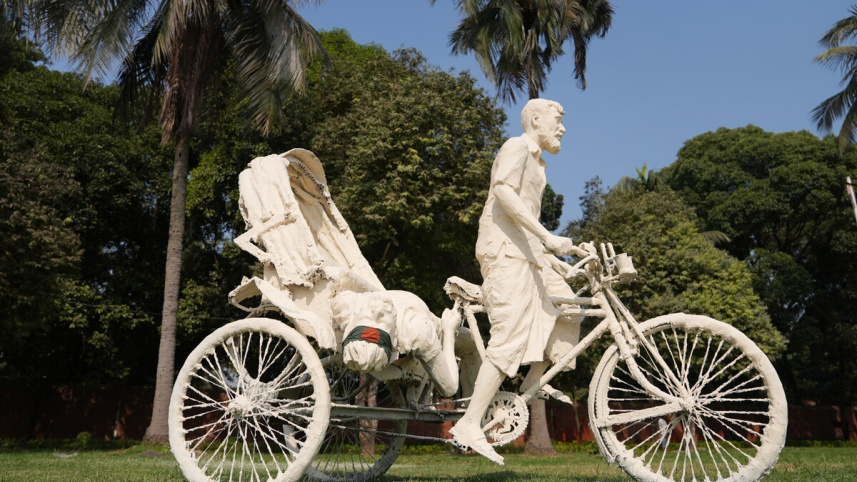
One of the memorial’s most striking elements, as highlighted by taz, is a sculpture of a rickshaw driver carrying the body of a slain protester back to his family—based on an iconic photograph from the uprising. The garden also features a circular installation commemorating around 4,200 people killed during the protests and during Hasina’s tenure, with their names inscribed on surrounding walls.
Curated by a team led by architects Marina Tabassum and Tanzim Wahab, both participants in the movement, the museum preserves graffiti, debris, and personal belongings left behind on the day protesters stormed the residence. Exhibits include bloodstained clothing of victims and the final letter of a 16-year-old protester.
taz describes the museum as a powerful, documentary-style space that avoids a single triumphant narrative, instead offering a pluralistic representation of Bangladesh’s recent history—aiming not only to memorialise the past, but also to inspire continued struggle for democracy.
 For all latest news, follow The Daily Star's Google News channel.
Comments