


Bangla Academy withholds Mohon Raihan’s literary award
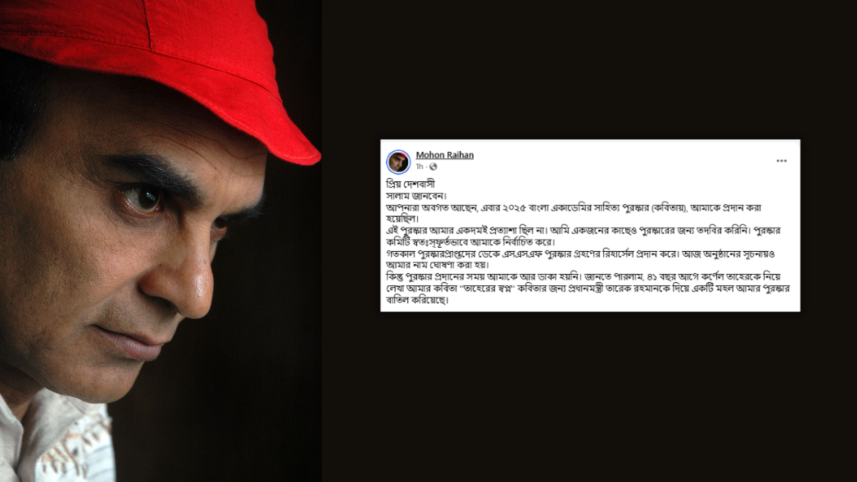
Although nominated for this year’s Bangla Academy Literary Award in the poetry category, poet Mohon Raihan’s award has been withheld by Bangla Academy without prior announcement.
On February 23, the Academy published the list of award recipients, which included Raihan’s name in the poetry category.

Raihan did not receive the award after allegations against him prompted a last-minute review, officials and the poet confirmed to several media outlets. He has disclosed the development today (Thursday) via Facebook, saying he learned of the decision only upon arriving at the ceremony. “I did not expect this award at all. I did not lobby anyone for it. The award committee selected me independently,” he wrote.
According to State Minister for Cultural Affairs Ali Newaz Mahmud Khaiyam, multiple complaints had been filed against Raihan. “There are numerous allegations against Mohon Raihan. Therefore, the award has been withheld for now,” he told Prothom Alo.
“Authorities are verifying the complaints. A final decision will be announced after review.”
The awards ceremony went ahead at Bangla Academy in Dhaka, with Prime Minister Tarique Rahman presenting the 2025 Bangla Academy Literary Awards to other recipients. Raihan’s name had been included in the award list announced on Monday by Bangla Academy.
Raihan claimed the decision to withhold the award was linked to a poem he wrote 41 years ago, titled “Taher er Shopno” (Taher’s Dream), which centres on Colonel Abu Taher.
Raihan currently serves as president of the Jatiya Kobita Parishad (National Poetry Council).
Asked whether announcing and then withholding the award disrespected the recipient, Khaiyam said nominations are determined independently by Bangla Academy. “We do not nominate awardees; Bangla Academy does that. This is a temporary issue, and a revised decision may be announced within days,” he added.
The Bangla Academy Literary Award remains one of Bangladesh’s most prestigious state recognitions for contributions to literature, traditionally presented during Ekushey observances in February every year, marking the Language Movement of 1952. The recent development has sparked discussion in literary and cultural circles about the autonomy of award committees and the boundaries of historical and political themes in literature.
 For all latest news, follow The Daily Star's Google News channel.
Comments