


Zen and chaos a pocket of stillness
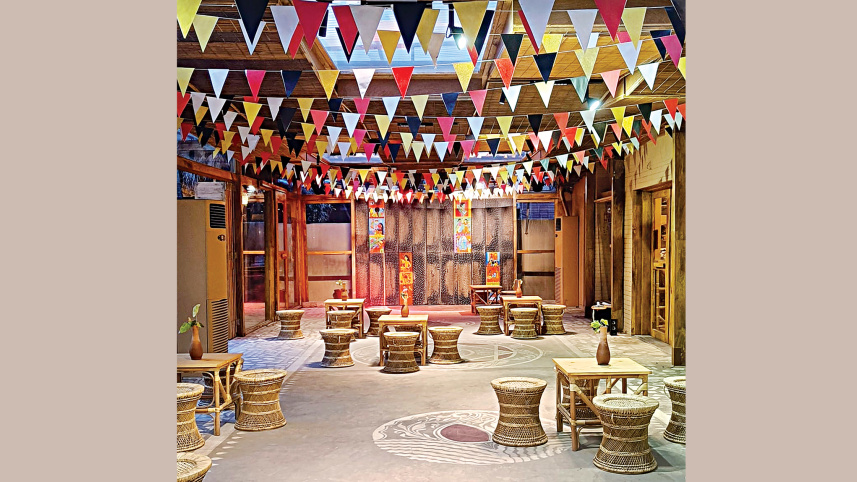
Jatra Biroti, the café portion of the store Jatra, has always been a refuge for me. Back when Jatra first started, its colours and ambience drew me in effortlessly. Later, with the addition of their café, a whole new, surprisingly relaxed dimension opened up for regulars like me.
The management was mindful and maintained a zen‑like atmosphere throughout the space. My soulmate Sony and I have made countless memories here. Even when Jatra was shifting to a new location, their invitation to say goodbye to the old space felt like an unexpected gesture of closure -- something we didn’t know could exist. We painted our hearts out on their torn‑down walls, and the doodling became oddly therapeutic.

This isn’t a store review or a café review, nor is it a pat on their back. It is simply a reminder to Dhaka that with all its restless energy, we are crying out for zen gardens, cafés, or libraries -- places where you can rediscover forgotten favourites. Spaces where lovers can hold hands and take a selfie, where narcissists can find corners to admire their reflections, and where senior citizens can enjoy fuss‑free, quiet moments
At times, we need to look beyond the chaos of glitz and glamour and put on a soothing balm of calm to detox our minds. Zen retreats sort of offer that grounding effect, connecting you to the earth, where even strays are given names and loving homes.
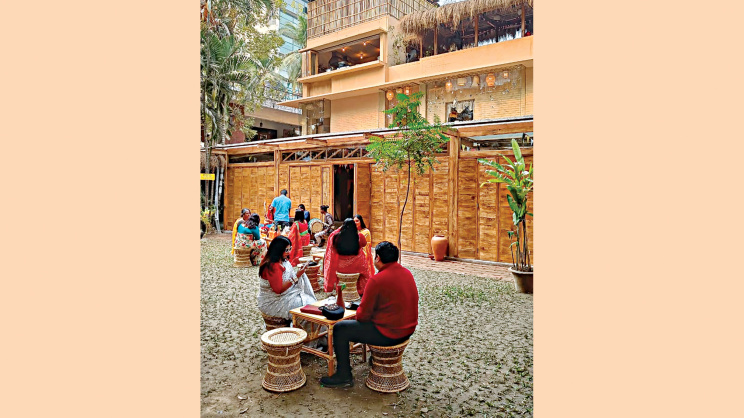
The city’s rhythm, horns, neon signs, endless chatter, demands a pause, a pocket of calm in the middle of chaos, exactly like Jatra Biroti or the Ikebana Experience Centre housing the Gulshan branch of Ajo Idea Space Café. Colours here remind us that Dhaka deserves beauty that heals. These spaces invite you to breathe, reconnect, and rediscover joy in simplicity, where you can simply be on your own and idle away with a dream.
It’s not about consuming culture passively; it’s about creating it together, in real time. Sony and I found ourselves part of that creation when we painted the alpona on Jatra Biroti’s new rooftop floor. Brushes dipped in bright hues became strokes of identity. It wasn’t decoration -- it was a ritual that now carries our colours, our laughter, and the quiet satisfaction of leaving something behind.
They’ve turned kitsch rickshaw art -- once dismissed as street eccentricity -- into Dhaka’s own visual language. Those unapologetically bold colours remind you of Dhaka’s stubborn refusal to be dull.
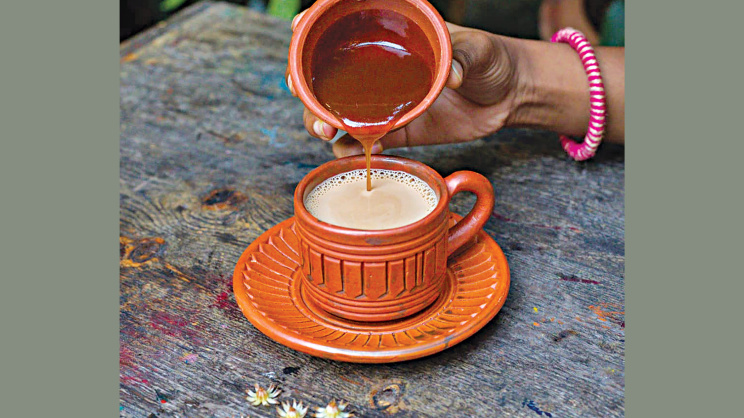
Just last week, on a heavy day when sadness weighed me down, Sony and I spent a few hours at their wee lawn where a plant fair was going on. We idled away with ice lollies of jaam with rock salt, luchi with alu’dam, iced tea, and the simple joy of people‑watching.
Observing the self‑absorbed young crowd exploit the ambience for endless selfies -- rather than enjoying the company of their companions -- was amusing. While they were engrossed in updating their virtual status, we were immersed in the vibe itself, finding solace in its authenticity.
This place has been busy reinventing itself, and the new additions feel like an evolution of its soul. The rooftop café is no longer just a place to sip tea -- it has become a canvas for activity‑based adda. Poetry readings, acoustic sessions, and small art circles now spill into the evenings, giving Dhaka’s restless crowd a chance to pause and participate.
Another such beautiful place I mentioned earlier, the Ikebana Experience Centre, is the brainchild of Nilufer Farook. Its sun‑baked look, green foliage, and colourful flowers glisten at sunset, allowing you to take a lungful of fresh air and relax your stiff senses. A beautiful path leads to the earthy, pleasing Ajo Idea Space Café.
A zen retreat is about quiet corners, creating an atmosphere that matters more than the menu, and a chance to blend everyday life with moments of reflection.
 For all latest news, follow The Daily Star's Google News channel.
Comments