Why uprisings fail: Lessons from Sri Lanka, Bangladesh, and Nepal
Across South Asia, youth have forced open political time: Sri Lanka's Aragalaya in 2022 unseated a president; Bangladesh's student mobilisation ended Sheikh Hasina's fifteen-year rule in August 2024; and Nepal's 'Gen Z' uprising in September 2025 toppled a government after an ill-judged social media ban crystallised public anger at corruption and patronage. These ruptures were real. The harder question is whether they reordered the distribution of power or merely rotated faces while leaving fiscal, coercive and party machines intact. In this article I argue that in postcolonial democracies, the horizon of transformative change is repeatedly foreshortened by a triad that activates after victory: first, elite recomposition around patronage and wealth defence; second, coercive continuity through militaries, police and courts that movements do not control; and third, austerity governance that translates crisis into technocratic necessity and narrows distributive options (Winters, 2011; Bermeo, 2016; Bayat, 2017). This claim foregrounds the afterlives of the postcolonial state, including civil, military and bureaucratic complexes and legal regimes that outlast rulers, and the order setting phase when budgets, appointments and policing rules are written (Skocpol, 1979; Tilly, 2004). Nonviolent campaigns excel at disruption yet often enter this phase organisationally thin and fiscally cornered, which exposes them to capture (Chenoweth & Stephan, 2011; Mansuri & Rao, 2013).
Read together, Sri Lanka, Bangladesh and Nepal reveal the same pattern in different sequences. In Colombo, debt workouts and stabilisation frames narrowed policy choice and enabled old networks to repopulate the state even as protestors claimed a civic refounding; in Dhaka, student victories collided with security and bureaucratic power that first repressed and then channelled transition, which tested whether insurgent coalitions could institutionalise without absorption; in Kathmandu, a digital rights spark exposed deeper patronage bargains and invited law and order responses that disciplined the interim. The lesson is comparative: when movements cannot embed broad coalitions inside coercive and fiscal institutions, elite recomposition proceeds under the banner of responsibility. This analysis aligns with, but is not reducible to, movement centred accounts of counterrevolution such as the recent monograph by Killian Clarke (2025). Clarke's work emphasises the preservation of broad coalitions and the capacity to remobilise as necessary defences, yet the South Asian threads suggest a further requirement: institutional insertion into the sites that allocate rents and authorise force. Egypt haunts the background not as a template to copy or avoid wholesale, but as a caution that nonviolent victories are most vulnerable when coalition breadth is not converted into durable leverage over coercion and the purse (Ketchley, 2017).
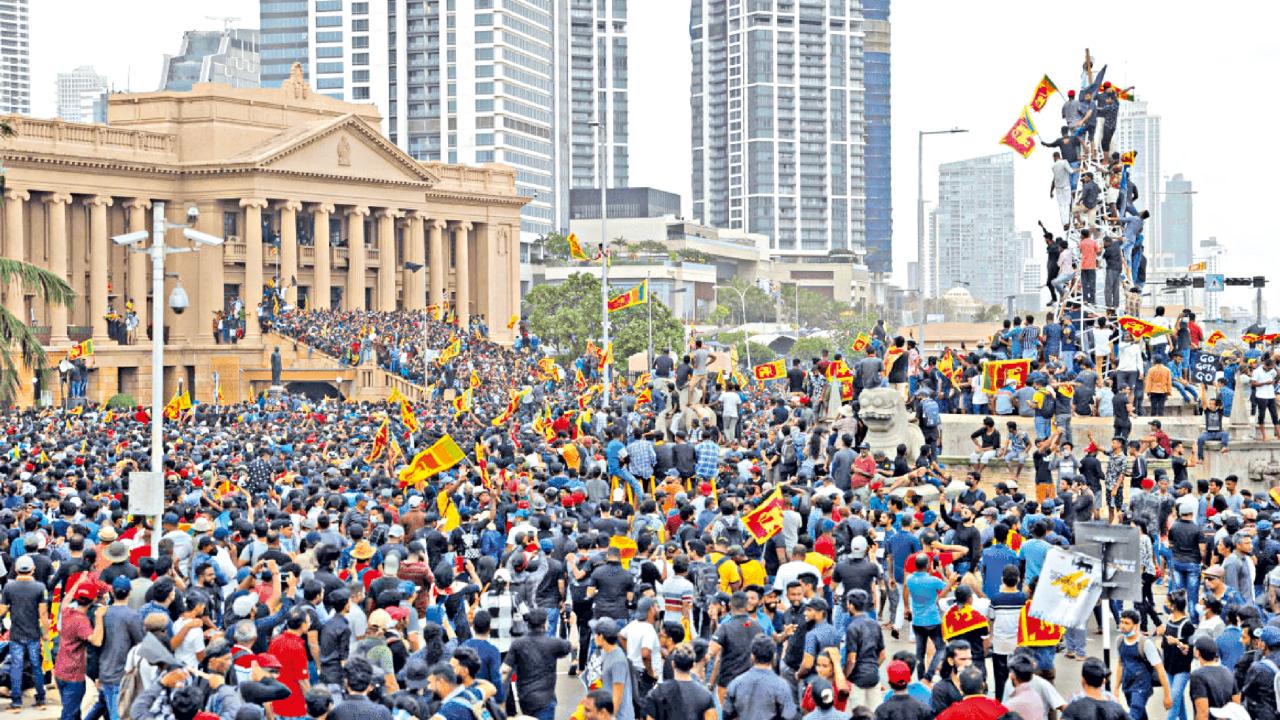
Winning the crowd, losing the order
A striking commonality across Sri Lanka, Bangladesh and Nepal is how much they resemble what Asef Bayat terms "revolutions without revolutionaries": eruptions sparked by ordinary people, precipitated by structural shocks such as debt distress, price spirals and abrupt restrictions on digital life, and coordinated through diffuse networks rather than disciplined organisations (Bayat, 2017). These uprisings scale quickly because they lower the costs of participation and broaden moral legitimacy. Yet precisely because they are not steered by embedded revolutionary actors with cadres, programmes and institutions ready to govern, they enter the moment after victory with a thin organisational core. The very features that make them formidable on the streets, including speed, spontaneity and horizontalism, leave them underequipped for the slow and transactional work of writing budgets, rules and appointments once the square empties (Tufekci, 2017; Beissinger, 2022). Read through Hannah Arendt's lens, these youth revolts bear the marks of moments in which the social question overwhelms the work of founding: economic precarity, scarcity and injury energise mass participation, but the instruments that convert moral urgency into durable authority remain weak (Arendt, 1963). This helps explain why horizontally networked coalitions, otherwise so adept at ejecting rulers, struggle in the order setting phase, where constituting power must be channelled into rules over budgets, appointments and coercion. Bayat names the same dilemma from another angle: crowds can seize visibility and extract concessions, yet without cadres, programmes and institutional insertion they reach a tactical ceiling. In South Asia, need driven mobilisation achieves rupture and then the familiar grammar of the state reasserts itself.
Crowds can seize visibility and extract concessions, yet without cadres, programmes and institutional insertion they reach a tactical ceiling. In South Asia, need driven mobilisation achieves rupture and then the familiar grammar of the state reasserts itself.
In practice, three dynamics repeatedly assemble the settlement after victory. First, elite recomposition accelerates: party cartels, oligarchic business networks and senior bureaucrats that are already wired into the machinery move fastest to occupy commanding posts, typically with the rhetoric of responsibility and stability (Winters, 2011). Second, coercive continuity persists: police, military and courts rarely change hands during the transition, so the very institutions that policed dissent set the limits of the new order, including licensing, media regulation, crowd control and prosecutorial discretion. Third, austerity governance narrows the policy frontier: crises that mobilised crowds are reframed as technical problems of debt, reserves and inflation, which empowers fiscal technocracies whose stabilisation scripts redistribute pain without altering the underlying settlement (Bermeo, 2016). The sequence varies. Colombo tilted first toward technocratic closure. Dhaka tilted toward security and bureaucratic management. Kathmandu tilted toward law and order containment. The outcome converges, which is a return to rule by networks that the uprising did not displace.
The implication is not that spontaneity is futile. These coalitions puncture inevitability, expose rent seeking and hold leaders to account. To convert rupture into rule, however, crowds must become organisers. That requires vehicles such as parties, unions and watchdog bodies that can bargain with entrenched elites, supervise coercive agencies and shape fiscal choices early, before stabilisation hardens into a new settlement (Mansuri & Rao, 2013). Movement research underscores the need to preserve broad coalitions and to retain the capacity to remobilise under threat. The South Asian evidence adds a further condition. Without rapid institutional insertion into the sites that allocate rents and authorise force, winning the crowd becomes losing the order.
Beyond the square: A genealogy of leaderless revolutions and order setting
To situate South Asia's present within a wider twenty-first century arc, let us briefly consider how the Arendt–Bayat lens and the triad of elite recomposition, coercive continuity and austerity governance travel across cases. Many recent revolutions are best understood as "revolutions without revolutionaries", that is, crowds of ordinary citizens propelled by economic and political shocks and coordinated through diffuse networks rather than disciplined organisations (Bayat, 2017). They achieve visibility and moral authority quickly, yet they reach the order-setting phase with thin organisational capacity. Arendt's reminder that the social question can overwhelm the work of founding clarifies why these breakthroughs so often falter once budgets, appointments and security rules must be written. Where organisational density is low, the triad reasserts itself. Coercive and fiscal nodes remain in familiar hands, and technocratic narratives of responsibility legitimate elite return (Winters, 2011; Bermeo, 2016).
The comparative record from Cairo to Tunis to Khartoum suggests that youth can indeed move mountains. Durable change arrives when those same coalitions learn to move ministries, budget lines and chains of command.
Egypt and Tunisia illustrate the divergence. In Egypt, mass mobilisation removed the former President Hosni Mubarak in 2011, but the military retained decisive autonomy and the post-revolutionary field fragmented, so counterrevolution organised faster than reform. Studies of protest dynamics and coalition breakdown show how a broad, non-programmatic alliance proved unable to convert street power into leverage over coercion and the purse, which exposed the transition to reversal (Ketchley, 2017; Brownlee, Masoud & Reynolds, 2015). Tunisia began from a similar crowd repertoire, yet it possessed organisational intermediaries, especially the UGTT trade union, that could bargain, monitor and enforce early pacts. That dense associational layer, together with a time-bound constitutional agenda, created some insulation against immediate recapture, even as later crises narrowed the horizon of reform (Beissinger, 2022). Likewise, Sudan's 2018–19 uprising shows both promise and peril. Professional associations and neighbourhood committees supplied an organisational spine that negotiated a civilian-military pact, which briefly opened institutional space. The failure to rapidly rebalance coercive institutions, and the absence of credible accountability for abuses, left the transition vulnerable, and a renewed military takeover followed (Cross, 2025). The lesson travels: organisational gains matter, but without early rules for policing, command and oversight, coercive continuity will set the limits of the new order (Chenoweth & Stephan, 2011; Greitens, 2016). Other episodes underline the centrality of movement-to-party conversion and fiscal room. Armenia's 2018 'Velvet' breakthrough translated protest into an electoral vehicle that initially expanded democratic space, yet subsequent security shocks and incumbent consolidation revealed how fragile gains remain when coercive and fiscal constraints are unresolved (Broers, 2020). Chile's 2019 protest wave produced a constitutional process with striking participation, but the absence of cross-class consensus and the hard budgetary arithmetic of reform constrained outcomes once the crowd returned to work (Smith, 2024). In both settings, the ability to bargain with entrenched elites while sustaining broad constituencies proved decisive for durability (Beissinger, 2022; Tilly, 2004).

Read back across this genealogy, the conditions for avoiding the South Asian trap become clearer. First, organisational density is not a decorative extra, it is the mechanism that converts moral authority into control over appointments, procurement and budget lines. Second, early rules for coercive power are foundational, since police, military and courts otherwise define the limits of contention by default. Third, fiscal politics is constitutive, not merely technical, since debt workouts and stabilisation scripts can lock in distributive choices that recreate the very coalitions a revolt sought to displace. These claims align with movement-centred research that stresses the preservation of broad coalitions and the capacity to remobilise when threatened, while shifting the analytic centre of gravity toward institutional insertion at coercive and fiscal nodes (Clarke, 2025; Chenoweth & Stephan, 2011). The comparative record from Cairo to Tunis to Khartoum suggests that youth can indeed move mountains. Durable change arrives when those same coalitions learn to move ministries, budget lines and chains of command.
Breaking the cycle: From rupture to rule
The argument thus far points out how leaderless breakthroughs lose the order. The task now is to specify what would count as winning it. The point is not to replace spontaneity with vanguardism. It is to convert moral authority into institutional leverage at exactly those junctions where capture happens: appointments and procurement, coercion and courts, budgets and debt. The comparative record suggests four design principles that are compatible with democratic breadth and that speak directly to South Asia's dilemmas.
First, build an insertion map, not a wish list. Movements that reach office usually arrive with diffuse mandates and long catalogues of reforms. What they need in the first hundred days is a short map of nodes where early control prevents later capture. In practice this means independent procurement and audit with automatic public disclosure; mandatory asset declarations and beneficial-ownership registers; open, merit-based civil service recruitment; and a hard rule that all senior appointments are published with selection criteria and timelines. Participation without teeth is absorbable; participation with enforcement changes incentives (Mansuri & Rao, 2013). These are low drama choices that determine who signs contracts and who supervises them, and hence whether elite recomposition proceeds by default. Second, convert crowds into organisers without dissolving the crowd. Movement to party is necessary, yet premature demobilisation is fatal. Successful episodes keep a dual structure in which an electoral vehicle bargains inside institutions while civic networks retain the capacity for disciplined, nonviolent remobilisation if veto players defect. This is where Clarke's emphasis on preserving broad coalitions and the ability to return to mass mobilisation is most useful, although the South Asian cases add that coalition breadth must be anchored in bodies that can monitor, bargain and enforce across time, rather than only signal in the square. Unions, professional associations and neighbourhood committees are not decorative; they are the compliance machinery of democratic pacts. Third, rebalance coercion early and visibly. The institutions that define the limits of contention rarely rotate when leaders do, which is why counterrevolution so often travels through police, military and courts. Early rules matter more than late reforms: clear standards for protest policing and use of force, external complaints bodies with subpoena power, transparent chains of command, time-bound vetting for gross abuses, and legal guarantees that intelligence and paramilitary units remain under civilian law. Even partial gains change bargaining dynamics with security elites and lower the probability that 'law and order' frames will swallow a transition (Greitens, 2016; Bermeo, 2016).
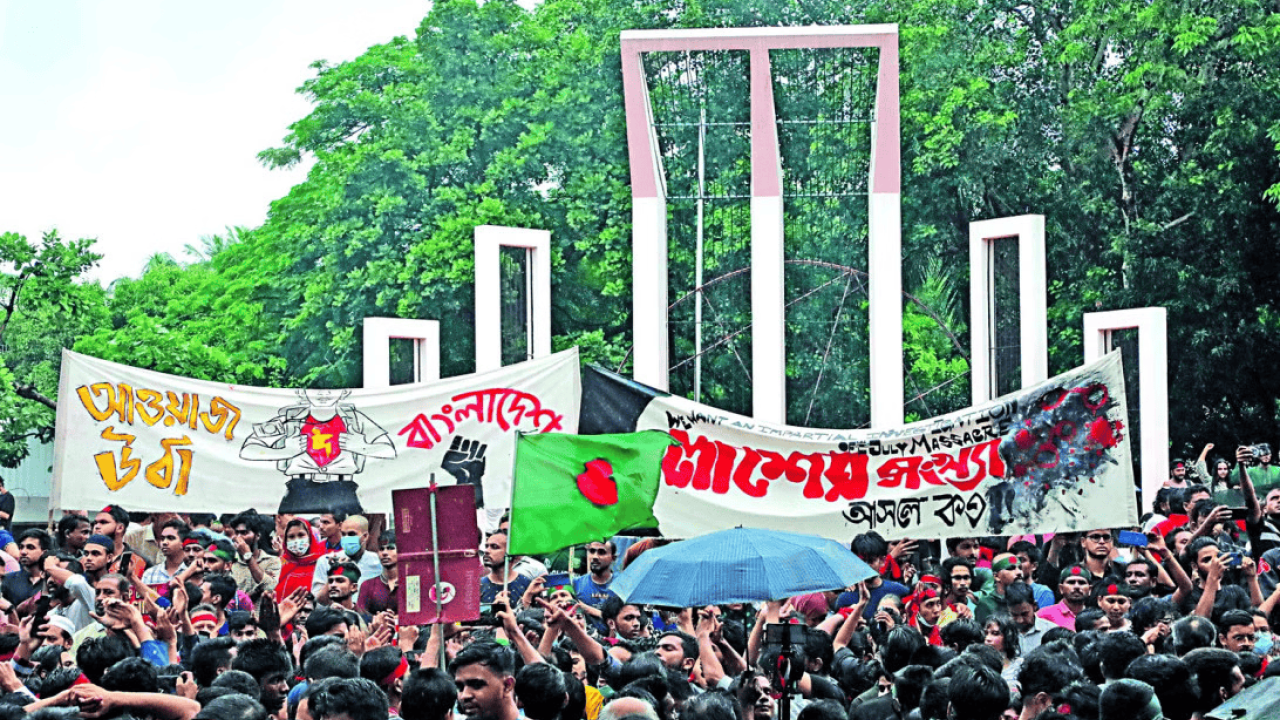
Without these rules, coercive continuity will set the ceiling of possibility no matter who holds cabinet posts. Fourth, treat fiscal politics as constitutive rather than technical. Debt workouts, exchange-rate choices and subsidy reforms are not merely macroeconomic housekeeping; they decide winners and losers and can lock in the very coalitions a revolt sought to displace. To widen the frontier of democratic choice, reformers need debt transparency statutes, parliamentary oversight of all major financing agreements, sunset clauses for emergency measures, real-time disclosure of budget execution, and campaign-finance rules that curb oligarchic wealth defence at the source. Sequencing matters: modest but credible tax reform and beneficial-ownership disclosure early can create revenue and information that expand policy space later.
Two cross-cutting points follow. Timing is strategic. Early, narrow, verifiable pacts are more defensible than grand, indefinite refoundings that invite unified resistance. And narrative is not an afterthought. Read with Arendt, the danger is that the social question consumes the founding; the antidote is not to abandon social urgency, but to link it to institutional authorship so that compassion does not become relief without rule. Bayat's warning about 'revolutions without revolutionaries' is therefore a design brief: cultivate organisers able to anchor crowds in institutions, rather than a counsel of despair about spontaneity itself. None of this guarantees durability. It does, however, change the game that follows a breakthrough. Elite recomposition becomes harder when appointments, contracts and budget lines are legible by design. Coercive continuity is less automatic when protest policing and accountability are rule bound rather than discretionary. Austerity governance is less hegemonic when debt and fiscal decisions must pass through public and parliamentary scrutiny. The measure of success is simple to state and demanding to achieve; the day the crowd leaves the square and the order remains changed.
Niladri Chatterjee is a Senior Lecturer in the Department of Cultural Sciences at Linnaeus University, Sweden. He can be contacted at niladri.chatterjee@lnu.se
Send your articles for Slow Reads to slowreads@thedailystar.net. Check out our submission guidelines for details.

The long transformation of rural Bangladesh

Islamic banking’s problem is the model, not the name

What India and Bangladesh get wrong about the Teesta

The unanswered questions of the Ganges Barrage

From seconds to hours: How reels are changing the way we think
Why do some men sexually abuse children?

How Islamic is Islamic banking?
Pay now or pay forever: What should Bangladesh's energy budget priorities be?

Can Bangladesh achieve energy sovereignty? A new perspective