


‘No artiste can ever be completely satisfied’
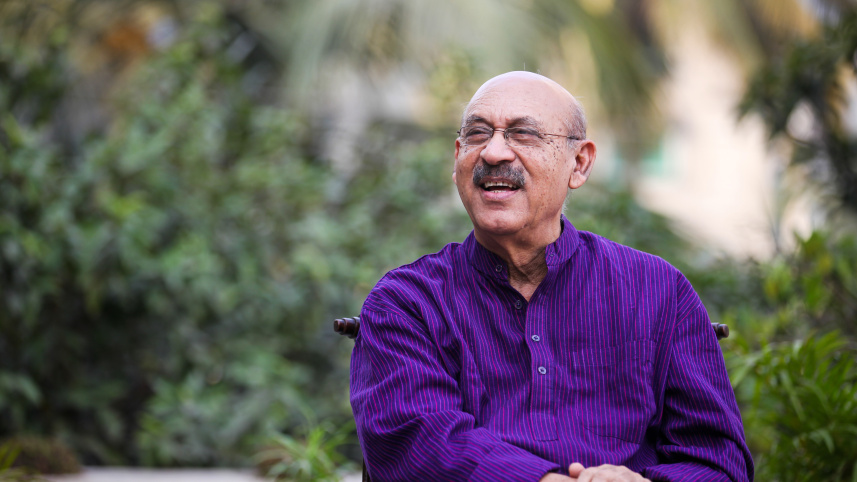
For more than five decades, Abul Hayat has been a familiar presence across Bangladesh's cultural landscape. From the stage to television and film, the Ekushey Padak-winning cultural figure, has taken on a wide range of characters while continuing to write alongside his acting career in theatre, television and the silver screen.
As he turns 82 today, Abul Hayat remains reflective about the road he has travelled — and, more importantly, the work he still wishes to do.

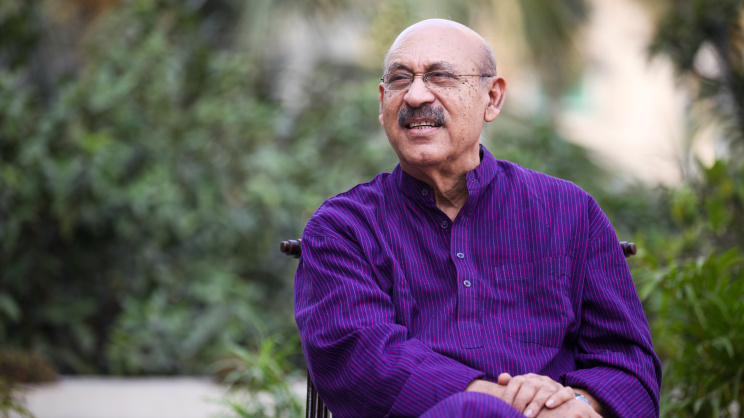
What goes through your mind as you celebrate another year of your life?
A birthday makes me feel that another year of my life has passed, and I have been given a new one — a new day, a new dawn and a new light. I am grateful to the Almighty for allowing me to live this long.
I think about what I have done in this life, how much I have been able to contribute, what work I have accomplished and what more I could have done.
You have played countless characters across stage, television and film. Is there anything you still regret not doing?
I have done some extraordinary work on stage and had the opportunity to play some remarkable characters. Those performances earned me people's love. Television also gave me the opportunity to play many good roles, and they brought me immense joy and a sense of fulfillment as an artiste.
I would have loved to play King Lear, but I never got the opportunity. Still, I believe I have played some extraordinary characters in my lifetime.
An artiste can never truly be satisfied. I have no regrets about my life, but I remain dissatisfied with my work as an artiste. If you are satisfied, there is no reason to keep working.
You became hugely popular through several of Humayun Ahmed's television dramas. What do you remember about working with him?
Humayun Ahmed created characters that stayed with audiences. His dramas were different. "Bohubrihi", "Nokkhotrer Raat", "Aj Robibar" — there are so many that I could keep naming them.
I played Kashem in "Ayomoy", which is one of my favourite works. Kashem is also one of my favourite characters. What saddens me most is that "Ayomoy" is no longer available to watch. It was a wonderful production, and audiences embraced it wholeheartedly.
Concerts and traditional events such as boat races have faced restrictions in recent times. How do you view these developments?
It is like cutting off our own feet. I don't know why this destruction has begun.
I also don't understand why BTV's logo had to be changed. Instead of changing the logo, produce good programmes. The old logo carries its own heritage. After 60 years, why does it need to be changed? It hurts.
Boat races and concerts are part of our culture. When we were young, we watched circuses and jatra pala. I lived in Chattogram at the time, and jatra pala performances would continue for months. No one came carrying sticks or looking for trouble.
You have also pursued literature alongside acting. How did that journey begin?
I started writing while studying at BUET. I wrote for a magazine, once under my own name and once under a pseudonym. Much later, I wrote for Bichitra and Tarakalok. I also wrote a column, "Esho Nipobone", for Prothom Alo.
I have published around 40 books so far. I was fortunate to grow up in a home where there were plenty of books. My father was an avid reader and bought a lot of books. That is where I developed my habit of reading. Eventually, as I kept reading, I began writing.
I have written stories, novels and plays.
 For all latest news, follow The Daily Star's Google News channel.
 Do you have any plans for your birthday this year?
I don't have any plans of my own. My granddaughter and I share the same birthday. She is my daughter Natasha's daughter, Sreesha. Perhaps my family will surprise me at home.
Comments