


Nirbaak launches publication series dedicated to mime art
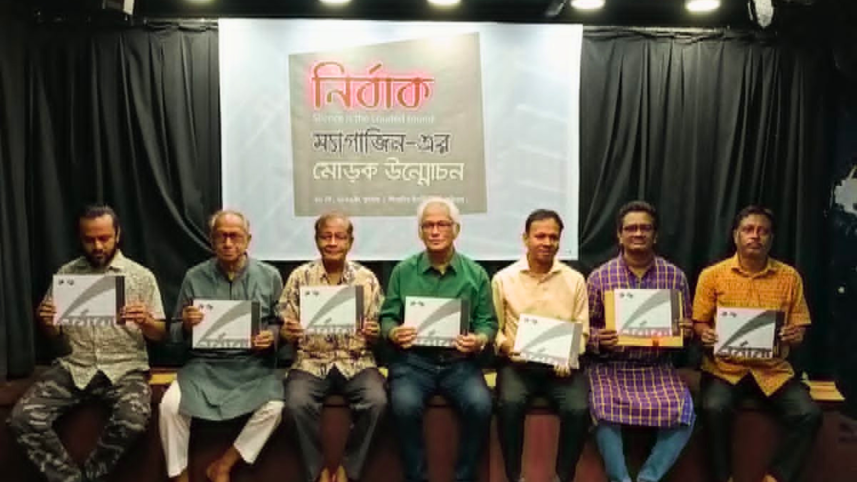
Nirbaak, a Chattogram-based organisation dedicated to the art of mime, launched the inaugural issue of its publication series at the Lecture Hall of Theatre Institute Chattogram (TIC) on Wednesday (May 20).
Speakers at the launch ceremony described the publication as a significant milestone for mime — known in Bangla as “mookabhinoy” — as a performing art form in Bangladesh.

Founded on the philosophy “Silence is the Loudest Sound”, Nirbaak was established to create a formal institutional space for mime practice in Chattogram and beyond. Although the city has a long-standing tradition of mime performance, the art form has historically lacked a dedicated platform for structured education, research, and documentation.
Speaking at the event, publication editor Dewan Mamun said Nirbaak aims to address that gap by creating a space where mime can be studied, documented, and preserved.
The first issue of the publication series focuses on the theme of makeup, examining its significance not simply as a cosmetic element but as a vital language of character creation and audience communication within mime performance.
According to Mamun, the issue offers a detailed exploration of an aspect of mime that has rarely been documented in Bangla, contributing to broader discourse surrounding the art form.
“Mime is not just a performance — it is a complete artistic language,” said Dewan Mamun, who is also a mime artiste. “Our publication series exists to give that language a written and published form.”
The publication features contributions from writers and researchers including Shishir Dutta, Jillur Rahman John, Ezaz Yusufi, Dewan Mahmud, Shahin Chowdhury, Shubhashish Bhowmick, Sanjeeb Barua, Dr Israfil Ahmed, Mirajul Haque, Masu-ur-Rahman, Nithar Mahbub, Rabiul Alam Robi, Shahriar Shawon, Sujit Kumar Barman, and Snigdha Ferdous.
The contributors collectively explored mime from artistic, technical, and cultural perspectives, marking an effort to build a written archive for the evolving art form in Bangladesh.
 For all latest news, follow The Daily Star's Google News channel.
Comments