


‘Lobongolotika’: Dismantling the frame of the ‘suffering woman’
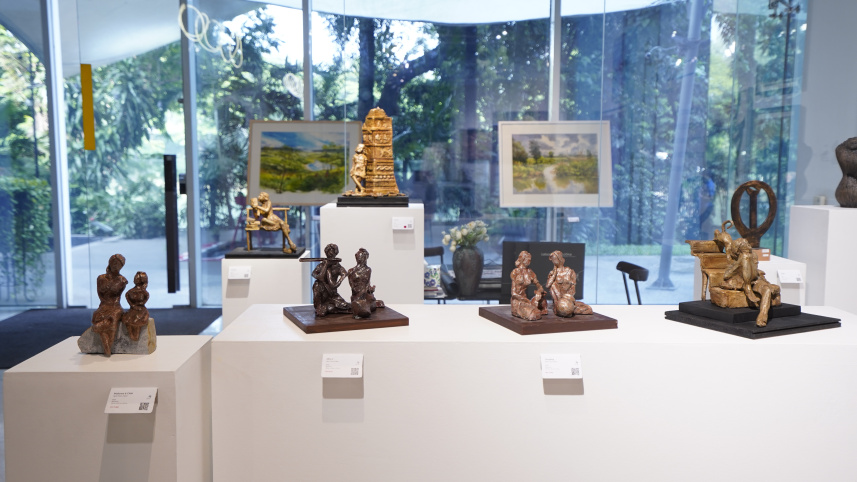
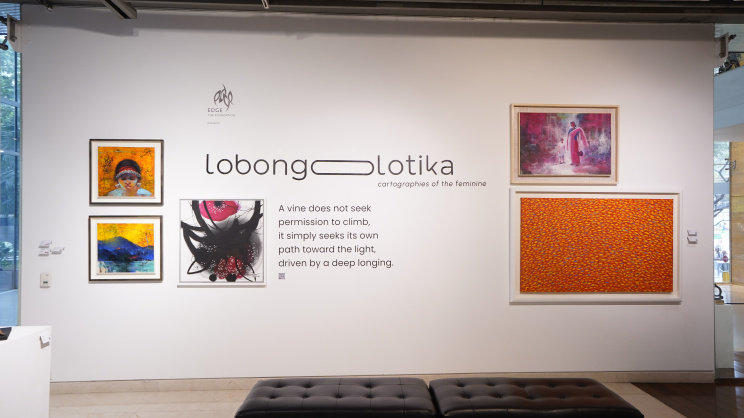
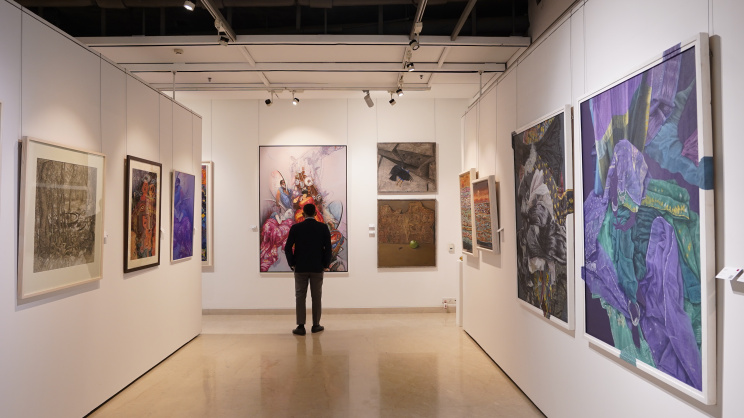
At the entrance to Edge Gallery this month, a giant wall text greets visitors with what reads almost like a warning. “For centuries, womanhood was painted in quiet suffering,” it says. “Lobongolotika dismantles that frame.” It goes on to describe 23 women artists reclaiming freedom through works of autonomy, laughter and desire.
Then comes the line that sets the tone for everything inside: “Do not look for the fragile here.” In her place, the text says, stands the creator, “wild, joyous, and ablaze with freedom.”

“Lobongolotika — Cartographies of the Feminine” brings together 65 works by Bipasha Hayat, Farida Zaman, Israt Jahan Proma, Ivy Zaman, Kanak Chanpa Chakma, Kuhu Plamondon, Lekh Nesa Khatun, Maksuda Iqbal Nipa, Mukti Bhowmik, Nargis Poly, Nur Munjerin Rimjhim, Rokeya Sultana, Shakirun Nahar Kanon, Sharmin Akter Lina, Sheikh Farhana Parvin Tumpa, Sigma Haque Angkan, Sima Mondal, Suborna Morsheada, Suriyea Rahman, Tanjim Jahan Laz, Tarana Halim, Tulsi Rani Das and Vinita Karim. The exhibition has been extended and will run until September 22.
Gallery Coordinator Puja Basak and Gallery Manager Shobuj Sultan Anmon, who co-curated the show, were struck by the turnout at the exhibition’s opening. The response was strong enough for the gallery to extend its run, giving more people the chance to see the works in the days ahead.
The premise is stated before you have even seen the art: womanhood has been associated with suffering long enough, and it is time for something else.
The title “Lobongolotika” comes from a Bengali fried pastry, its folded dough held together by a clove pressed through its centre before it goes into the oil. The exhibition takes that small act of holding together as a metaphor for “the feminine spirit” — softness and strength existing in the same form.
The metaphor is neat, perhaps deliberately so. And the exhibition itself often works in much the same way: it makes a large declaration, then places very different works underneath it.
Anmon, who guided a recent walkthrough, was careful not to describe the exhibition as a “female exhibition”. All 23 artists happen to be women, he explained, but the curatorial idea is broader: “the feminine” is presented as a sensibility rather than a demographic category, something expressed through form, texture and ideas rather than owned by one gender.
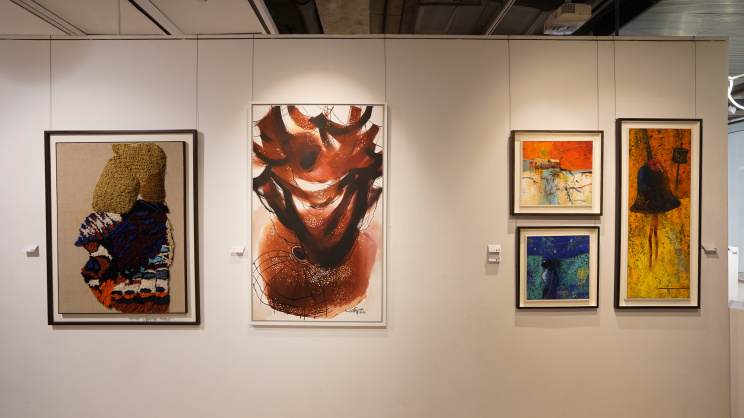
At the entrance, Rokeya Sultana’s “Where Dreams Meet the Time: Madonna 3” is a dense composition of deep blue, gold, magenta and green, with figures emerging almost imperceptibly from the surface. Beside it, Maksuda Iqbal Nipa offers something quieter, built from blue, yellow and small flashes of red-orange.
Further inside, Sheikh Farhana Parvin Tumpa’s “Story of Parents 24” and “Story of Parents 25” unfold like two scenes from the same strange fairytale. Figures cradle children beneath glowing arches, surrounded by houses, foliage and boat-like forms. Maternal tenderness is present, but so is something dreamlike and difficult to pin down.
Sima Mondal’s “Structure of Life” is harder to miss. A woman draped in a red-and-gold sari stands at the centre of a world built from bicycle parts, gears and chains. A mechanical halo rises behind her; a rickshaw puller is folded into the machinery below. Her eyes are covered, leaving the figure caught between visibility and blindness, strength and confinement.
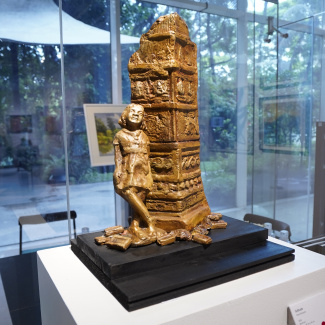
Then there is Tulsi Rani Das’s “Buriganga”, which personifies the river as an old woman. Her grey hair and waterlogged skin turn the polluted river into a body that appears to be ageing alongside it. The work is connected to the sari-weaving communities that once depended on the river and gradually moved away as its water became unusable. Das’s engagement with fabric and drapery makes the work particularly interesting within this exhibition. The river is not simply an environmental subject; it becomes another body, carrying histories of labour, memory and loss.'
One of the most striking works is “Threadbound” by Nur Munjerin Rimjhim. A young woman kneels against a surface worked with wool, holding a paintbrush almost like a crochet hook. Thread runs across her body as she works, making it difficult to tell whether she is creating something or becoming trapped inside it.
The work was described during the walkthrough as being connected to Rimjhim’s experience as an art student, particularly the restrictions imposed by an academic syllabus. The contradiction is difficult to miss: the tools intended for artistic freedom can also become tools of constraint.
That tension may be where “Lobongolotika” becomes most compelling.
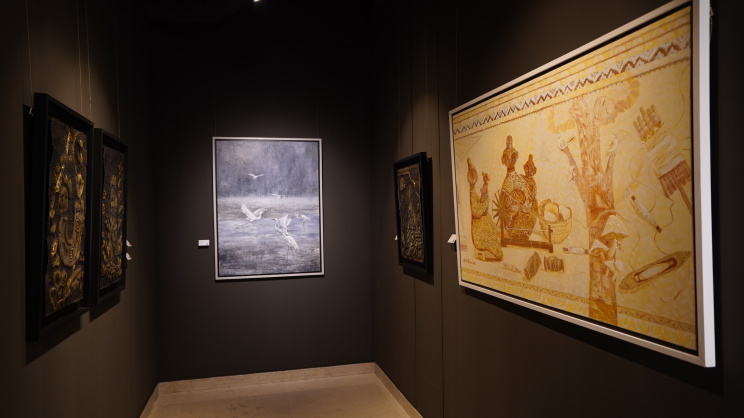
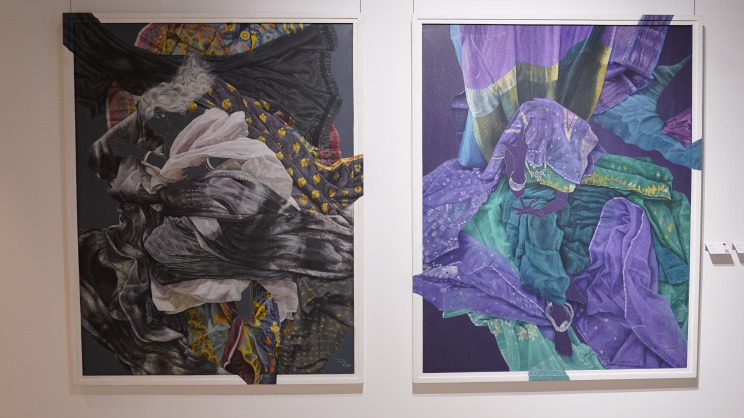
The exhibition wants to move beyond the familiar image of the suffering woman. But not every work inside it is interested in replacing suffering with uncomplicated joy. Bipasha Hayat’s “Anthology of Torn Memories”, made from layers of shredded and crumpled black muslin, is almost tactile in its darkness. Beside it, a speech bubble reads: “Break the rule. Touch me. Some memories are meant to be felt.”
It is difficult to reconcile a work called “Anthology of Torn Memories” with an exhibition that begins by announcing that suffering is no longer the story. But perhaps that is exactly the point. Twenty-three artists cannot be expected to speak in one voice simply because they have been brought together under one curatorial framework.
There is another layer to the exhibition that sits quietly beneath its language of autonomy: the works are for sale. Prices range from roughly Tk 70,000 to Tk 6.51 lakh, with Suriyea Rahman’s works among those at the lower end and Rokeya Sultana’s “Where Dreams Meet the Time: Madonna 3” carrying a Tk 6.51 lakh price tag. Tulsi Rani Das’s “Buriganga” was already marked as sold, alongside several others, during the walkthrough.
This is also where the exhibition’s argument becomes less straightforward than its entrance wall suggests. To replace the suffering woman with one who is always “wild”, “joyous” and “ablaze with freedom” risks creating another idealised figure. One image says a woman is defined by what she has endured, while the other says she is defined by how completely she has escaped it. Real lives tend to be messier than either.
Bangladeshi women artists have, for decades, worked across that space. The histories of artists such as Dilara Begum Jolly and Ferdousi Priyabhashini cannot be neatly divided into suffering and freedom. Their work demonstrates that confronting pain can itself be an act of agency. Adding to that history, a tribute to Novera Ahmed sits nearby, celebrating an artist who was challenging the idea of the passive female artist decades before “Lobongolotika”. Her presence makes the exhibition’s proposition feel less like a beginning than one chapter in a much longer history.
 For all latest news, follow The Daily Star's Google News channel.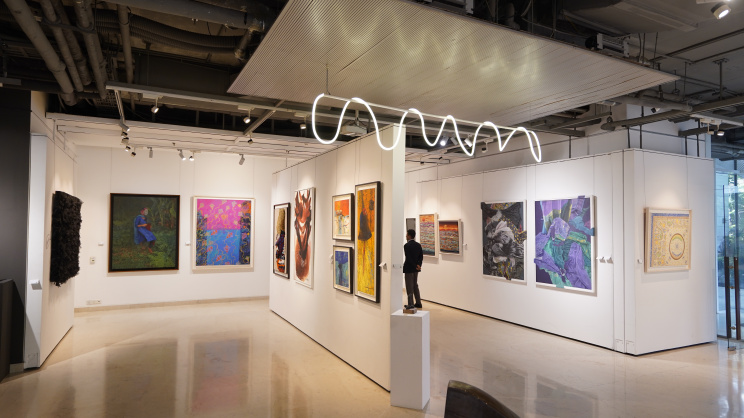
And perhaps that is where the exhibition is most honest: not in its declaration that the old frame has been dismantled, but in the contradictions that remain once you walk past it.
By the time you reach the exit, the words “wild, joyous, and ablaze with freedom” stay with you. So do the quieter, darker and more complicated works in the rooms behind you. Together, they make the exhibition harder to pin down than its opening statement suggests. This is where “Lobongolotika” becomes most interesting – not in defining what feminine freedom should look like, but in showing how differently it can take shape. — not in defining what feminine freedom should look like, but in showing how differently it can take shape.
Comments