


‘Bangladesh’s Purest Artist’: Remembering Safiuddin Ahmed
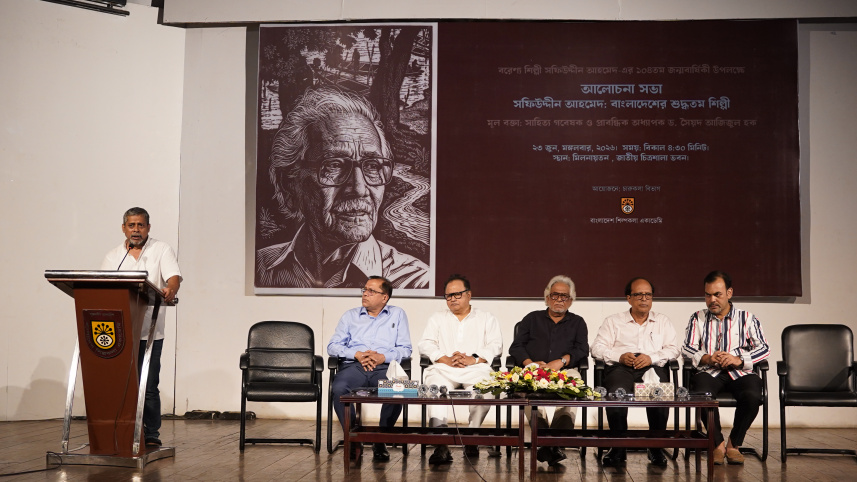
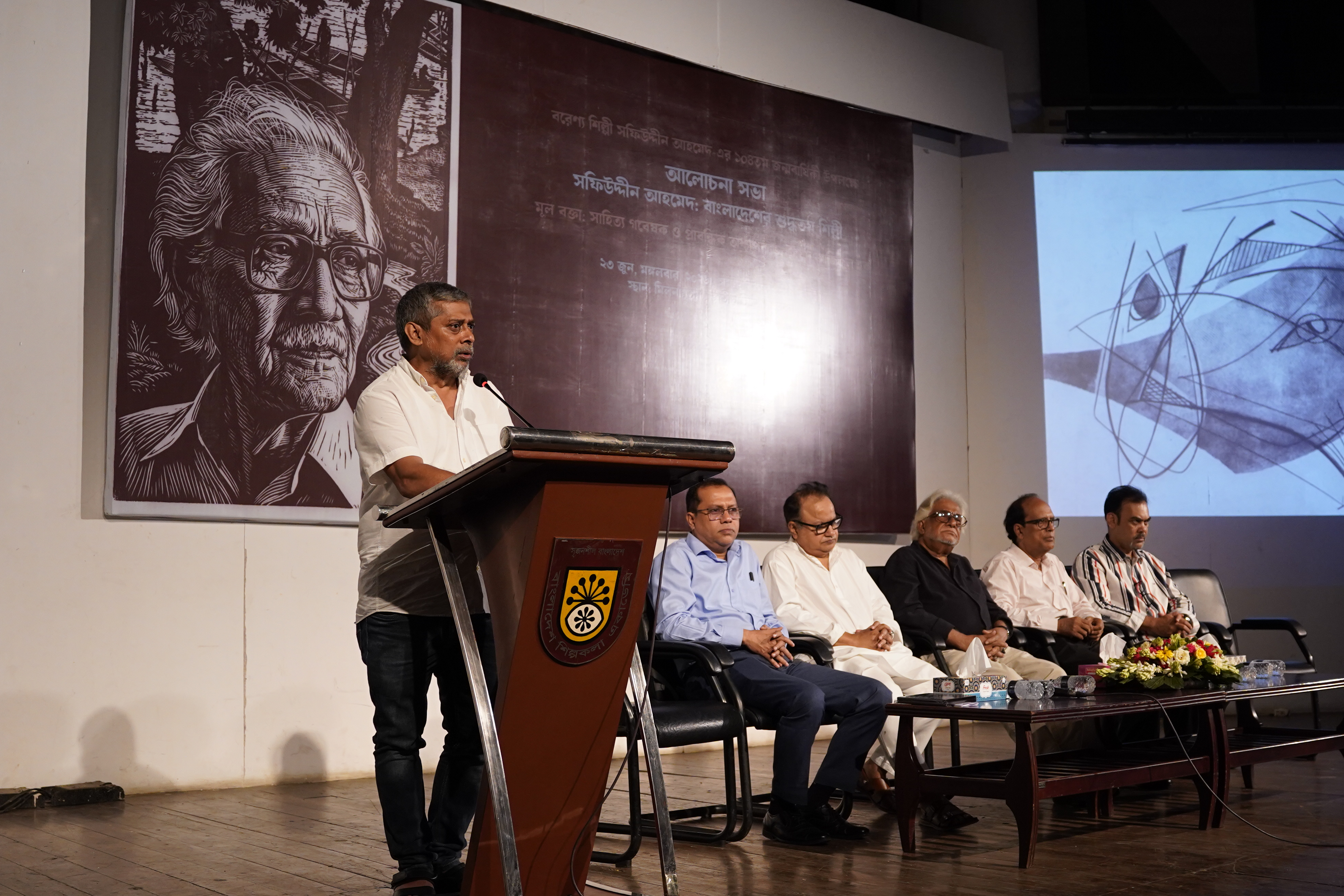
Bangladesh Shilpakala Academy’s Fine Arts Department organised a commemorative discussion on Shilpaguru Safiuddin Ahmed, one of the pioneering figures of modern Bangladeshi art and printmaking, marking his 104th birth anniversary at the Milanayatan of the National Art Gallery in Dhaka on Tuesday (June 23).
The two-hour event, titled “Safiuddin Ahmed: Bangladesh’s Purest Artist”, brought together senior artists, art educators, critics, researchers, and admirers of the artist, including many who had direct academic and artistic links with him. The discussion focused on Safiuddin’s disciplined artistic language, his technical mastery of printmaking, and his continuing influence on generations of Bangladeshi artists.

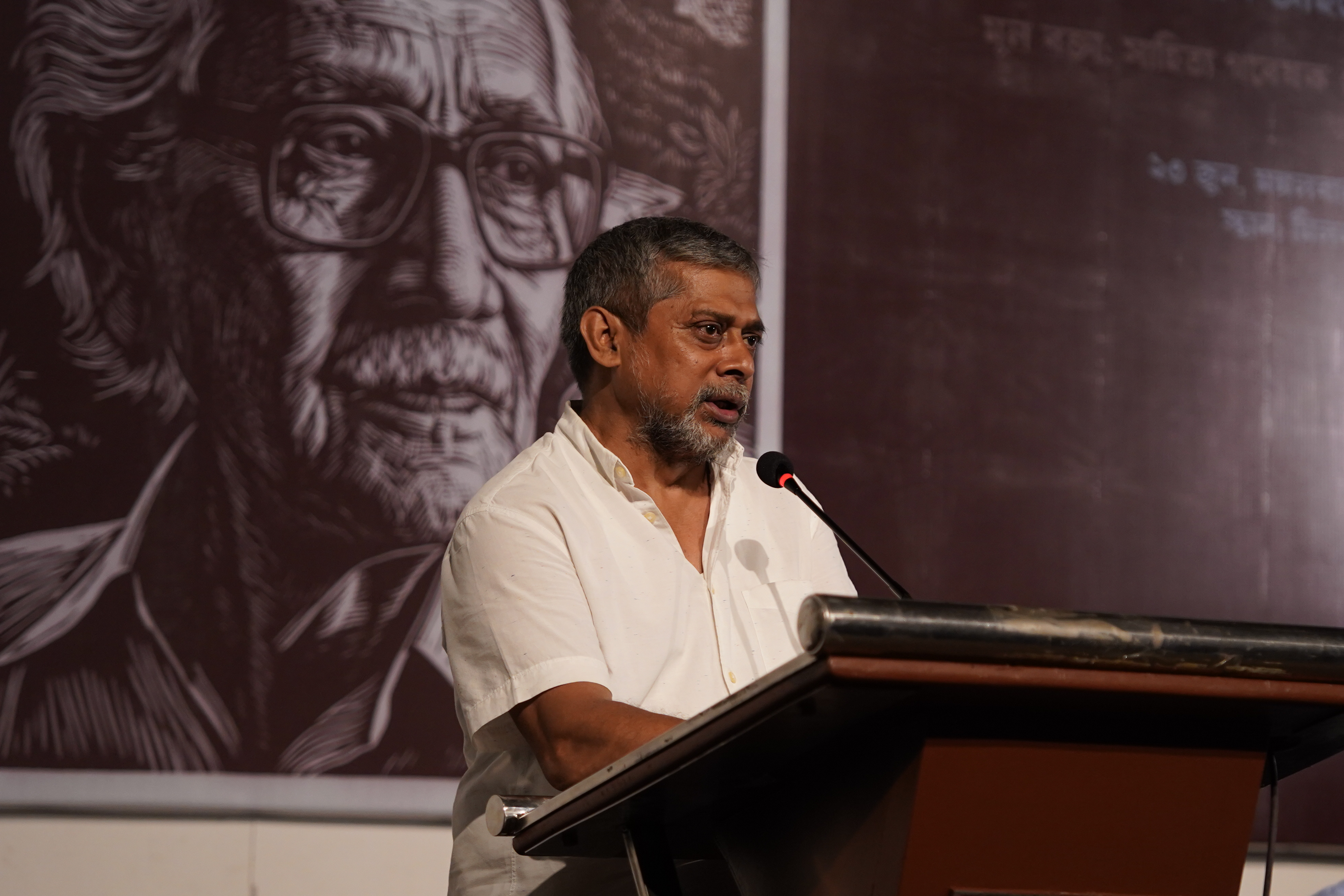
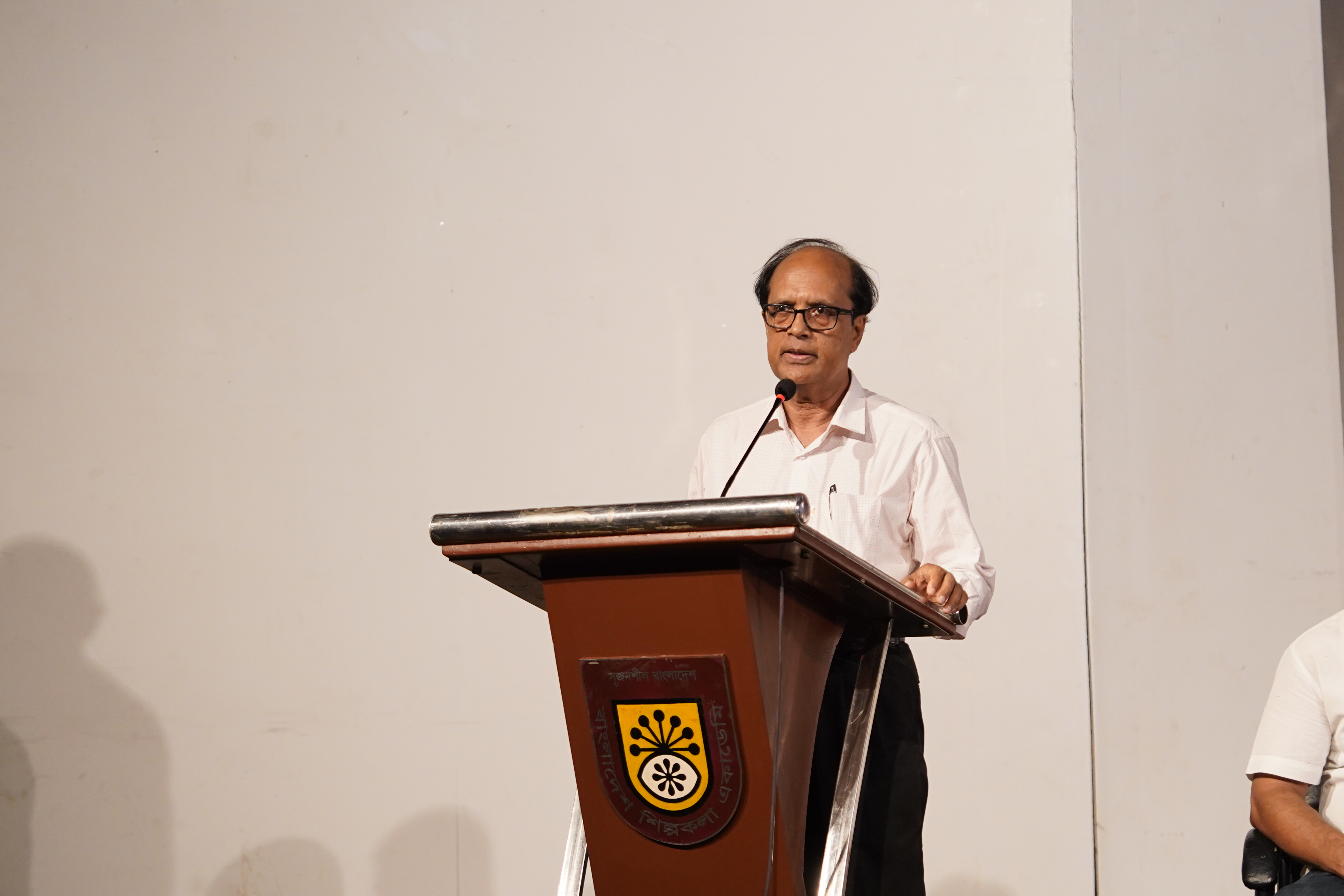
Ekushey Padak-winning artist Monirul Islam attended the programme as chief guest, while Professor Dr Md Azharul Islam Sheikh, dean of the Faculty of Fine Art at the University of Dhaka, was present as special guest. Literary researcher and essayist Professor Dr Syed Azizul Haque delivered the keynote address. Artist Rafi Haque and artist and art critic Mostofa Zaman Mithu joined the session as discussants.
Born in 1922, Safiuddin Ahmed studied at the Calcutta Government School of Art and later became one of the central figures in the development of modern art education in Bangladesh. He received the Ekushey Padak in 1978 and the Independence Award in 1996.
The title “Bangladesh’s Purest Artist” stems from Ahmed’s unwavering commitment to artistic technique and remarkable discipline. His works followed the grammar of composition, line, texture, and tonal balance with rare precision while never losing their emotional depth. His images carried the memory of landscape, labour, suffering, resistance, and human dignity through a controlled visual language without ever becoming mechanical.
Several speakers recalled his personal discipline and quiet classroom presence. His neatness in dress, studio practice, and personal conduct reflected the qualities of his prints, where every line, surface, and shade appeared carefully considered and intentional.
One of the recurring themes of the discussion was his role in establishing printmaking as a serious modern medium in Bangladesh. Safiuddin was a founding figure at the Institute of Fine Arts, now the Faculty of Fine Art at the University of Dhaka, and helped shape the academic foundation of printmaking in the country. Through his teaching, studio practice, and institutional contributions, he trained and inspired many artists who later expanded the language of printmaking in Bangladesh.
By the late 1950s, Safiuddin’s art had moved towards abstraction through simplified forms, rhythmic lines, and carefully organised pictorial space. His celebrated work “The Angry Fish” (1964) was discussed as a major example of political protest art.
The discussion also addressed his works related to 1971, including “Memories of 71” and “Refugee of 71”. Speakers noted that these works conveyed the trauma of war through restrained symbolism rather than direct narrative illustration. The eye motif, wounded forms, and compressed space expressed the violence of history through a modernist visual structure.
Safiuddin Ahmed died in 2012, leaving behind a body of work that continues to shape the understanding of modernism, printmaking, and artistic discipline in Bangladesh.
 For all latest news, follow The Daily Star's Google News channel.
Comments