


The quiet grief of becoming ordinary
There’s a very specific kind of heartbreak that arrives on a random Tuesday—one morning, you simply wake up and realise that the big, successful life you had envisioned for yourself as a child is not quite the same as the quiet life you are leading now. The gifted child who thought they would change the world, the teenager who carried impossible dreams like spare change in their pocket, and the adult who now answers emails, rereads the same sentence three times, and wonders when exactly constant burnout became their default.
Maybe the cruelest thing modern life does is convince people that their worth depends on becoming remarkable. That if your life does not look cinematic, global, productive, or endlessly upward moving, then you have somehow failed.

But literature has always known better. Some of the most beautiful stories ever written are about people sitting in kitchens. Walking home alone. Remembering old friendships. Starting over quietly. Learning how to live with disappointment without letting it calcify into bitterness.
Anxious People
Fredrik Backman
Atria Publishing, 2019
A failed robbery traps strangers together in an apartment viewing, and slowly, their lives begin unravelling in front of each other. What makes this novel devastating in the best way is its understanding that adulthood is mostly improvisation. Everyone in the room feels like they’ve failed at something: marriage, parenting, careers, dreams, themselves. Each of them carries a lifetime of grievances, hurts, secrets, and passions that are ready to boil over. None of them is entirely who they appear to be. Yet Backman treats human messiness with extraordinary tenderness. It’s a reminder that people rarely become the polished versions of themselves they once imagined. Most of us simply become human.
All the Lovers in the Night
Mieko Kawakami
Europa Editions, 2022
A lonely woman in her thirties drifts through work and routine so quietly that she almost disappears inside it. Kawakami writes loneliness with surgical precision. This is not a story about dramatic success or failure, but about alienation: from work, from other people, and from yourself. The protagonist’s life looks painfully small on paper, yet the novel insists that interior lives still matter deeply. It understands something many high-achieving people fear: sometimes burnout doesn’t look like collapse. Sometimes it looks like becoming emotionally invisible.
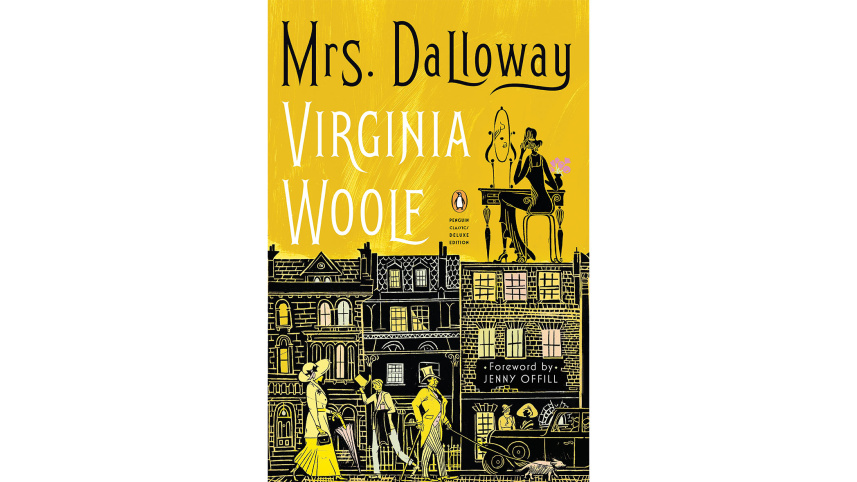
Mrs Dalloway
Virginia Woolf
Hogarth Press, 1925
Following the life of a woman as she prepares for a party while reflecting on her past, her choices, and the life she ultimately ended up living, Woolf captures the terrifying awareness that adulthood is partly built from roads not taken. The people we could have loved. The selves we could have become. Yet the novel also quietly asks whether ordinary moments—flowers, conversation, sunlight, memory—might still contain meaning even without grandeur. On the surface, almost nothing happens in this novel. Internally, everything does. A century later, it still reads like emotional clairvoyance.
The Midnight Library
Matt Haig
Viking, 2020
This book became wildly popular for a reason: it directly addresses regret. We follow a woman as she enters a library containing all the lives she could have lived if she had made different choices. The fantasy premise allows Haig to explore the seductive myth that somewhere out there exists a “perfect” version of your life. But the novel’s real strength lies in what it ultimately rejects — the idea that human value comes from optimisation. You do not need to become extraordinary in every timeline to deserve your own.
Sisters in Yellow
Mieko Kawakami
Knopf, 2026
Kawakami has a gift for writing about women haunted by unrealised versions of themselves. This novel lingers in the strange emotional space between nostalgia and estrangement: the feeling of remembering who you used to be, but no longer knowing how to return there. The story delves into the lives of a group of four friends fighting for freedom, independence, and survival in 1990s Tokyo—a world rapidly dividing into haves and have-nots. As memories of youth, insecurity, desire, and loneliness resurface, the novel traces how people slowly drift apart from both each other and from earlier versions of themselves. Kawakami writes brilliantly about the strange grief of looking back at your younger self, almost like a stranger—someone full of certainty, longing, and possibility that adulthood quietly wore down over time.
Days at the Morisaki Bookshop
Satoshi Yagisawa
Harper Perennial, 2023
After heartbreak derails her life, a young woman moves into her uncle’s tiny second-hand bookshop and slowly rebuilds herself. As summer fades to autumn, they connect over shared interests and discover life, love, and the healing power of books. This is a quiet novel in the gentlest sense. No grand transformation, no dramatic redemption arc, just books, routine, healing, and the slow reassembly of a person. Yagisawa shows us how sometimes potential isn’t ‘wasted’, sometimes it simply changes shape.
Welcome to the Hyunam-dong Bookshop
Hwang Bo-reum
Bloomsbury Publishing, 2024
There’s something deeply comforting about a book that treats rest, slowness, and small happinesses as worthy goals rather than failures of ambition. After years of living the kind of life that looks successful from the outside, Yeongju suddenly burns out. She quits her demanding corporate career, leaves behind her unhappy marriage, and opens a small bookshop in a quiet Seoul neighbourhood called Hyunam-dong.
The novel moves through the lives of multiple characters—a barista trying to escape toxic work culture, customers struggling with direction and self-worth, and people quietly questioning the lives they built for themselves. More than anything, it’s a book about stepping away from achievement-driven living and learning how to exist more gently.
Tuesdays with Morrie
Mitch Albom
Warner, 2000
Years after losing touch with his old professor, a man reconnects with him during the final months of his life. This book asks brutal but necessary questions: What actually matters? What do we regret at the end? What does a meaningful life look like when stripped of achievement culture? Morrie’s answer is both simple and annoyingly profound: love people, pay attention, and stop postponing your life. The older you get, the harder it becomes to argue with him.
Maybe potential was never meant to be a finish line. Maybe becoming softer, wiser, kinder, slower, more present—despite everything—is also a kind of becoming.
 For all latest news, follow The Daily Star's Google News channel.
Sara Kabir is a dreamer, writer, and literature lover who is constantly juggling academia and her many creative hobbies. She is currently a lecturer at North South University. Find her musings on Instagram @scarletfangirl.
Comments