


The courage to speak: The life, ideas, and legacy of Ambassador M. Serajul Islam
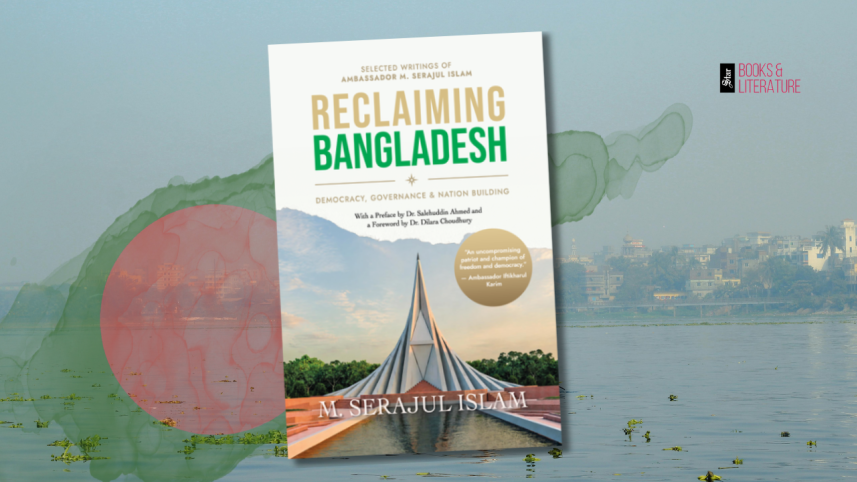
I have known Ambassador M. Serajul Islam—"Shobuj" to me and his friends—for more than six decades. We were both trained at the Civil Service Academy of Pakistan before he went on to serve Bangladesh in the diplomatic service with distinction, while I diverged and chose a career in the academic and business world of the United States. After his retirement, we talked more frequently, furiously yet respectfully debating everything from politics to the future of Bangladesh.
Ambassador M. Serajul Islam did not choose a life of quiet retirement like most of his colleagues, but instead pursued his passion for writing in areas dear to his heart—democracy, governance, and nation building. He was a student of politics, knowledgeable about various models of governance, and passionate about a Bangladesh free of poverty, with universal economic opportunity within the framework of democracy.

It was painful for Ambassador Islam to see the sacrifices of millions ignored by unscrupulous politicians who made Bangladesh their “business”. These politicians enriched themselves and methodically destroyed every institution from the bureaucracy to the judiciary. They did so with impunity. While most retired diplomats and bureaucrats chose to stay silent, Ambassador Islam chose to challenge the injustices through his weapon of writing.
Freed from the shackles of government protocol, he wrote extensively on a variety of interrelated subjects: elections, electoral integrity, political legitimacy, governance, democratic resilience, constitutional order, rule of law, state reforms, diplomacy, and geopolitics. He also wrote on Bangladesh's relationship with both small and major powers, including India, China, and the USA.
These writings were not theoretical analysis or “safe” remembrances from his diplomatic days but a hard-nosed critique of what was taking place in his beloved Bangladesh. These writings, mostly in the popular media, were not simple criticisms—they were written by a “Master” who backed up his reasoning with logic and provided alternatives drawn from his experiences around the world.
The writings gathered here, carefully selected by his children from hundreds of published materials, provide readers with a glimpse of who he was: an uncompromising patriot and champion of freedom and democracy. This is not one of those books you read once and then leave as an untouched decoration on the bookshelf. Instead, most readers will read it again and again, finding parallels with issues of the present.
Ambassador Serajul Islam's arguments for democracy are timeless, and his ideas about good governance are proven models drawn from the best practices around the world. His advocacy for the “have-nots” reflects who he was as a person, and his courageous voice for equal protection for everyone before the judiciary speaks to his upbringing and values.
Readers should also recall that Ambassador Islam was writing courageously when the rights of Bangladeshis were being systematically taken away and Bangladesh was becoming a sub-contractor—politically and economically—to India. He was threatened directly and indirectly but could not be silenced. Sadly, he passed away within days of the student-led revolution which toppled the autocratic regime. Both the interim government and the current elected government would have benefited a great deal from Ambassador M. Serajul Islam's advice and guidance.
Through his writings, Ambassador Islam has left behind a body of work which should be read by researchers and policymakers alike. His writings include some of the most sensitive subjects in Bangladesh’s recent history—the relationship between Bangladesh and India, the role of US Ambassadors in Bangladeshi politics, the breakdown of law and order including deliberate misinterpretation of the constitution, and China's master-class diplomacy. Concurrently, he wrote about a potential and doable path for Bangladesh to secure its own future.
Ambassador Islam passionately believed that a nation of 180 million people should chart its own path, maintaining good but never subservient relationships with global powers. He was acutely aware of “our traits as a nation” but remained firm in his belief that the country could only thrive under Lincoln's doctrine of government “of the people, by the people, and for the people.”
Ambassador M. Serajul Islam’s testimony at the Dhaka Forum in October 2018: “Bangladesh is the only country in modern history whose people have sacrificed their lives by the millions to establish a country where they should be able to express their opinions without fear and elect the government of their choice in a free and fair national election,” echoes throughout his writings and is his fitting epitaph.
Dr. Faisal M. Rahman, Founding Dean & Professor, The Graham School of Management, Saint Xavier University, Chicago, USA. Dr. Rahman is also President of the APAC Group of healthcare companies. Contact: rahman@sxu.edu
 For all latest news, follow The Daily Star's Google News channel.
Comments