


Between memory and mirage: The many lives of Vladimir Nabokov

Literature, at its deepest, does not merely tell stories, it alters the very periphery of perception.
And so, there are writers who tell stories, and then there are those rare conjurers who transfigure language itself into an instrument of enchantment. Among the latter, Vladimir Nabokov occupies a throne both solitary and sublime.

His prose does not simply communicate, it scintillates, pirouettes and occasionally ensnares -- demanding of the reader not passive consumption but an almost conspiratorial attentiveness.
Each sentence bears the imprint of a mind at once fastidious and flamboyant, where precision is pursued with the zeal of a scientist and ornament embraced with the relish of an aesthete.
Yet this dazzling stylist was no mere artificer of verbal arabesques.
Forged in the crucible of exile, dislodged from the certainties of an aristocratic Russian childhood by the convulsions of revolution, Nabokov transformed personal dislocation into artistic dominion.
Bereft of a fixed homeland, he erected instead a sovereign republic of words -- intricate, self-sustaining, and defiantly impervious to the vulgar erosions of history.
Within this meticulously wrought universe, narrative becomes a game of mirrors, identity a shifting masquerade and beauty itself a treacherous accomplice.
Nabokov beguiles even as he disquiets, inviting the reader into a labyrinth where elegance and unease are inextricably entwined. The result is a body of work that lingers not as mere literature, but as an experience -- at once intoxicating and exacting, a testament to the perilous splendour of art pursued to its most exquisite extremes.
Exile
Born into the waning opulence of pre-revolutionary Russia, on April 22, 1899, Nabokov’s early life belonged to a world that would soon dissolve into history’s upheaval.
The Russian Revolution drove the Nabokovs into exile, first to Crimea, then to Western Europe. In Berlin and later Paris, Nabokov lived the double life of émigré necessity and artistic ambition, teaching languages, composing chess problems and writing novels in Russian that glowed with the polish of a vanished world.
The second migration, to the United States in 1940, completed his transformation. There he became a professor of literature, a meticulous lepidopterist and crucially an English-language stylist of unnerving brilliance.
His career divides neatly into Russian and American phases, but the deeper continuity is psychological -- a consciousness haunted by loss yet refusing sentimentality, transmuting nostalgia into a glittering, almost cruel lucidity.
Works such as Speak, Memory reveal a writer for whom recollection is not passive retrieval but active creation.
He reconstructs his lost Russia with such tactile vividness that it seems to outlast the historical reality.
Memory becomes a sovereign territory, immune to the devastations of politics and time.
This insistence on the autonomy of the inner life gives Nabokov a peculiar resilience. He does not seek to repair the past; he refashions it, turning loss into art. The result is a body of work that feels both elegiac and defiantly alive even after his passing away in 1977 in Montreux, Switzerland.
Nabokov’s passion for butterflies was not a mere hobby but a parallel discipline. As a lepidopterist, he displayed the same meticulous attention to detail that marks his prose.
 For all latest news, follow The Daily Star's Google News channel.
 The act of classification, the patience of observation, the delight in minute variations -- these habits seep into his fiction.
Characters are examined with a collector’s eye, their quirks and contradictions pinned, as it were, to the page.
Nabokov’s fiction is famously playful, but the play is rarely innocent.
He constructs elaborate narrative games -- false trails, mirrored plots, riddles tucked into footnotes -- that both delight and destabilise. The reader is constantly reminded that the story is a made thing, a carefully engineered illusion.
This metafictional wit, long before it became fashionable, gives Nabokov a startling modernity.
His narrators are often unreliable, even manipulative. They charm, deceive, confess and conceal in the same breath.
The result is a moral vertigo. We are made complicit in their perspectives, then forced to recognise the cost of that complicity.
In this, Nabokov anticipates later postmodern experiments, yet he never relinquishes the aesthetic pleasure that keeps the reader enthralled.
Lolita
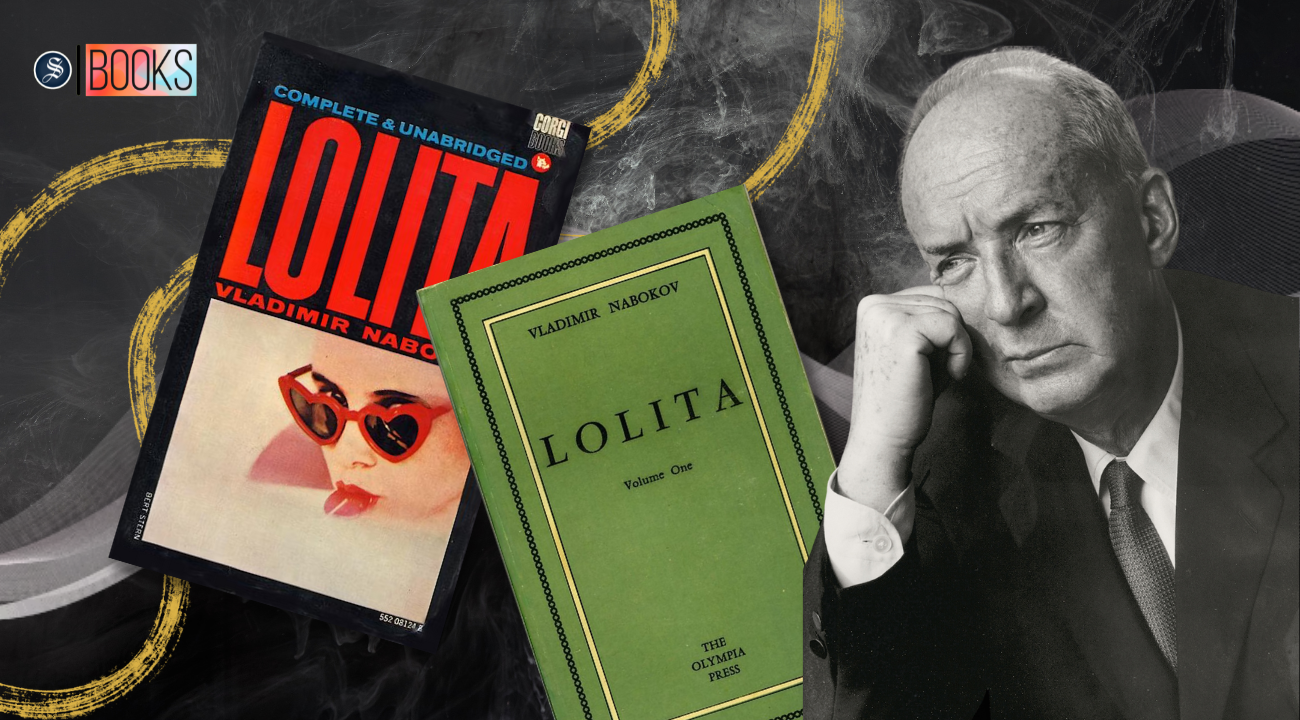
No discussion of Nabokov can avoid Lolita, the novel that secured his fame and controversy in equal measure.
On its surface, it is a disturbing account of obsession, narrated by the beguiling Humbert Humbert. Beneath that surface lies a work of startling linguistic beauty and structural finesse. Nabokov does not excuse Humbert; he exposes him, allowing the elegance of the prose to collide with the ugliness of the desire it encases.
The resonance of Lolita lies precisely in this tension. It forces readers to confront the uneasy truth that aesthetic pleasure can coexist with moral discomfort. The novel’s afterlife -- in criticism, adaptation, and cultural debate -- testifies to its power to unsettle complacency. It is less a scandal than a test, one that continues to divide and provoke.
Nabokov’s resonance endures because he refuses to simplify the world.
Instead, he renders it in all its dazzling, disconcerting complexity.
To read Nabokov is to be reminded that literature, at its highest pitch, is not merely a mirror to life but a reimagining of it -- precise, playful, and, above all -- profoundly alive.
Comments