


Daffodil Smart City: How a self-sustained educational township flourished in Savar
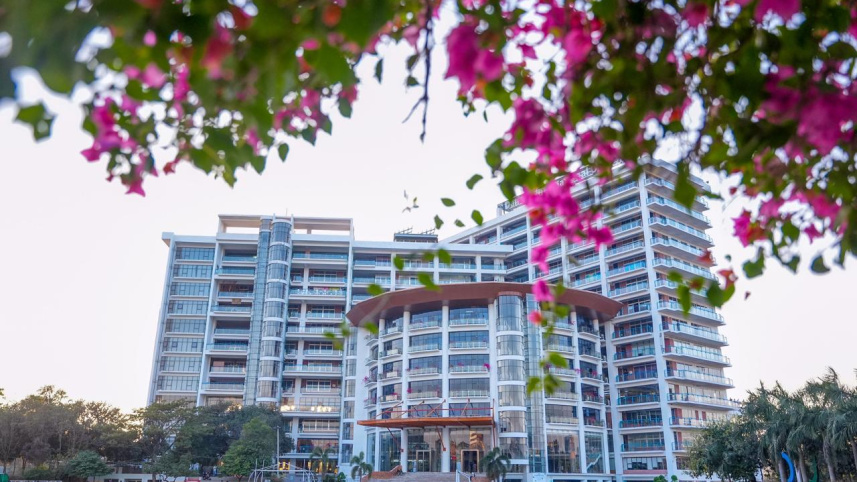
As higher education increasingly extends beyond conventional degrees to encompass research, innovation and global exposure, Daffodil International University (DIU) has sought to build an ecosystem around these priorities.
Located in Birulia, Savar, Daffodil Smart City brings education, technology, sustainability, and student life together within an integrated environment.

The university's growing international recognition reflects this approach. In the Times Higher Education Sustainability Impact Rankings 2026, DIU ranked first among Bangladeshi universities and was placed among the world's top 100 sustainable universities. In the U.S. News Best Global Universities Rankings 2026–2027, it ranked 366th in Asia and 1,061st globally, while maintaining its position in the 1001–1200 band of the QS World University Rankings 2027.
DIU's international network now spans more than 690 universities and over 55 global memberships. Between 2020 and 2025, more than 2,600 students participated in international exchange programmes. The presence of students from different countries has also contributed to a more diverse campus environment.
A campus designed for the future
Established in 2002, DIU now offers academic programmes across 31 departments, including fields such as robotics, genetic engineering, innovation and entrepreneurship, multimedia and creative technology, real estate and fisheries.
The university's academic infrastructure includes 160 laboratories and 17 research centres. Its "One Student One Laptop" initiative, launched in 2010, has provided more than 80,000 laptops to students.
The DIU campus forms an integral part of Daffodil Smart City, a self-sustained educational township developed in Savar. Its 70,000-square-foot central library houses approximately 833,000 books and e-resources. The university also operates a fleet of more than 100 buses and has nine residential buildings across five halls.
The campus has adopted a cashless financial ecosystem, with students using a unified "One Card" and a dedicated mobile app for transactions.
Turning sustainability into practice
Sustainability is another key component of the Smart City model. DIU, in partnership with Paramount Solar Limited, is implementing a 3.4 MW rooftop solar power project. The initiative is expected to reduce carbon emissions by around 4,000 tonnes annually.
Beyond generating clean energy, the solar installation is being used as a "live learning lab", allowing students to gain practical exposure to renewable energy and environmental technologies.
The university is also placing emphasis on employability and entrepreneurship. Through its Career Development Center, DIU has built links with more than 500 corporate organisations and helped over 1,000 students secure jobs and internships over the last two years. Its entrepreneurship initiatives have supported around 2,000 students in becoming entrepreneurs over the past decade.
Supporting students beyond academics
DIU offers scholarships in 36 categories, with more than 133,000 students receiving tuition fee waivers between 2009 and 2024.
The university has also introduced a Group Life Insurance policy covering both students and their guardians. According to the university, it has settled claims worth more than BDT 15 crore for 504 families.
Under the policy, if a guardian passes away while a student is pursuing their studies, the student's education remains financially supported through the insurance coverage. In the unfortunate event of a student's death, the applicable insurance claim is paid to the family, providing financial support during a difficult period.
The broader idea behind Daffodil Smart City is to create an environment where education, research, technology, sustainability, entrepreneurship and student life operate alongside one another.
For DIU, the aim is to prepare graduates not only with academic qualifications, but also with practical experience and the skills needed to navigate an increasingly competitive global workplace.
 For all latest news, follow The Daily Star's Google News channel.
Comments