


How BRACU’s Mongol-Tori is forging industry-academia collaborations
As Sir Fazle Hasan Abed, the Founder of BRAC and BRAC University, stated, “Don’t ever slow down, don’t ever stop innovating, and most importantly, don’t ever lose sight of the mission to extend a hand to those who need it.” Driven by this philosophy, Team BRACU Mongol-Tori has continued pushing the boundaries of innovation.
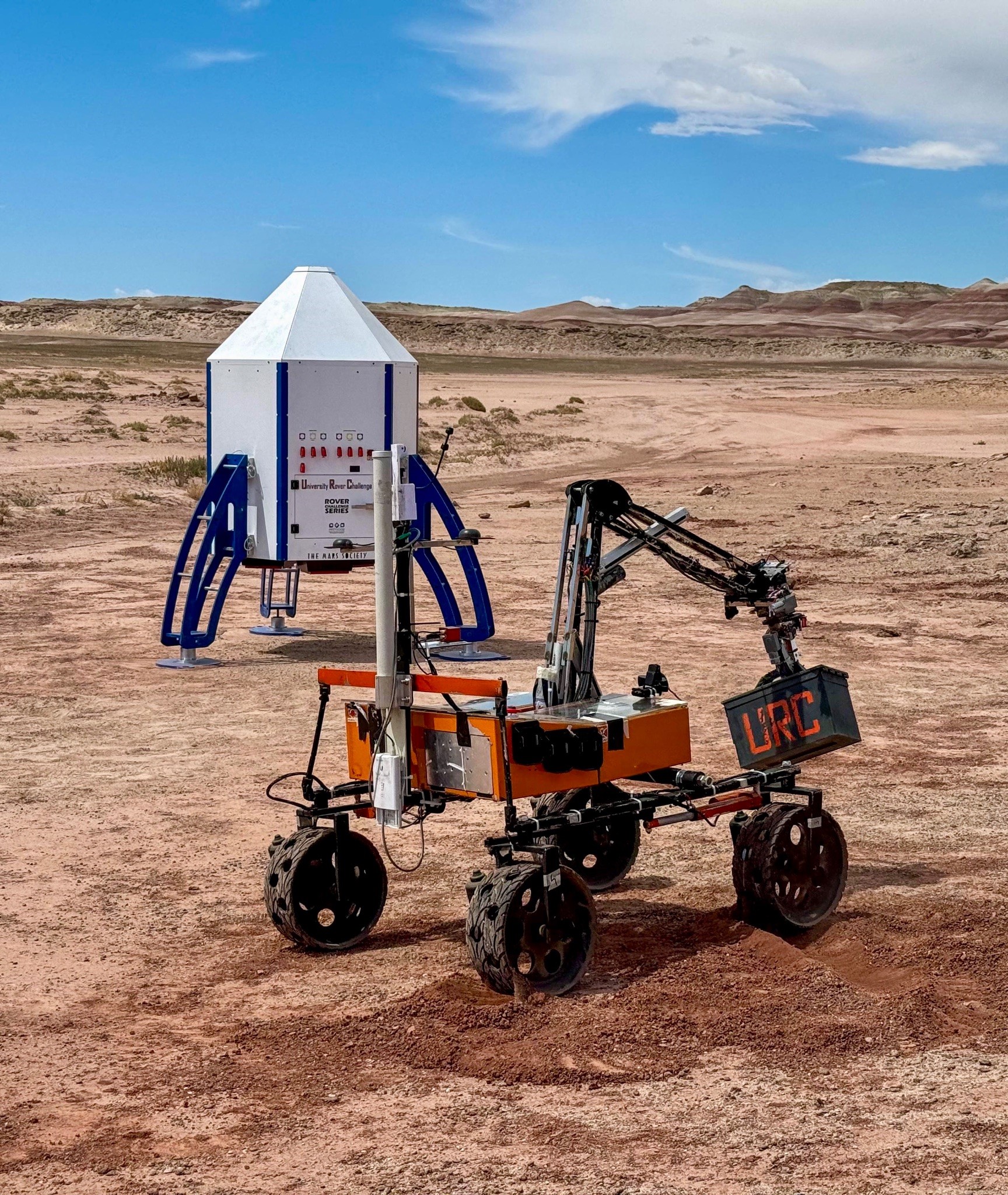

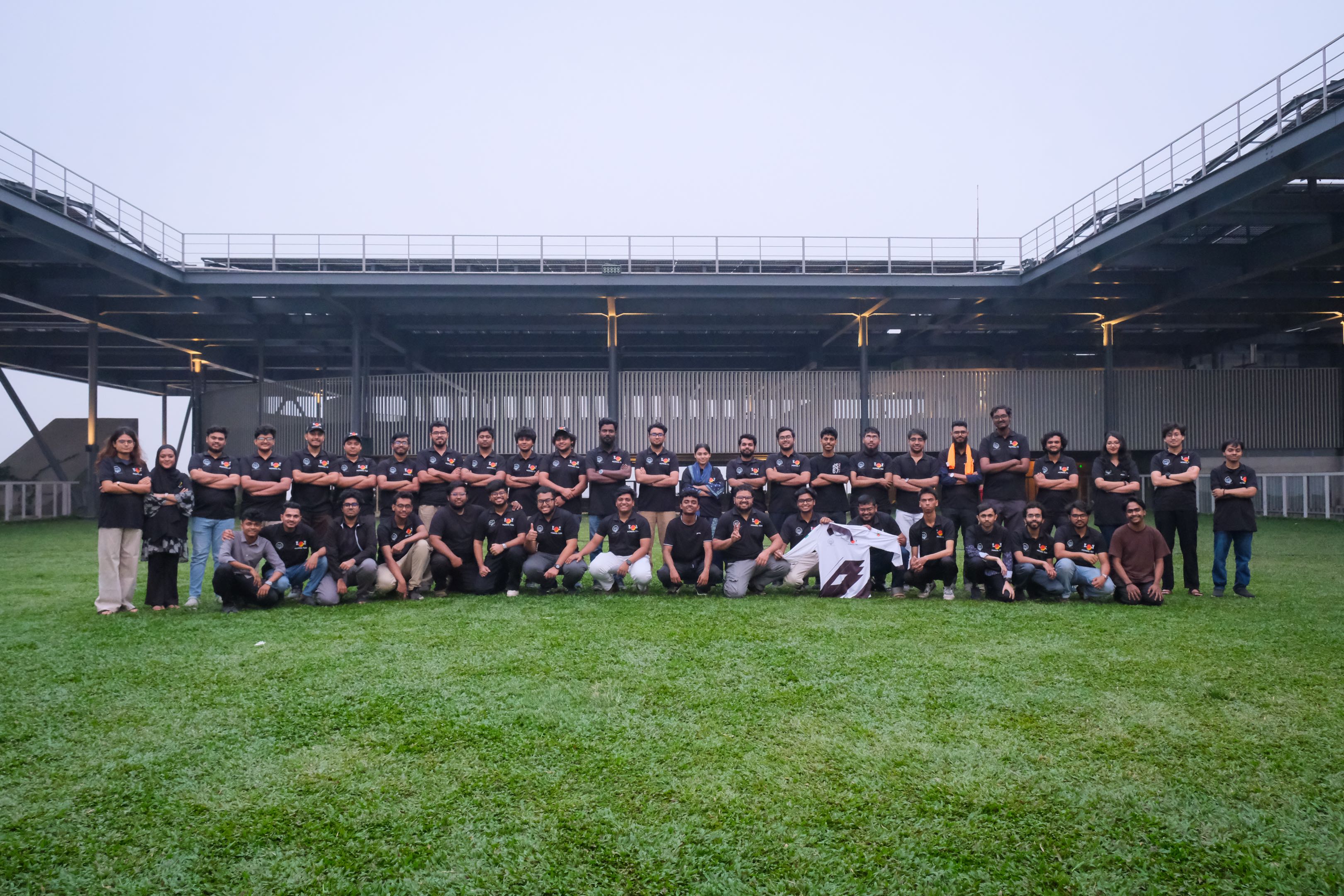
Team BRACU Mongol-Tori has been consistently participating in the University Rover Challenge (URC) for seven years and has once again qualified for the URC 2026 Finals. But for this BRAC University (BRACU) rover team, success in competitions is only part of the picture. What the team has been quietly building on the side is a growing web of international industry-academia collaborations – anchored strongly by the strategic involvement of the Meghna Group of Industries (MGI).
Over the last 12 months, MGI has not merely been a sponsor but a driving force behind Mongol-Tori’s momentum. As the title sponsor across all competitions the team has participated in, MGI has ensured that the Mongol-Tori name – and, by extension, Bangladesh’s growing robotics capability – has had a powerful and consistent presence on the global stage.
Over the past year, Mongol-Tori has also been actively mentoring school and college students in robotics and STEM education, reaching over 16 institutions across Dhaka and Chattogram. In collaboration with Malaysian company Cytron Technologies, the team has been mentoring students for international competitions, bringing the practical knowledge and discipline honed through years of Mars rover engineering directly into secondary-level education.
"We want to make sure the next generation doesn't have to start from zero the way we did," said Mongol-Tori’s co-lead MD Jesan. The outreach reflects the team's broader belief that a sustainable robotics culture in Bangladesh must be cultivated from the ground up, long before students enrol in a university engineering programme.
As Mongol-Tori prepares for the URC 2026 Finals, it has also been quietly building a portfolio of international industry partnerships, starting with a challenge that sits at the heart of any Mars rover mission: reliable, long-range communication. The team integrated mission-critical radio technology from SATEL, a Finnish company recognised globally for industrial-grade wireless connectivity. The result was a verified ground teleoperation range of 3.3 kilometres, tested under the harsh environmental conditions of Bangladesh.
Building on that foundation, the team partnered with CompleTech, an antenna manufacturing company based in Finland. Together, they developed a long-range, high-gain custom antenna designed specifically around Bangladesh's environmental factors. As part of this collaboration, the team also mapped the RF propagation of 433 MHz along the marine drive of Potenga, Chittagong – one of the most environmentally complex stretches in the country. That field data directly shaped the antenna's design. In a notable validation of the team’s engineering depth, CompleTech is now developing an antenna tracking system module built on the codebase provided by Mongol-Tori, an instance of student-led innovation feeding directly into global product development.
The collaborations did not stop there. SBG Systems, a leading French supplier of inertial sensors, backed the team’s research with a tactical-grade Inertial Navigation System (INS) with a triple-band antenna, enabling sub-degree and sub-centimetre accuracy in rover navigation even under challenging environmental conditions.
Mongol-Tori has also entered into a long-term collaboration with myActuator, one of the world’s leading manufacturers of high-torque robotic motors, to develop a precision-based robotic manipulator arm, an initiative that extends well beyond rover applications into industrial robotics.
MGI is now set to host an exclusive industry visit, where Mongol-Tori will have the opportunity to demonstrate and test its prototype within a live industrial environment. This initiative signals a significant step forward, bridging university-led innovation with Bangladesh’s manufacturing ecosystem.
Mars rover projects are not uncommon at the university level. Sustaining them, however, is a different story. Robotics is expensive, and most teams struggle to survive beyond a single competitive cycle. BRACU Mongol-Tori, now in its seventh year at the URC, offers a compelling counter-narrative.
By producing real technical outputs that industry partners can build upon, and by anchoring that work in a genuine commitment to STEM education at the community level, Mongol-Tori has transformed a university competition project into a platform of enduring impact.
For Mars rover teams across Bangladesh, the Mongol-Tori model makes one thing abundantly clear: industry-academia collaboration is not just a funding strategy; it is the foundation of sustainability, relevance, and long-term success.
Md Rafid Khan and Nameera Amin are the team lead and team manager, respectively, of BRACU Mongol Tori.
 For all latest news, follow The Daily Star's Google News channel.
Comments