


CU shuttle turns from campus pride to daily ordeal for students
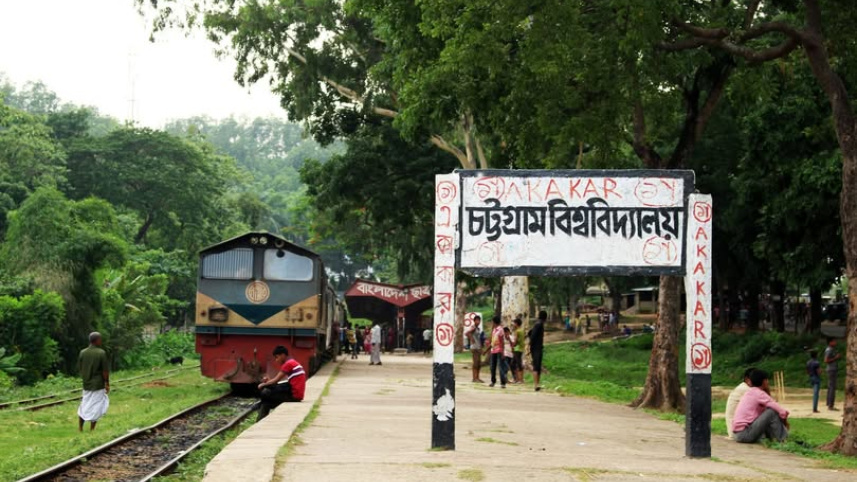
Once a symbol of pride, the shuttle train service of Chittagong University (CU) has increasingly become a source of suffering and anxiety for students, amid persistent disruptions and safety concerns.
Although it remains the country’s only university-based shuttle train service, a series of long-standing issues including schedule disruptions, engine failures, coach shortages, overcrowding, and security risks have turned daily commuting into an uncertain and often hazardous experience.

Thousands of students rely on the shuttle trains as their primary mode of transport between the port city and CU campus.
One of the most alarming concerns is the recurring incidents of stone-pelting. Students allege that miscreants regularly hurl bricks and stones at moving trains, particularly near cantonment areas. The incidents have heightened fear among commuters, especially female students.
A severe shortage of coaches has further compounded the problem. With passenger numbers far exceeding capacity, many students are forced to travel on rooftops or hang from doors, risking their lives. Ageing engines and carriages often break down mid-journey, leaving students stranded for hours.
The situation worsened following heavy rains on April 28, when hill runoff damaged railway tracks near the university, triggering further schedule disruptions. Since then, students have had to endure prolonged delay at stations, affecting both their studies and daily lives.
Students say the unpredictability of the shuttle service is costing them valuable time. “A single trip to and from the city takes up almost the entire day,” several students complained, adding that they are struggling to manage tuition, job preparations, and other commitments.
Despite repeated protests, memorandums, and campaigns by students over the years, there has been little visible progress. Even after the Chittagong University Central Students’ Union (Cucsu) election, multiple meetings between student representatives, railway authorities, and university administration have failed to produce tangible solutions.
Cucsu Secretary for communication and accommodation, Ishaq Bhuiyan, said, “The ongoing suffering caused by the shuttle has reached an intolerable level. We have consistently raised demands and held discussions, but no effective outcome has been achieved. We have now been compelled to call for protests, and active support from students is essential.”
He added that a meeting with railway authorities and the university administration has been scheduled for Monday, after which further programmes will be announced through a press conference.
Echoing similar concerns, Mokaddas Hossain, an executive member of Shahid Farhad Hossain Hall union, said a sustainable solution is now a necessity. “If needed, dedicated transport for teachers could be reconsidered to bring everyone under the shuttle system. If prompt action is not achieved, students will take to organised movements to realise their rights,” he said.
University authorities said they are in regular communication with railway officials to ease student suffering.
CU Pro-Vice Chancellor (Administration) Prof Kamal Uddin said the shuttle crisis is a long-standing issue. “We have scheduled a meeting with the highest authorities of the railway on Monday, where all aspects of the shuttle service will be discussed. We hope to reach a workable solution,” he added.
 For all latest news, follow The Daily Star's Google News channel.
Comments