


"If the art is yours, it is enough"
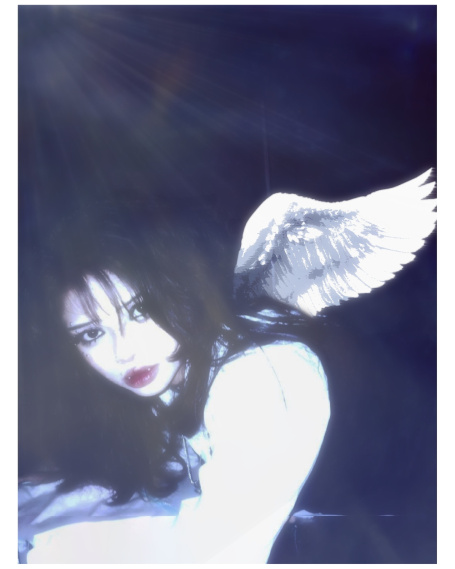
Dhaka-based musician Swar, the artist behind Porcelain Kiss, creates dreamy yet unsettling electronic music that explores isolation, derealisation, and the strange distance of living in a hyper-connected world. Starting with little more than a smartphone and headphones, she turned her bedroom setup into an intimate sound that exists outside Bangladesh’s mainstream indie landscape.
For Swar, the DIY approach is part of the project’s identity. Rather than chasing numbers or algorithmic reach, she remains committed to making music that feels honest to her. Through Porcelain Kiss, she gives shape to the quiet disconnection of a generation that is constantly online yet often feels alone.

Campus sat down with Swar to discuss building Porcelain Kiss from her bedroom, finding an audience across borders, and turning feelings of detachment and grief into sound.
Campus (C): For someone discovering your music today, who is Porcelain Kiss? Where does the name come from, and how would you describe your sound in three words?
Swar (S): Porcelain Kiss is basically the part of me that I can’t really explain normally, so I put it into music. I am an independent artist from Bangladesh, making dark, emotional, and electronic music with dreamy or ethereal, and sometimes unsettling textures.
The name “Porcelain Kiss” came from the contrast I liked between something fragile and something intimate. It felt soft but a little strange, which is kind of what I wanted the project to feel like. If I had to describe the sound in three words, it would be ethereal, dark, and emotional.
C: You started making music on your phone instead of waiting to access a studio. What first inspired you to create your own music, and how has that DIY approach shaped the sound of Porcelain Kiss?
S: I started on my phone because I didn’t really have access to a studio or expensive equipment, and I knew it wasn’t coming to me any sooner. Honestly, I didn’t want that to be the reason I never started. I had a phone, headphones, and a lot of ideas. So, I just started experimenting.
Making everything myself definitely shaped Porcelain Kiss. I learned by doing things badly at first and slowly figuring out what sounded right. It also made the music very personal because I resonated with the imperfect audio of older acts like Crim3s and Crystal Castles. To me, the imperfections themselves carried that emotion, so I was trying to translate what I feel directly into sound.
C: What has it been like making dark electronic and dreamscape music in Bangladesh's indie scene, where acoustic, rock, and pop tend to dominate?
S: It can feel as though I am being outcast sometimes because the scene here naturally leans more toward acoustic, rock, pop, metal, and other mainstream sounds. There aren't always many people around you making the same kind of music. But I actually like that part of it too. I never really wanted Porcelain Kiss to sound like everything else around me. There are young people discovering music from all over the world now, so I think the audience is changing too. I am happy to pursue international listeners.
C: On your platform, you stand by the rule: "If the art is yours, it is enough". In an algorithm-driven era where young independent artists constantly chase external validation, how do you maintain that creative boundary?
S: I think the internet makes you feel like everything needs to be measured. Views, followers, streams, comments, whether people think you're good enough. It’s very easy to start making things for an algorithm instead of making things because you actually have something to say.
That rule reminds me that the reason I started was never to impress everyone. If I make something and it genuinely feels like me, then it already has a reason to exist. Of course, I still want people to listen to it, but I don't want numbers to decide whether something I created has value. I hope I keep this mindset till the end.
C: "Under The Moon" turns private grief into a quiet memorial, while "Fog" captures the jarring derealisation of waking up in a haze. When a song begins with a feeling like grief or detachment rather than a melody, what does the creative process look like from there?
S: With something like “Under the Moon”, the emotion came first. I wasn't trying to make a sad song. I was trying to capture a very specific feeling of missing something or someone, and not really knowing what to do with that feeling.
“Fog” came from a completely different kind of emotion. It was my second ever self-produced song, and the feeling of being awake but not completely present, like everything around you is real but somehow distant.
Once I have that feeling, I try to build a world around it with sound. Sometimes the production becomes more important than the lyrics because I want the listener to actually feel the emotion instead of just being told what it is.
C: Across songs like "out of frame" and "Blur", your work explores the isolation of feeling like an outsider watching life from behind glass. Why do you think this sense of digital disconnect and social displacement resonates so deeply with young listeners today, and how has creating music helped you process those feelings?
S: I think a lot of young people are constantly connected now, but somehow still feel incredibly alone. You can talk to hundreds of people online and still feel like nobody actually knows you. You see people going places, having relationships and friends, becoming successful, and you start comparing your real life to tiny edited pieces of someone else's. I think that's where the feeling behind songs like “Out of Frame” and “Blur” comes from. Creating music gives me some place to put those feelings instead of keeping them in my head. Sometimes I don't even fully understand what I am feeling until I have turned it into a song.
 For all latest news, follow The Daily Star's Google News channel.
 C: What would you say to a teenager in Bangladesh sitting alone in their bedroom, feeling like they don't fit in but dreaming of making music with nothing more than a phone and a pair of headphones?
S: Don't wait until you have everything. I started with basically nothing except a phone and a pair of headphones. You don't need the perfect microphone, the perfect computer, the perfect room, or someone's permission to call yourself an artist.
Start with whatever you have and learn as you go. And don't be embarrassed if your first songs aren't amazing. Mine weren't either. You're allowed to be bad at something while you're learning. And don't let people convince you that your music isn't real because you made it differently from them. Start there. The rest can come later.
Comments