


From Diana Award to Forbes 30 Under 30: Nafira's social impact journey
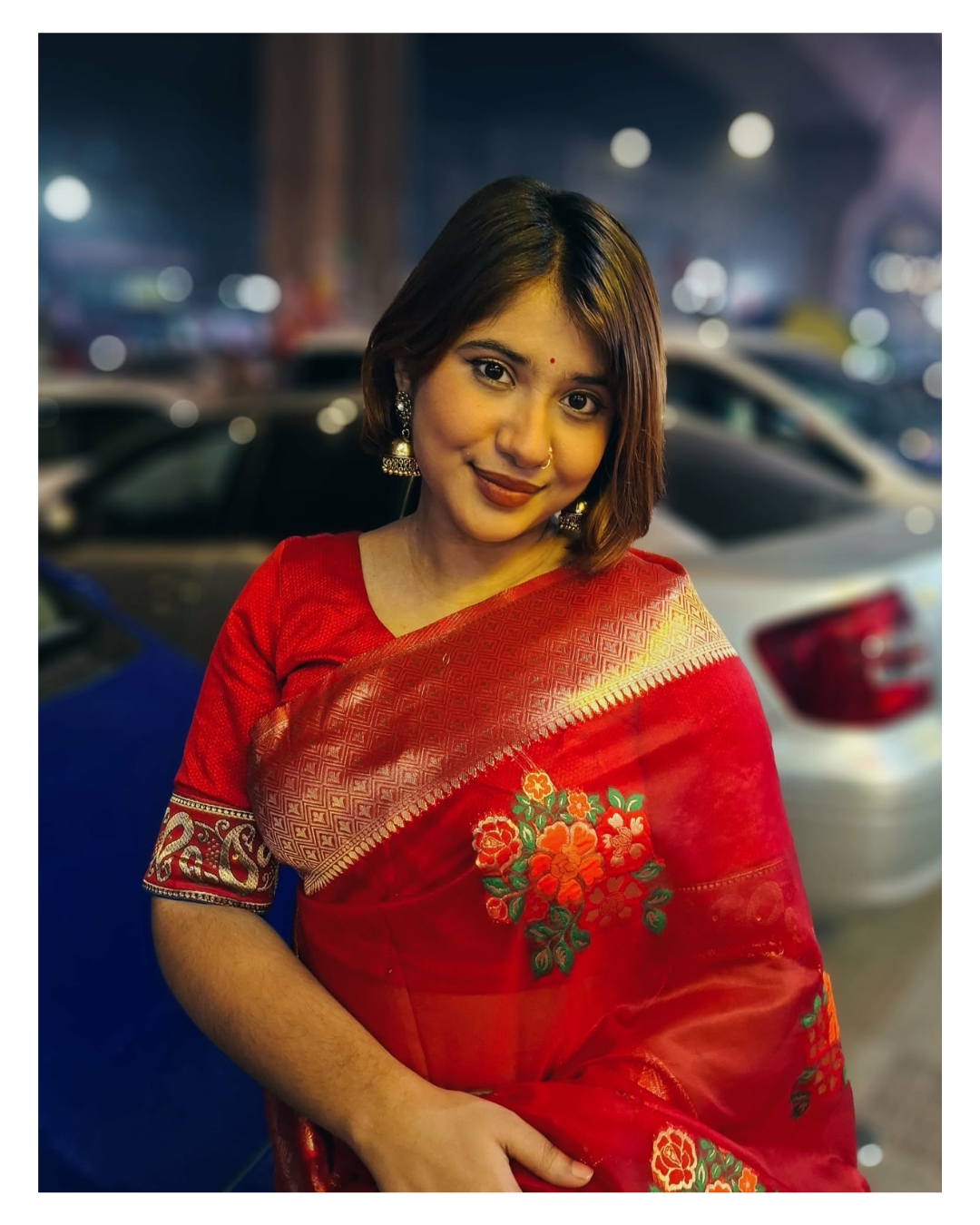
Nafira Nayeem Ahmad, a student of the Department of English and Humanities at BRAC University, is the founder and president of Amplitude – a non-profit, youth-led charity organisation striving towards working for social impact by helping children and vulnerable communities. She received the Diana Award in 2022 in recognition of driving positive change in society through her work. She was also the recipient of the Legacy Awardin 2024. This year, Nafira was featured in Forbes' 30 Under 30 Asia 2026 List under the "Social Impact" category. Campus sat down with Nafira Nayeem to get a closer look at her journey.
Campus (C): You founded Amplitude as a teenager. What motivated you to start so young?

Nafira Nayeem Ahmad (N): While growing up, I lived in a privileged bubble. I never had to worry about food or finances or going to school. I had the privilege of going to a leading English-medium school in Bangladesh. I did not understand the nuances of the world until class nine. As soon as I started going into the real world for my tuition classes, I realised that my life is very different from those of other people who are marginalised. It made me think about who made these rules and who pays the price. While thinking about these issues, I realised I can do something for society. It was an eye-opener seeing people my age selling flowers for a living. I have always wanted to help people. That's when I decided to share my privilege with other people. I founded Amplitude in class 10 to help people by sharing my privilege.
C: Was there a specific moment that made you realise social impact was your calling?
N: Since we started, we have had the privilege of hosting multiple events, and we are grateful for the impact achieved.
One thing we do during our book-giving initiatives is that we go to underprivileged schools and provide them with stationery and books for an entire school year. And when the next year starts, we go and provide them with materials for that year. When I went for my first book giving in 2021, we had so much fun; we danced and studied a bit. We talked about comprehensive sex education and menstrual hygiene. The next year I went, and I asked the children, “What do you want to be when you grow up?” One of the kids looked at me and said, “Apu, I wish to be like you when I grow up.” And I was 18 when she said that. The idea that they have that ambition and wish to make a positive impact in the world was inspiring.
One time, when we went to the Korail slums during our sex education workshops, I had kids coming forward and saying, “That boy asserts that period is dirty.” There are such gaps that need to be filled, but at least someone understands that our impact is reaching someone – that's progress. I think that was when I realised helping others is my calling.
C: What barriers did you encounter as a young founder, and how did you overcome them?
N: One of the barriers that I had to face was the fact that I started off very young, and we live in a patriarchal society. Whenever a girl attempts to do something, people always doubt them. Especially when you start at a young age, getting sponsors is tough because people think girls are too inexperienced. But with time, things start getting better when you receive recognition. This is actually the only point of my recognition. So that people start taking me seriously.
C: You have strived towards helping people by organising initiatives such as Booksgiving and Paint It Red, striving for women's empowerment, and centring menstrual hygiene awareness. Which issue do you think Bangladeshi youth most urgently need to address today?
N: Bangladeshi youth need to address two things: comprehensive sexual education and mental health.
When we talk about sex education, people have this misconception that the topic is about merely having or not having sex. But we need a more sex-positive society to understand what sex is not, because more often, people do not understand sexual and reproductive health and rights. People do not understand what is rape and what is not rape. To a lot of people, rape is a straightforward idea, and that consent can be breached in multiple ways is something they may not understand. People still cannot fathom that coercion is the opposite of consent. So it's very important that the curricula in our schools prioritise sex education, because if children do not understand it at a young age, once they grow up, it will be hard to debunk misconceptions. Our generation is more aware than before, but we are still debunking a lot of ideas ourselves. Not everyone of our age understands consent.
Secondly, emotional health is very important. While it is important for every single gender, I still think that we should put a little bit of extra emphasis on men's mental health because men are growing up to become the ideal patriarchy tells them they have to be and impact themselves and society. So, it's very important that we put an extra emphasis on men's emotional health and, of course, sexual and reproductive health and rights.
C: How has receiving international recognition, such as the Diana Legacy Award, influenced your approach to leadership and social impact?
N: I think nothing has changed. My life is the same. I am grateful I received the award and that I shared my story with the rest of the world. But I would not say that it drastically changed my life. I am still doing the same work I did previously. One thing that actually did happen is that opportunities come easier to me now than a few years ago because we now have recognition of ourselves, and our organisation is more credible and makes people take us more seriously. I would not say it has made me a great person; I still am the very same person.
C: Being featured in Forbes’ 30 Under 30 Asia is a significant milestone. What does that recognition mean to you?
N: The recognition from Forbes is the first that I applied to myself. As for the Diana Legacy Award, I was nominated by other people – a fact that I got to know after receiving the award. Forbes is the one place I applied to because when I was young, I read about the awards in the newspaper and thought to myself that I wanted to receive something like this when I grew up. Then, I got to know about the "Social Impact" category and applied, thinking I would try my luck. And it happened. I feel very grateful. I thought I would feel very ecstatic, and I was happy too, but I do not feel like something in my life has particularly changed. I understand and appreciate that a lot of people in the country are very proud, and I am grateful. But because of this recognition, I have to wait a few more months to see how much scope and opportunities we can get for Amplitude and if this will bring any significant help to us. It's too early to tell.
C. What are your future plans with Amplitude?
N: With Amplitude, I want to make something like BRAC. I decided to stay back in my country. After enroling at BRAC University, I learnt about the many civic engagement opportunities that they offer and how they are connected to civic engagement; it made me realise I could model Amplitude into something like that, but operating under non-profit or non-commercialisation. Under Amplitude, I wanted to have small social businesses that would help us scale up the organisation further. I wanted to have Amplitude Schools, where we will be teaching subjects beyond the curriculum alongside the educational curriculum we already have and help students have a nuanced understanding of the world by offering classes on ethics, sex education, and mental and emotional health, among others. We scaled up to Bandarban this year, and we are in talks with schools across other areas too, but I want to make sure that at least 90 percent of children in this country have access to education. I particularly want to help the Sylhet tea workers and give them the scope to start their own enterprises so that they won't be exploited further. I do not want Amplitude to go international. I want to reach every corner of Bangladesh with Amplitude. I want people of my country to be helped by our privilege so far.
C: If you could leave one message for young Bangladeshis encouraging them to make a positive impact on society, what would it be?
 For all latest news, follow The Daily Star's Google News channel.
 N: People will always tell you that you are too young. Too young to know, too young to understand. Too young to figure things out on your own. But no matter how many times people tell you, “You are the leaders of tomorrow,” remember, you are not. You are already leading. And that should be the first reason to start anything that you want. Find the one thing that you are passionate about, one problem you cannot stop thinking about and one community where that problem is prevalent, and imagine a solution to that particular problem and get started. Find people who have the same mindset as you and get started, because we have to get started, because no matter how many times people tell you that you are too young, you are not. There are people in Bangladesh, Palestine, Sudan, and Congo who are waiting for someone to take charge of the many problems plaguing society and change things. If you think you have an idea that you want to share, either join an organisation that has the same values as you or start something of your own. If I can do it, you could too.
Comments