


Surviving the fortress: How Dhaka must navigate the US trade overhaul

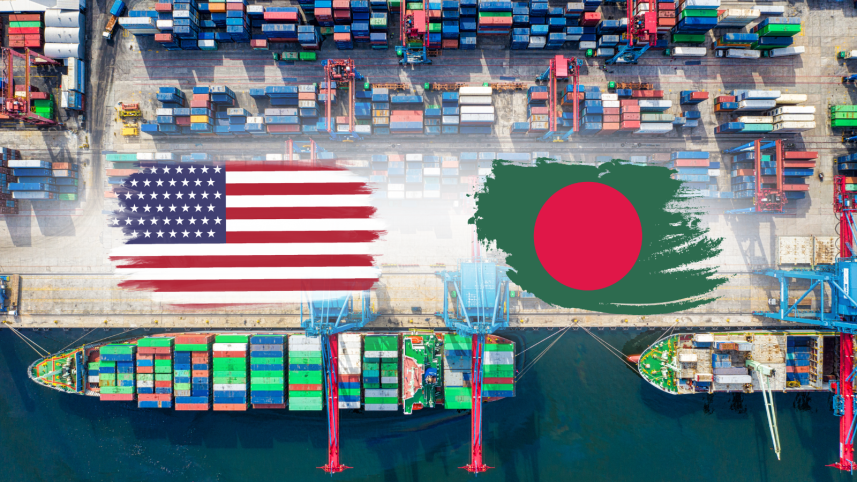
Following the US Supreme Court’s landmark February 2026 decision striking down President Trump’s IEEPA tariffs, Washington has rapidly pivoted. The United States’ trade strategy has effectively transformed into a "Fortress" model, deploying a formidable two-pronged offensive: a temporary 10 percent global import surcharge under Section 122, followed by the threat of aggressive, long-term Section 301 investigations.
For nations heavily reliant on the American market, the message is unambiguous: negotiate a settlement before the temporary tariffs expire in July 2026, or face severe, permanent penalties. Empowered by Section 301, the Office of the United States Trade Representative (USTR) has launched sweeping probes into foreign trade practices that allegedly undercut the US industrial base and compromise global labour standards.

These investigations target 16 economies for "structural excess capacity" and 60 economies for failing to eliminate forced labour from their supply chains. If corrective policies are not implemented, Washington is prepared to impose punitive tariffs to level the playing field. Inevitably, Bangladesh finds itself squarely under this intense scrutiny.
A DANGEROUSLY COMPRESSED TIMELINE
What makes this situation uniquely perilous for Bangladesh is the USTR’s exceptionally compressed timeline. By law, the USTR has up to a year to issue a final determination after initiating a Section 301(b) investigation. However, USTR Jamieson Greer has publicly pledged to conclude the process in a mere five months.
This accelerated schedule is designed to ensure that new Section 301 tariffs are ready to seamlessly replace the temporary 10 percent global tariffs when they expire on July 24, 2026, avoiding any gap in tariff coverage. Consequently, stakeholders face a vanishingly narrow window to prepare and submit meaningful input. Preliminary consultations are already underway. Written comments for both investigations are due by April 15, 2026, followed closely by high-stakes public hearings in April for forced labour and May for excess capacity. Final binding conclusions are expected by July.
THE FRAGILE 19 PERCENT LIFELINE
While Bangladesh and the US have secured a tentative 19 percent tariff rate, complacency is a luxury Dhaka cannot afford. USTR Greer has made it clear that this stopgap deal is highly fragile and wholly dependent on the pending Section 301 investigation-a stark indicator of Washington's hardline expectations.
In this precarious interim, our exports are already absorbing a 10 percent baseline surcharge-one that Washington has signalled will soon jump to 15 percent. But the ultimate threat is much steeper: should this fragile 19 percent deal collapse, Bangladesh faces punitive, permanent Section 301 tariffs that will easily shatter that 19 percent threshold.
WHAT DOES THIS MEAN FOR BANGLADESH?
From Bangladesh’s perspective, the implications of these investigations are significant. Any post-investigation tariff differentiation could create a potentially discriminatory trading environment, making market access more difficult for suppliers like Bangladesh.
The concept of “excess capacity” itself remains complex and often difficult to measure, as there is no universally agreed-upon definition. While the United States wants to protect its domestic industries and jobs through these measures, it is also important to recognise that the US is not a major producer of textiles and apparel. In volume terms, Bangladesh accounts for about 10.5 percent of US clothing imports, compared to 27 percent for China and 19 percent for Vietnam, suggesting that concerns over ‘excess capacity’ extend well beyond any single supplier.
Broad restrictive measures could therefore risk destabilising global supply chains, affecting not only exporting countries but also retailers, consumers, and price stability in importing markets. However, Bangladesh can still emphasise that our booming exports -- particularly in the readymade garment (RMG) sector -- are the natural result of our market-driven industrial structure, robust private investment, and genuine global demand.
As we navigate our LDC graduation transition, we need to back this narrative with concrete data demonstrating that our capacity expansion is directly aligned with global consumption trends, rather than driven by state-directed, market-distorting subsidies.
On the issue of forced labour, Bangladesh’s garment industry operates within a framework of national labour laws and compliance mechanisms that are regularly monitored by government agencies, international buyers, and independent third-party auditors. Initiatives such as the ILO Better Work program have been implemented successfully, while labour legislation has undergone multiple amendments over the past decade to strengthen worker protections, social dialogue, and institutional oversight.
Bangladesh can therefore confidently demonstrate its commitment to responsible production and sourcing, welcoming greater collaboration with trade partners to enhance transparency and traceability across supply chains.
At the same time, this moment calls for constructive engagement: deepening trade ties with the United States, addressing remaining trade barriers, and reinforcing dialogue with buyers and policymakers. Through proactive cooperation and continued reforms, Bangladesh can send a clear message that it remains a reliable, responsible, and forward-looking partner in the global apparel supply chain.
THE PATH FORWARD
This accelerated tariff process is part of a broader strategic shift in US administration policy. Because the United States remains our single largest export destination, maintaining an open, transparent dialogue and reaching a sustainable compromise is not just preferred-it is essential for Bangladesh's macroeconomic survival.
Ultimately, Bangladesh must perform a delicate balancing act over the next few months. We must diligently comply with rigorous USTR investigation demands while simultaneously fighting for flexible terms that safeguard our vital domestic industries and the four million workers -- predominantly women -- who depend on them. The clock is ticking, and our trade diplomacy has never been more critical.
 For all latest news, follow The Daily Star's Google News channel.
The writer is a former director of BGMEA and additional managing director of Denim Expert Ltd. He can be reached at mohiuddinrubel@gmail.com
Comments