


Supply shortages, trader collusion fuel high food prices: CPD
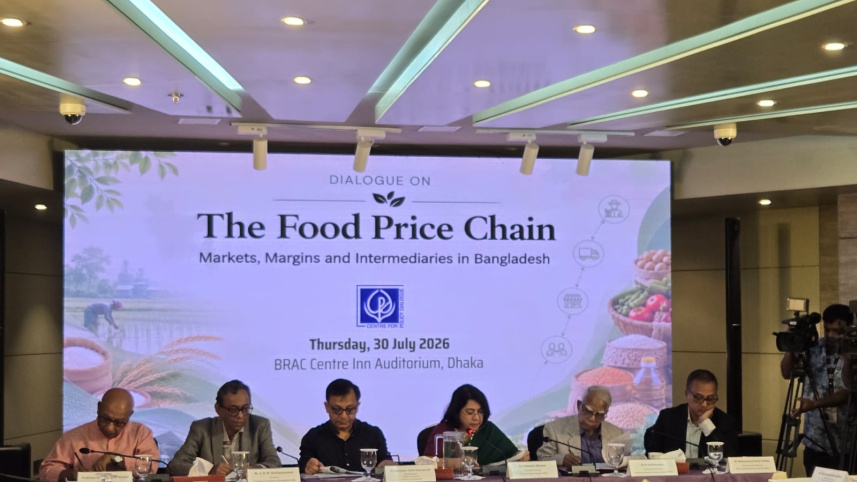
Supply shortages, trader collusion, and hoarding are the most frequent causes of high prices in Bangladesh, according to a Centre for Policy Dialogue (CPD) study on the food price chain.
The independent think-tank unveiled the findings of the study at a dialogue at the BRAC Centre Inn in Dhaka today.

The CPD said it conducted the research to trace the supply chains of selected essential food commodities from retail markets back to producers, as food prices in Bangladesh have remained high and volatile.
The research team collected data from 10 retail markets selected through sampling in the Dhaka Division. In each market, it surveyed five retailers for each of the 10 selected commodities, resulting in 500 retailer interviews.
The commodities include medium-quality rice, lentils, local onions, potatoes, green chilli, brinjal, hen eggs, beef, rui (carp), and chicken.
The study found that farmers, millers, urban wholesale commission agents, and retailers pocketed the largest share of consumers' expenditure through gross margins in most cases.
The price spread at the farmer level was high, exceeding 50 percent for onions and fish, and topping 100 percent for potatoes, brinjal, and green chilli, said CPD Senior Research Associate Foqoruddin Al Kabir at the event.
Brinjal and green chilli prices were highly volatile across all market participants, while chicken and beef farmers received a negative net margin, largely due to high feed costs, the study found.
The CPD said commission payments were evident for onions, brinjal, green chilli, fish, and beef. Retailers' heavy dependence on urban aratdars, or commission agents, was found to increase market concentration and price volatility.
The CPD recommended cutting unnecessary supply-chain layers and boosting competition through closer monitoring by the Ministry of Commerce and the Competition Commission. It said an increase in market choices for farmers and retailers, as well as greater transparency in prices and market information, was necessary.
At the dialogue, Fahmida Khatun, executive director of the CPD, said food prices remain among Bangladesh's most pressing economic challenges, hitting low-income households hardest.
She cited production constraints, supply chain inefficiencies, and weak competition as key drivers, stressing the need for stronger monitoring and evidence-based reforms.
Commerce Minister Khandakar Abdul Muktadir and AHM Shafiquzzaman, president of the Consumers Association of Bangladesh (CAB), attended the event, among others.
 For all latest news, follow The Daily Star's Google News channel.
Comments