


New telecom policy must be assessed after political transition: Khosru
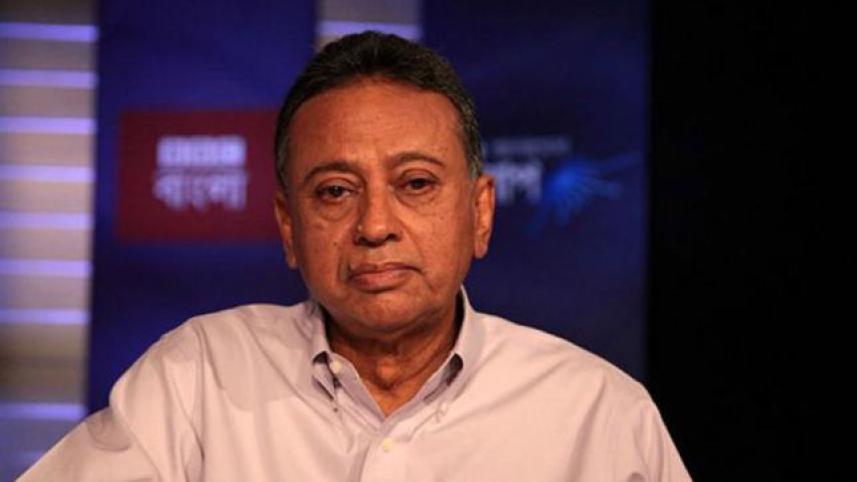
The new telecom policy should be reviewed once Bangladesh returns to a democratic order to safeguard the interests of citizens, the nation, and investors, BNP Standing Committee Member Amir Khosru Mahmud Chowdhury said today.
"I think this is the responsibility of those who will be elected in the coming days," he said, adding that the BNP would not discriminate between local and foreign investors when formulating a policy.

Khosru made the remarks at a seminar titled "Challenges in Shaping the Bangladesh of Tomorrow: The Future of Local Entrepreneurs in the Telecommunications and Information Technology Sectors," organised by the Telecom and Technology Reporters' Network, Bangladesh, at a hotel in Dhaka.
Earlier, in late September, the Telecommunications Network and Licensing Policy 2025 was gazetted.
"The ICT (information and communication technology) and telecom sectors involve critical economic decisions for Bangladesh, so investment, ICT, and telecom policies must be thoroughly assessed before major decisions are made," Khosru said.
He noted that the Bangladesh Telecommunication Regulatory Commission should be an independent authority, but its independence was undermined during the previous government.
"Over the past 14-15 years, licences were issued without accountability. Where five licences were necessary, 30 were issued," he said. "The telecom sector is in a complete mess."
Khosru emphasised that major reforms are needed but insisted that any changes must protect local investment, employment, digital security, and national sovereignty.
"We need foreign investment. But that doesn't mean we will replace local investment with foreign capital. That cannot happen," he said.
"The returns in the telecom sector are high. Foreign companies will naturally remain interested. So, I don't understand why our own people cannot invest in a sector that promises such profits," he added.
Sumon Ahmed Sabir, deputy managing director of Fiber@Home, warned that several provisions in the new telecom licensing policy could hinder local entrepreneurs while giving extra advantages to foreign multinational companies.
"This may create future risks of market monopoly, national security vulnerabilities, and losses for domestic investors," he said.
According to Sabir, the policy introduces major changes to Bangladesh's telecom infrastructure, investment climate, and competitive market structure.
The draft allows multinational companies with up to 65 percent foreign direct investment (FDI) to get cross-layer licences, while similar opportunities remain limited for local operators.
"This will create discriminatory barriers for domestic players," he added.
He also cautioned that investors who have spent substantial capital over the past 15–20 years might struggle to recover their investments, noting the "real risks of super dominance" by one or more multinational firms.
Long-established local, infrastructure-based businesses could face existential threats, he said.
Moynul Haque Siddiqui, chairman of Fiber@Home, said local operators have invested billions of dollars to build Bangladesh's telecommunications infrastructure. "But now their business will be jeopardised if telecom service providers are allowed to enter the same business," he cautioned.
Telecom expert Abu Nazam M Tanveer Hossain added that the new policy and guidelines are being developed in a scattered way, without a long-term strategic vision.
Ganosamhati Andolon Chief Coordinator Zonayed Saki warned, "After a revolution, people will not accept any policy that hands control of the telecom sector to foreign operators."
 For all latest news, follow The Daily Star's Google News channel.
 BNP Chairperson's Advisory Council Member Jahiruddin Swapan said the draft policy highlights certain technological competencies to favour foreign investors, effectively side-lining local entrepreneurs.
He added that since 2007, successive governments have issued licences without proper oversight, creating a culture of unaccountable business practices.
"No policy—whether for domestic or foreign investors—can function without accountability, nor should it," he said.
Journalist Masood Kamal also spoke at the event.
Comments