


Make it easy for companies to get listed
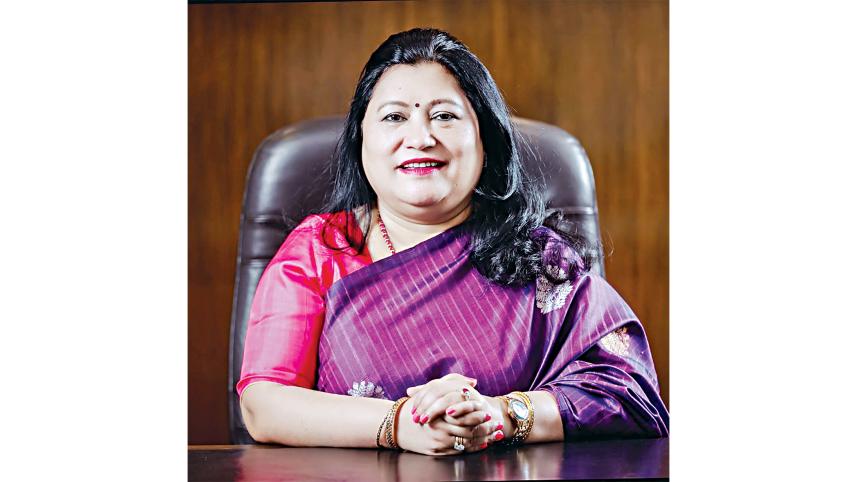
Bangladesh needs to ensure an environment conducive to attracting companies, especially multinational ones, with good track records to the stock market, said Rupali Haque Chowdhury, president of the Bangladesh Association of Publicly Listed Companies (BAPLC), yesterday.
This should be enabled not only through widening of the gap in taxes paid by listed and non-listed firms but also by ensuring a level playing field for all firms, said Chowdhury, also managing director of Berger Paints Bangladesh.

When Berger got listed, the gap was 15 percentage points, she told a views-exchange meeting organised by Capital Market Journalists' Forum (CMJF) on its premises in Dhaka.
Now it is very low (5 percentage points), for which getting listed is an unattractive option for non-listed firms, she said.
The law for listed and non-listed companies should be reviewed as the company act is giving a lot of benefits to the non-listed firms, such as relief from maintaining corporate governance, said Chowdhury.
If non-listed firms are forced to maintain corporate governance, the practices will cause no discomfort once they get listed, she said.
"It is not just about taxes; we must create a level playing field," she said, adding that listed firms need to follow stricter regulatory requirements.
Moreover, entrepreneurs can easily get bank loans for their long-term needs, for which they do not need to get listed, said Chowdhury.
In many countries, the process to avail bank loans is complex, for which firms meet their financing needs through the stock market, she said.
The stock market lacks companies with good track records. Domestic and foreign companies must find it lucrative to enter the stock market or invest in it, she said.
Many investors fear getting harassed at annual general meetings, where their families are sometimes present, said Chowdhury.
"It is a deterrent factor for listing...So, the regulator should work on it," she said.
To attract relatively low paid-up capital-based companies, the BAPLC has already urged reviewing the listing requirements, she said.
Chowdhury said the BAPLC was ready to provide support to ensure the presence of companies with good track records in the market.
In response to a question, she stated that now was not the right time to increase port charges and other supplementary duties.
If these duties are raised at this moment, businesses will not be able to cope with the resulting inflationary pressure, she said.
She said the business sector had to cope with a huge foreign exchange loss in a span of two years, as the local currency was devalued by around 40 percent, directly hitting their profits.
Coming about after the pandemic, the Russia-Ukraine war and exchange loss were big shocks for the business sector, said Chowdhury.
"I realise that the government also needs money, but it is not the right time to raise costs for businesses," she said.
To attract investment, she emphasised the need for bringing improvements to financial policies, including tax regulations and infrastructure.
 For all latest news, follow The Daily Star's Google News channel.
 Compared to peer countries, Bangladesh has higher lead times, she noted. "The supply chains must be world-class to attract investors," she said.
Chowdhury strongly emphasised the need to eliminate corruption.
She called for cancelling licences of audit firms found involved in financial irregularities and stressed on the importance of setting precedents.
The regulatory bodies must ensure accountability so that wrongdoers face consequences, she said.
She explained that people were motivated by two factors—incentives and punishment. If regulatory bodies fail to take action against any misconduct, it only encourages further wrongdoings, she said.
Most people genuinely want to be good and honest, but a few bad actors define the broader population, said Chowdhury.
She stressed on the need for collective action, stating that now was the time for everyone to rise and bring about a positive change to the nation.
The event was presided over by CMJF President Golam Samdani Bhuiyan and moderated by General Secretary Abu Ali.




Comments