


High inflation compels many to do multiple jobs: PPRC webinar
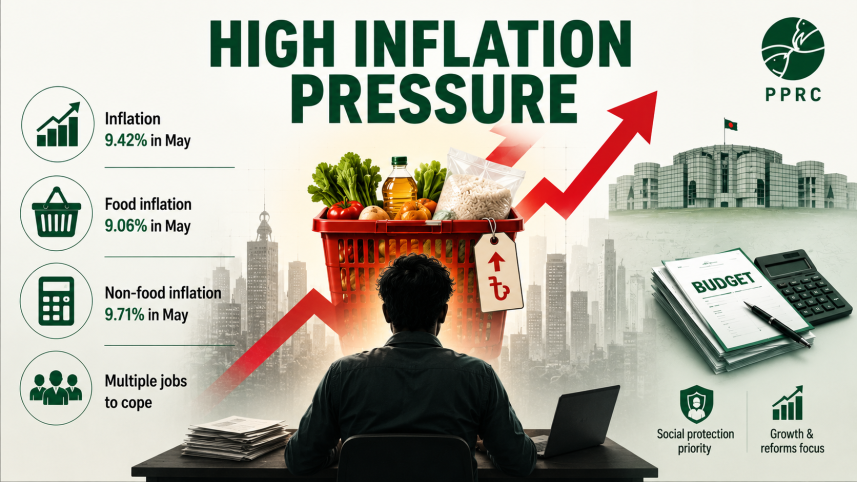
Bangladesh has been experiencing persistently high inflation for a prolonged period, pushing people's endurance to its limits, analysts said at an event today.
The prolonged period of high inflation in the country has had a significant impact on people's lives. In this reality, many young people are having to take on multiple jobs. Some are even working three jobs to cope with the situation, they said.

They spoke at a budget analysis event organised online by the Power and Participation Research Centre (PPRC).
Bangladesh’s overall inflation climbed to a 16-month high of 9.42 percent in May, driven largely by a sharp rise in food prices that is squeezing household budgets, particularly for low- and middle-income families.
According to data released by the Bangladesh Bureau of Statistics, food inflation rose to 9.06 percent in May from 8.39 percent in April, reflecting higher prices of essential commodities. Non-food inflation also increased, reaching 9.71 percent from 9.57 percent in April.
Farah Kabir, country director of ActionAid Bangladesh, said prices of goods have remained elevated for several years.
“If you ask small and medium-sized business owners, they will tell you that business is not doing well,” she said.
The country's overall situation cannot be judged solely by looking at Dhaka. Dhaka is like a balloon—much of what is seen here is artificial, she said.
Even tea stalls remain open at midnight. When around 2 crore people live in such a limited space, this is to be expected. Overall, people across the country are not doing well, she said.
The proposed budget includes reductions in duties and taxes on a range of essential commodities. As a result, prices have remained largely stable following the budget announcement, said Muhammad Abdul Majid, a former chairman of the NBR.
According to him, the current prices of essential goods are likely to remain unchanged if these tax concessions continue.
Majid emphasised that political commitment will be crucial to achieving the intended outcomes. Simply announcing tax and duty reductions is not enough, he said.
Policymakers must also ensure that the measures are properly implemented and that consumers ultimately benefit from them, he said.
Hossain Zillur Rahman, executive chairman of the PPRC, said the country has social protection programmes aimed at supporting low-income groups. However, he raised concerns about the budget's implications for the middle class.
Although the tax-free income threshold has been increased, higher tax rates have offset part of that benefit. Consequently, those who pay income tax are likely to see only limited relief, he said.
He said the proposed budget reflects the new government's commitment to easing public hardship, boosting economic growth and pursuing key reforms. It places special emphasis on social sector spending, and its objectives have been widely viewed as positive.
Nevertheless, concerns persist over the feasibility of the spending plans, given that revenue collection has repeatedly fallen short of target. This raises questions about how the government will fund its ambitious expenditure programme, he added.
Md Fazlul Hoque, former president of the Bangladesh Knitwear Manufacturers and Exporters Association, warned that rising government borrowing from banks could crowd out credit available to the private sector.
He further stressed that improvements in energy security, overall stability and reforms in the banking sector are essential to encourage higher private investment.
 For all latest news, follow The Daily Star's Google News channel.
Comments