


Can legal reforms free BB from political control?

The Bangladesh Bank (BB) has proposed a comprehensive legal overhaul to secure full institutional autonomy and reduce political interference. In a letter to the finance adviser, BB Governor Ahsan H Mansur presented nine draft amendments to the Bangladesh Bank Order 1972, aiming to align the central bank's governance with international standards. The proposed Bangladesh Bank Ordinance 2025 would introduce significant structural changes to administration and governance, including management, board composition and institutional functions.
Key proposals include a search committee to appoint the governor and deputy governors to prioritise professional competence rather than political loyalty. A Court of Inquiry would be authorised to investigate serious allegations against regulators and issue formal advice following a trial. This would make appointment and removal processes less politically driven. The board structure would shift towards greater independence, reducing government-appointed positions and increasing independent experts. The governor's rank would be elevated to that of a cabinet minister, matching peers in India and Singapore, to reinforce institutional standing. The draft also expands the bank's oversight powers, granting legal authority to protect whistleblowers, regulate credit rating agencies, value collateral and act against monopolies to improve discipline across the financial sector.

Backed by the International Monetary Fund (IMF) recommendations under its $5.5 billion loan programme, these reforms are seen as long overdue. The initiative is a long-anticipated attempt to address one of the central bank's deepest weaknesses: its lack of independence. For decades, political considerations have shaped decisions in monetary policy, banking regulation and financial governance. Governor Mansur's proposals aim to convert the idea of autonomy into a practical legal framework, creating guardrails that could survive changes in political leadership.
Yet the initiative is as ambitious as it is fragile. The timing, under an interim government and IMF conditions, creates both opportunity and risk. It offers a brief window for technocratic reform without partisan obstruction, but it also raises questions of legitimacy and durability. Without broad political consensus, future governments could overturn the ordinance. Bangladesh's history is full of reforms reversed before they could take root.
The design of the proposal draws heavily from models such as the Bank of England and the Reserve Bank of India. It is an impressive effort to meet international standards. However, the local political economy is different. The central bank operates in a system where informal influence, patronage networks and bureaucratic overlap are deeply entrenched. Legal safeguards alone cannot overcome such forces. Autonomy is not just a legal matter, but a political one, shaped by how much space political leaders are willing to allow and how responsibly that space is used.
Elevating the governor's rank to cabinet level may enhance authority, but it could also blur boundaries between fiscal and monetary policy if not carefully managed. Likewise, extending the bank's mandate to include whistleblower protection and anti-monopoly action could overburden it without adequate capacity and coordination with other agencies.
In the end, the proposed amendments are an important and urgent beginning, not a cure-all. Independence cannot be granted only by law; it must be built through credible leadership, transparency and consistent enforcement of rules. If enacted, the amendments would strengthen the legal foundations of financial governance. But without political restraint, professional integrity and sustained implementation, they risk becoming another chapter in the country's long record of unfulfilled promises of reform.
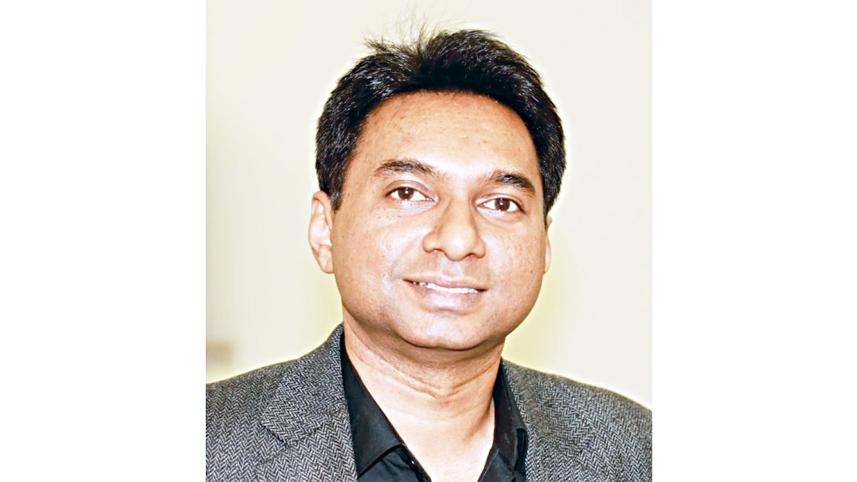
Selim Raihan is an economics professor at Dhaka University, and executive director of South Asian Network on Economic Modeling (Sanem). He can be reached at selim.raihan@gmail.com
 For all latest news, follow The Daily Star's Google News channel.
Comments