


BNP to abolish Financial Institutions Division if voted to power
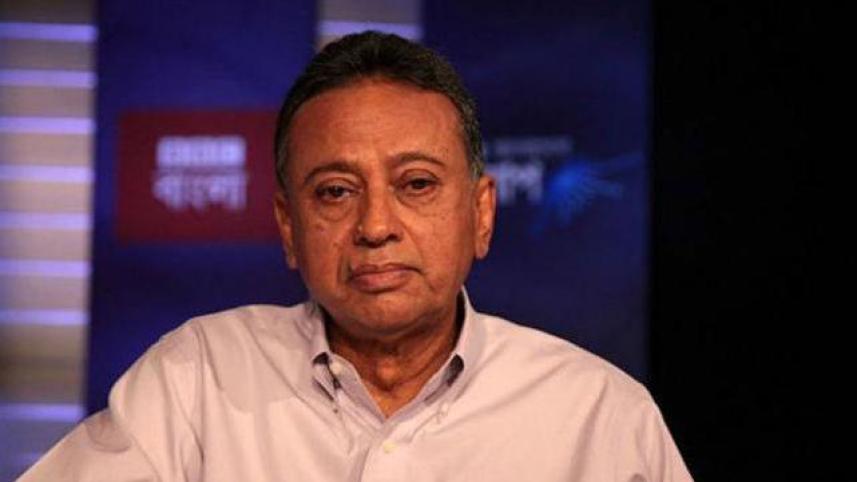
The BNP will abolish the Financial Institutions Division under the Ministry of Finance if it returns to power, said the party's Standing Committee Member Amir Khosru Mahmud Chowdhury yesterday.
He alleged that the division was established to control state-owned banks by appointing cronies as managing directors and board members, turning it into a breeding ground for corruption and misuse of public funds.
 For all latest news, follow The Daily Star's Google News channel.
 "When the BNP was last in power, we abolished this division. But Sheikh Hasina reinstated it after assuming office. If we return to power, we will scrap it again," Khosru said while speaking as the chief guest at the Economic Reform Summit held at a hotel in Dhaka's Gulshan.
The event was jointly organised by Voice for Reform, BRAIN, Innovision Consulting, Fintech Society, and Citizen Coalition.
Khosru, a former commerce minister, pledged to implement major deregulation by easing government control and cutting bureaucratic red tape, empowering the private sector to steer Bangladesh's economy toward inclusive growth if the BNP comes to power.
He urged trade bodies and entrepreneurs to prepare for a more private sector–driven, less bureaucratic economy.
To reform and restore discipline in the financial sector, he stressed the need to grant further independence to regulatory bodies like Bangladesh Bank.
"For real reform, institutions like Bangladesh Bank, the Securities and Exchange Commission, and BTRC must be fully independent."
The politician claimed that under the BNP-led governments, no political appointments were made, preventing market manipulation and banking scams.
If it comes to power again, the BNP would undertake all necessary reforms to boost investment, he also said.
"If you want investment and trade to grow, you must create an open environment where bodies like the Bangladesh Investment Development Authority involve the private sector, not just bureaucrats."
Referring to the recent division of the National Board of Revenue (NBR) into two separate entities, he questioned the effectiveness of the move.
"What benefit has it brought? Both parts are still controlled by bureaucrats," he said, noting that the BNP has a different plan for the tax authority.
On the issue of bureaucracy, Khosru said the BNP would neither confront civil servants nor allow unaccountability to persist.
"The bureaucracy should focus on implementing policy rather than making it, as overlapping roles have long hindered efficiency and accountability. Rather, we will reduce their excessive control. Power will be decentralised in all areas of governance. Policy-making authority will remain with policymakers, not bureaucrats," he said.
Meanwhile, during a panel discussion at the event, energy expert M Tamim said, "We are currently facing a severe energy crisis. Over the past 15 years, there has been no investment in developing domestic energy sources."
Instead, he added that investment has gone into power plants—about 30 billion dollars spent—because that's where the most opportunities for corruption existed.
Professor Rashed Al Mahmud Titumir of Dhaka University's Department of Development Studies said that the previous government's growth model had, in fact, created poverty and unemployment.
"Behind the so-called stories of economic miracles lay harsh realities, which are now coming to light," he said.
"Due to rising inflation, people's purchasing power has fallen, and poverty and unemployment have increased," Titumir continued.
"Bangladesh now stands at a historic crossroads," he added. "Either we accept stagnation, or we move toward unprecedented prosperity. For that, a new economic model is essential."
Masrur Reaz, chairman of Policy Exchange Bangladesh, said that the country's investment environment has lagged due to the absence of long-term planning.
"Bangladesh has no national investment policy and therefore lacks proper coordination between foreign and domestic investments," he said.
Monzur Hossain, a member of the Planning Commission's General Economics Division, said Bangladesh must focus on both the supply and demand sides of investment.
He stressed creating opportunities in sectors like manufacturing, electronics, automobiles, defence, and semiconductors, and called for a short-term strategic plan to guide future economic direction.
Mohammad Hasan Arif, vice chairman of the Export Promotion Bureau (EPB), said Bangladesh has fallen into a "collective weakness" and must overcome it.
He proposed forming an independent export and investment promotion agency similar to Japan's JETRO or South Korea's KOTRA to attract foreign investment and boost exports.
Nakibur Rahman, Jamaat-e-Islami's US spokesperson, said most remittance money goes into non-productive assets like land and housing.
He urged creating systems to channel remittances into investment, saying attractive options for expatriates could boost growth and employment.
Other speakers at the event included Abul Kasem Khan, chairperson of BUILD; accountant Snehashish Barua; Jyoti Rahman, executive editor of Counterpart; and Waseem Alim, CEO of Chaldal.


Comments