Once again the debate over Bengali nationalism

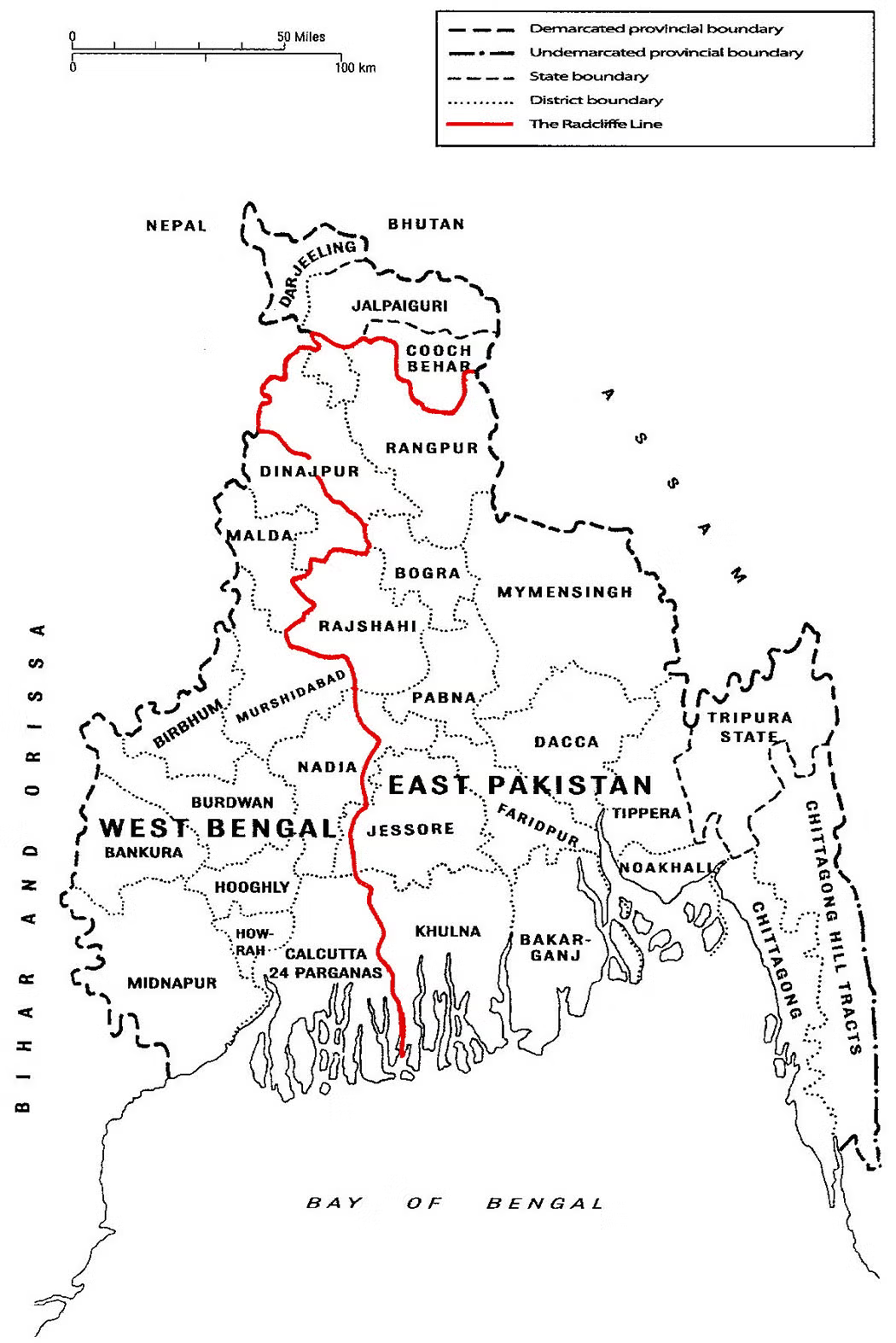
After the Partition of 1947, within just twenty-five years, Bangladesh emerged as an independent state. The creation of this nation—on the eastern side of what was once undivided Bengal—remains a rare example in world history: a state born out of another already independent state in the post–Second World War era, when decolonisation was reshaping the global order, as in the case of Pakistan and later Bangladesh. It is no secret that Bengali Muslims largely aspired to be part of Pakistan in 1947, while West Bengal, with its Hindu majority, preferred to remain within India.
This raises a crucial question: how, then, was it possible for Bangladesh to emerge on the basis of Bengali nationalism? From the immediate aftermath of the 1971 Liberation War to the present day—and perhaps even into the future—historians have debated whether the birth of Bangladesh was a sudden rupture, a continuation of the Partition of Bengal in 1947, or whether its roots can be traced further back to the first Partition of Bengal in 1905.
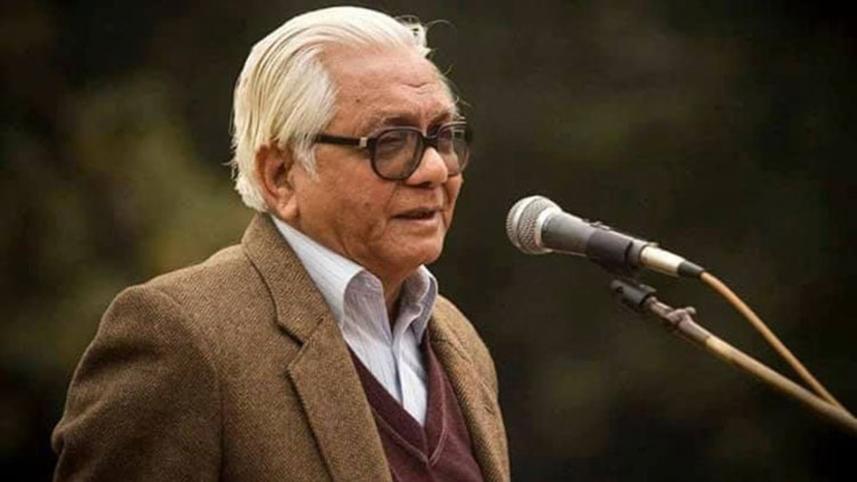
The recently deceased Badruddin Umar raised this very question as early as December 20, 1972, in Dainik Azad, where he wrote about the roots of Bangladeshi nationalism—what we generally describe as Bengali nationalism. Umar critically examined the Awami League, which had led the Liberation War, arguing that its justification of Bengali nationalism often rested on slogans rather than substantial arguments. He insisted that greater clarity was needed to understand what truly made the emergence of a Bengali nation possible in 1971. It was Umar himself whose writings profoundly shaped radical youth during the Pakistani era, inspiring them to challenge the dominant ideology of Pakistan. His three groundbreaking works—Sampradayikata (1966), Sanskritir Sankat (1967), and Sanskritik Sampradayikata (1968)—were especially influential, offering sharp critiques of communalism and cultural crisis at a time when state-sponsored Pakistani chauvinism sought to suppress alternative voices.
Umar raised a critical question: while countries such as Germany, Korea, and Vietnam split into separate states, none of them claimed to constitute entirely new nations. Why, then, did Bangladesh argue for itself as a distinct nation, and what were the loopholes in the way this claim was articulated? He approached the issue from economic, cultural, and social perspectives, probing the basis of the so-called “Bengali nation”, which was framed as distinct from West Bengal. Bengali nationalism had emerged in opposition to Pakistan’s communal nationalism, rooted in the two-nation theory, with language becoming the central ground for unity. But if the Bengali nation had supposedly evolved naturally over thousands of years, could it not also be seen as sharing the same cultural legacy as Rammohan Roy, Michael Madhusudan Dutt, Bankimchandra Chattopadhyay, Mir Mosharraf Hossain, Rabindranath Tagore, Sharatchandra Chattopadhyay, and Kazi Nazrul Islam—figures equally revered in West Bengal?
Being one of the renowned historians of the 1952 Language Movement, Badruddin Umar contends that no other decisive literary or cultural events took place in East Pakistan during the following two decades that could establish its distinctness, in terms of language, from West Bengal.
This brings him to the second issue: the economic foundations of Bengali nationalism in that period. Economically, East Pakistan remained stagnant, subjected to what Umar describes as a form of quasi-colonial exploitation by West Pakistani rulers and industrialists. There was little to no capitalist development, as West Pakistani policies kept the region bound within a largely feudal framework. In this sense, East Pakistan’s economic trajectory showed no substantial divergence from that of West Bengal. By contrast, when Germany, Korea, or Vietnam were divided, each side adopted entirely different economic systems; yet none of them sought legitimacy by claiming to be a separate nation. Therefore, Umar argues, the economic situation of East Pakistan did not provide strong or valid grounds for the articulation of a distinct nation.
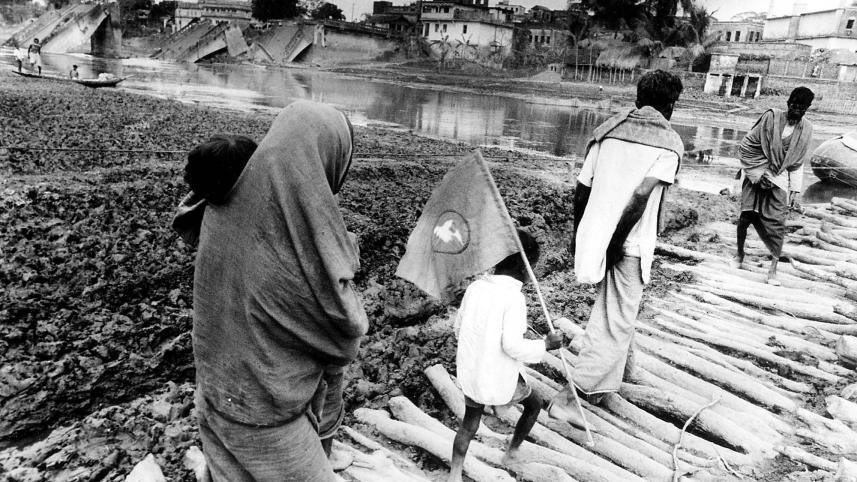
The most striking change in the social dynamics of East Pakistan, according to Umar, was the shift in its social structure. Once dominated by Hindus, this structure was significantly transformed as Muslims gradually replaced them in positions of social and economic ownership. Umar therefore asked whether this transformation was, in fact, the decisive factor that facilitated the formation of a new kind of Bangladeshi (or Bengali) nationalism under Sheikh Mujibur Rahman—often articulated at the time in the name of “Mujibism”. He also argued that the roots of this nationalism were entangled in the Lahore Resolution of 1940, famously known as the Pakistan Resolution. While the new rulers of Bangladesh described their project as “Bengali nationalism”, Umar provocatively raised the question of whether it was not, in reality, a reworking of the 1940 Resolution, in which the idea of creating “two Muslim states” had been proposed. Bengali nationalism, as made tangible by the new rulers led by the Awami League, was, in his view, nothing more than a revision of that original resolution—with the plural “states” reduced to a singular “state” after 24 years.
Badruddin Umar, who remained a noted intellectual presence in Bangladesh for more than five decades, first gained traction in the 1960s during the Pakistan era for his trenchant critiques of Pakistani ideology from social, cultural, and historical perspectives—and for his opposition to Bengali chauvinism. Notably, he was not alone in viewing Bangladesh as a return to the Lahore Resolution.
Whether or not one agrees with Umar’s claim that independent Bangladesh simply reproduced the logic of the Lahore Resolution—and thereby risked overlooking the transformative significance of the 1971 Liberation War—the ambivalent nature of Bangladeshi nationalism, which so often exposes its own fragility, remains undeniable. It is precisely this ambivalence that Umar so astutely diagnosed in 1972, and which continues to provide fertile ground for social scientists today.
Priyam Pritim Paul is currently pursuing PhD at Ashoka University.
Send your articles for Slow Reads to slowreads@thedailystar.net. Check out our submission guidelines for details.

Part I / From Artificial Intelligence to the Artificial State: Is the Trajectory Inexorable?
157th Birth Anniversary of Mahatma Gandhi / Gandhi’s return to Noakhali
Why does Tagore still trouble Bangladesh’s idea of ‘us’?

Can Bangladesh make better use of its zakat money?

Three revolutions that reshaped the world
Paradise lost and found: Rediscovering early modern Bengal
Unbound Mother: The making and remaking of Kaali in Bengal

Do great leaders make history, or does history make them?
Poison and cremation: A forensic history of colonial Bengal