


5 key developments of economy last week
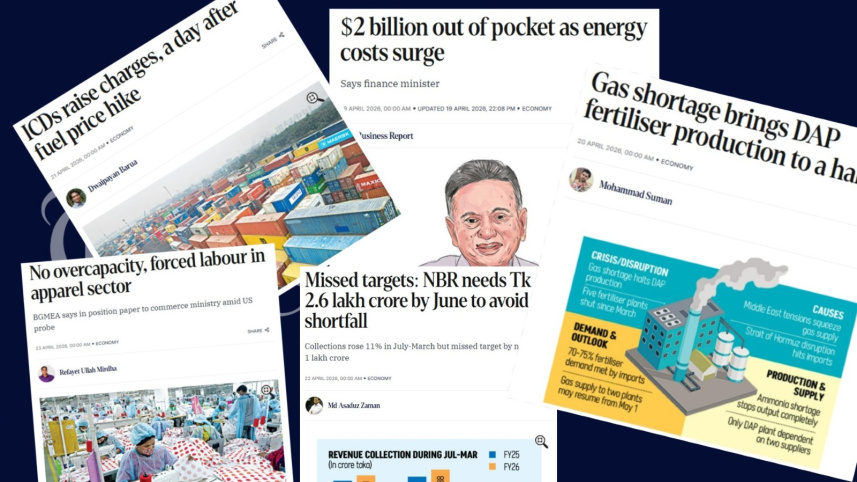
Bangladesh's economy last week revolved around energy-related costs straining public finances, a halt in fertiliser production due to gas shortages, and fresh burdens on trade from rising container depot charges.
The week was also marked by a revenue collection shortfall heading into the fiscal year-end, and pushback from the garment industry against US allegations of forced labour and overcapacity.

The following is a recap of those major stories as covered by Star Business.
$2 billion out of pocket as energy costs surge, says finance minister (April 19)
Bangladesh has incurred nearly $2 billion in additional energy costs owing to global supply chain disruptions, Finance Minister Amir Khosru Mahmud Chowdhury said while addressing an event in Washington. He called for urgent budget support to ease fiscal pressure and shore up weakened banks.
Gas shortage brings DAP fertiliser production to a halt (April 20)
Production at the state-owned DAP Fertilizer Company Limited in Chattogram ground to a halt after an acute ammonia shortage, itself a consequence of the prolonged closure of five urea factories, including CUFL and Kafco, disrupted by gas supply problems tied to geopolitical tensions in the Middle East.
ICDs raise charges, a day after fuel price hike (April 21)
Private inland container depots hiked handling charges by 8.5 percent, just one day after diesel prices climbed 15 percent. Exporters immediately protested the move, warning it would raise trade costs and further weaken Bangladesh's competitiveness in global markets.
Missed targets: NBR needs Tk 2.6 lakh crore by June to avoid shortfall (April 22)
The National Board of Revenue faces a Tk 2.6 lakh crore collection target in the final quarter of FY26 after falling nearly Tk 1 lakh crore short of its nine-month goal. Analysts pointed to slowing GDP and elevated energy costs as the chief obstacles to closing the gap.
No overcapacity, forced labour in apparel sector (April 23)
The BGMEA firmly rejected US allegations of forced labour and overcapacity in Bangladesh's garment sector. In a formal position paper, the association said that its exports support rather than undercut the US economy, and that the industry operates in full compliance with internationally recognised labour standards.
 For all latest news, follow The Daily Star's Google News channel.
Comments