


Asia’s coal imports set to surge as LNG stays costly
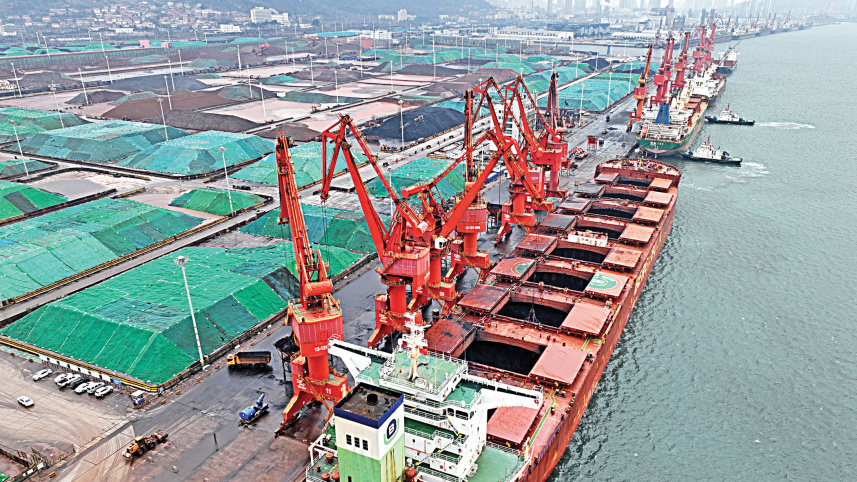
Global exports of thermal coal are currently on track to register a second consecutive annual contraction.
But thanks to thermal coal’s widest price discount to LNG in four years, coal shipments look set for a late-year resurgence.

Benchmark Australian thermal coal export prices are currently around 80 percent cheaper than liquefied natural gas for delivery in Asia.
This cements coal’s place as the most affordable power generation fuel in the region.
The fourth quarter of the year is also the traditional high point for coal demand in Asia.
This is when utilities replenish stocks ahead of the winter heating period.
That combination of a growing price advantage over alternate fuels just as the peak demand period kicks in has the potential to propel coal export volumes sharply higher over the final weeks of the year.
For climate trackers hoping to see a permanent decline in coal use, any late-year renaissance in coal flows may be a disappointment.
But for utilities across the world’s most populous region, the economics of generation may trump climate concerns over the near term. This will ensure coal retains its central role in power production mixes across Asia.
Australian export prices of thermal coal from Newcastle are currently trading around $143 per metric ton.
This is equivalent to around $5.40 per million British thermal units, according to LSEG. That compares to the latest quotes for LNG delivered to Asia of around $25.00 per MMBtu.
This means that high-quality thermal coal is roughly $20 per MMBtu cheaper than LNG in key Asian power markets.
With thermal coal prices from Indonesia routinely at least $1 per MMBtu cheaper than Australian coal, power generators have a strong economic incentive.
They are opting for coal over LNG for the upcoming winter heating season.
Power fuel importers are already into the fuel restocking cycle in preparation for a pick-up in heating demand across major markets.
Major coal-consuming markets include China, Japan, and South Korea.
Those three countries imported around 122 million metric tons of coal during the July-through-September quarter, data from Kpler shows.
That is when power demand for cooling peaks in those countries.
However, those same countries imported an average of 143 million tons of thermal coal during the last quarter of the year in 2024 and 2025.
This is when heating demand peaks.
 For all latest news, follow The Daily Star's Google News channel.
 That means the combined coal imports of China, Japan, and South Korea alone could jump by around 20 million tons during the last quarter of the year.
For major coal exporters such as Indonesia and Australia, those import trends mean the final months of the year are usually the busiest.
Export data for Indonesia show that average shipment volumes during the October-to-December quarter averaged around 137 million tons for the 2023 to 2025 period.
During the third quarter of 2026, Indonesia shipped out just under 107 million tons. This was the lowest tally for that quarter since 2021.
Australia also tends to see export volumes reach their peak during the final quarter. Exports averaged around 55 million tons for the October-to-December period from 2023 through 2025. During the third quarter this year, Australia’s export tally was 52 million tons.
If utilities across East Asia ramp up their coal import orders, Indonesia and Australia will see a significant rise in purchase orders.
Combined fourth-quarter volumes out of Indonesia and Australia averaged around 192.5 million tons from 2023 through 2025, Kpler data shows.
Total exports from those countries were around 159 million tons during the July-to-September quarter of 2026.
Exports could see a nearly 30-million-ton climb during the final quarter of 2026 if previous trends are repeated.
If that seasonal lift materialises, it would mark a notable turnaround for a fuel widely viewed as being in decline.
Yet coal’s enduring advantage is that it competes on price rather than policy.
With LNG prices elevated and power demand entering its strongest seasonal phase, utilities across Asia may conclude that the cheapest source of electricity is also the hardest fuel to replace.
For all the momentum behind the energy transition, this winter’s trade flows could serve as a reminder that cost still shapes fuel choices.
Comments