


German exports jump despite supply bottlenecks
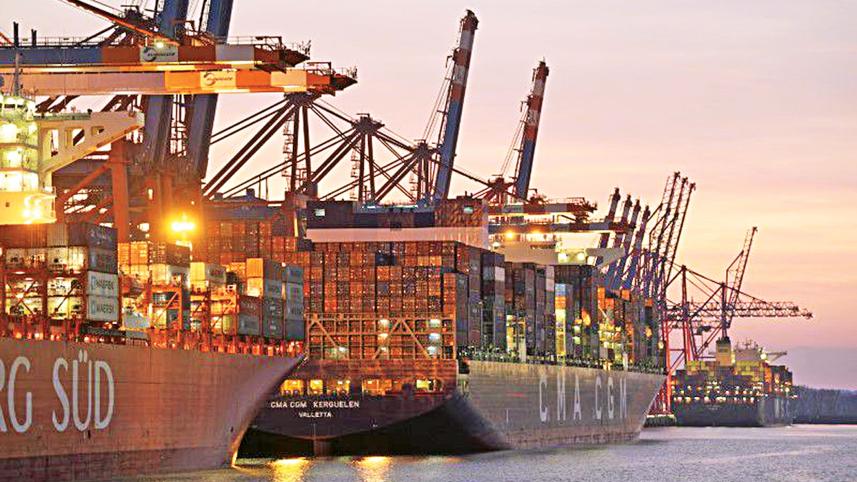
German exports rose more than expected in June despite persisting supply bottlenecks in manufacturing, data showed on Monday, suggesting a solid recovery in Europe's biggest economy.
The data, released by the Federal Statistics Office on Monday, brought some relief after manufacturing figures showed on Friday that industrial output unexpectedly fell in June due to supply bottlenecks for intermediate goods.

"Exports are now up for the 14th month in a row. What a run!" VP Bank analyst Thomas Gitzel said.
Seasonally adjusted exports jumped by 1.3 per cent on the month in June after a slightly revised rise of 0.4 per cent in May. Imports rose 0.6 per cent after an increase of 3.4 per cent the prior month.
The strong rise in exports widened the trade surplus to 13.6 billion euros from a revised 12.8 billion euros in May.
A Reuters poll had pointed to a 0.4 per cent increase in exports, a 0.5 per cent rise in imports and a trade balance of 13.4 billion euros.
Compared to February 2020, the month before the start of the Covid-19 pandemic in Germany, seasonally adjusted exports rose by 1.1 per cent and imports jumped by 10 per cent, underlining strong domestic demand and massive state spending during the crisis.
The monthly trade data did not include a breakdown by country.
On the year, exports jumped 23.6 per cent and imports soared 27 per cent, mainly driven by business with the United States and China, Germany's two most important trading partners outside the European Union's single market.
Exports of "Made in Germany" goods to the United States were up by nearly 40 per cent on the year in June and exports to China rose 16 per cent. Exports to Britain increased 11 per cent on the year while imports from the UK were up by 11.5 per cent.
VP Bank analyst Gitzel cautioned there was risk that the supply bottlenecks for intermediate products in manufacturing could soon be reflected more clearly in the export figures.
"The problem of material shortages will eat its way through the entire economic figures," Gitzel added.
The central bank said last month economic growth could accelerate further this summer if there were no "significant setbacks" in the fight against the pandemic and if supply bottlenecks eased.
On this condition, the Bundesbank expects the economy to reach its pre-pandemic levels at the end of the third quarter, growing 3.7 per cent this year and 5.2 per cent next year.
 For all latest news, follow The Daily Star's Google News channel.
Comments