


Some RMG suppliers struggling for export payments

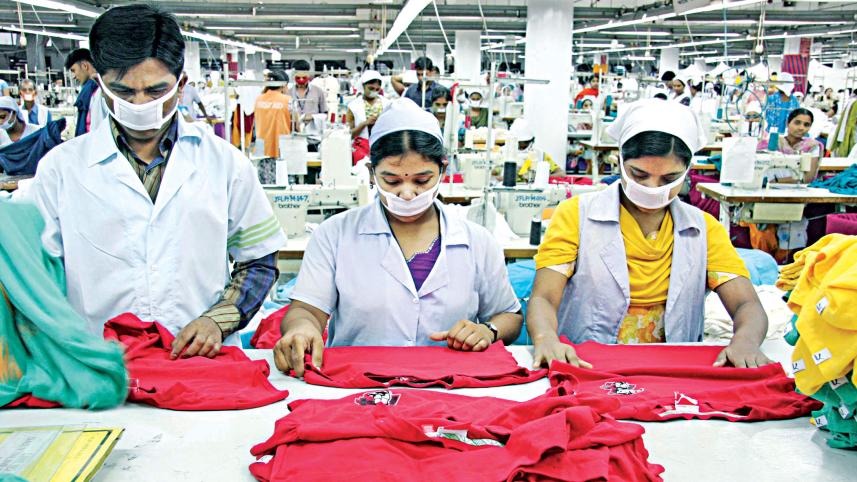
Some local garment suppliers are struggling to avail payments from troubled Western clothing retailers and brands even nearly two years past making shipments while Covid-19 was initially running riot.
Between April and August of 2020, international retailers and brands suspended, cancelled or demanded unusual payment deferrals worth $3.18 billion, according to data from the Bangladesh Garment Manufacturers and Exporters Association (BGMEA).

However, some 95 per cent of the payments were made, although after unusual delays of as much as 220 days and under big discounts from suppliers.
Some of the payments are still pending as some companies went bankrupt and for legal tussles in their respective countries.
Take the instance of JC Penney. Many of the local suppliers are yet to get their payments from the US retail giant as it was handed over to a new owner.
"I have been advised that I will get my payment after the completion of the legal issues," said a major Bangladeshi supplier who is owed $1.3 million.
"However, I do not know when and how my payment would be made," he said, declining a request to be named here.
Suppliers said nearly 100 garment manufacturers from Bangladesh used to supply $800 million-worth goods to JC Penney in a year.
Similarly, British upscale clothing retailer Debenhams has also been taken over by a new owner. As a result, some of the local suppliers did not get their payments in full.
Zahangir Alam, coordinator of Debenhams Vendors Community in Bangladesh, said so far some $50 million out of a total $69 million in due payments has been realised from Debenhams, albeit alongside a discount of more than 25 per cent.
"Some 43 local suppliers used to supply mainly woven shirts to Debenhams and unfortunately the company fell in trouble and the payment got stuck," Alam told The Daily Star over the phone.
"After an intense negotiation we could realise $50 million and now we are waiting for the rest," he said.
Another Debenhams supplier said he settled on a payment after granting a discount of over 40 per cent as getting any money from the company was turning into a struggle. Md Ehterab Hossain, managing director of a Tongi-based knitwear factory, said one of his Germany buyers was yet to pay $0.56 millionalthough the goods were shipped prior to the pandemic between December 2019 and January 2020.
A group of nine small and medium garment exporters sent goods worth $1.3 million to this German buyer but all of them did not get the payment yet. The company gave assurances several times but nothing materialised as of yet, he said.
Faruque Hassan, president of the BGMEA, said some 95 per cent of the payments have already been made and only 5 per cent remains.
Companies which are in financial troubles or facing legal issues cannot provide payments, he said.
"Still we are in negotiations with those companies…We are putting pressure on them," Hassan also said.
Payments are pending from offshore offices of Western companies situated in Dubai, Hong Kong, Singapore and the Caribbean islands, said KI Hossain, president of Bangladesh Garment Buying House Association.
The offshore companies are subsidiaries with limited assets and the mother companies do not take responsibilities for which whenever they declare bankruptcy, the offshore ones shut down, he said.
As a result, the supplier companies suffer payment delays or get nothing at all, he added. The local garment sector started performing strongly again with the recovery of the global economy.
 For all latest news, follow The Daily Star's Google News channel.
 In the July-December period of the current fiscal year, garment shipments rose 28.02 per cent to $19.9 billion.
Of the sum, $11.16 billion came from knitwear sales, up 30.91 per cent, and $8.73 billion from woven items, an increase of 24.50 per cent.
"The upward trend of garment export will continue up to June this year as we have received plenty of orders," said Hassan.
Comments