Ensure fair prices through auctions of agricultural commodities
My company, Kazi Farms, is the largest producer of eggs in Bangladesh, selling about 600,000 per day from our Ashulia sales centre. A major difficulty we had when we started the sales centre was how to price our eggs. The market price of eggs changes every day, because the supply of eggs from farms is variable, and consumer demand for eggs is also variable. We have to sell all our eggs every day as eggs are perishable, and our sales centres have no refrigeration or cold storage to preserve them for sale the next day. We were able to solve the problem of daily price discovery by holding online auctions of our eggs. By definition, an auction is a mechanism where buyers compete with each other to determine a variable price for the purpose of a particular sale. The notable thing about our egg auction is that we never sell at the highest bid price, but instead at a lower bid price at which all buyers will be happy to buy.
On a given morning, our Ashulia sales centre manager may be informed by our farms that 600,000 eggs have been loaded on to trucks and despatched to the sales centre. The sales centre manager then requests our different wholesale customers around Dhaka to submit their bids of price and quantity through our smartphone auction app. Since Kazi Farms produces only 4% of the egg supply of the country, each of our customers also continuously gets prices from competing egg producers, and bids a price that they think is competitive with their other egg sources. So each of our customers bids a different price. Our average customer requires about 50,000 eggs per day, which means to sell all our eggs we usually need about 12 buyers. We rank all the customers from highest to lowest bid price, and add up all the quantities until our full quantity of eggs is sold. Then we sell all the eggs at the price offered by the 12th highest bidder.
When you auction a car or a painting, you need only one buyer, and it is appropriate to sell to the highest bidder. However, when you auction hundreds of thousands of eggs, and each customer is a small trader who has the capacity to buy only 1/12th of the total, you need to decide on a price which is acceptable to all 12 buyers. So the appropriate auction price is the 12th highest bid.
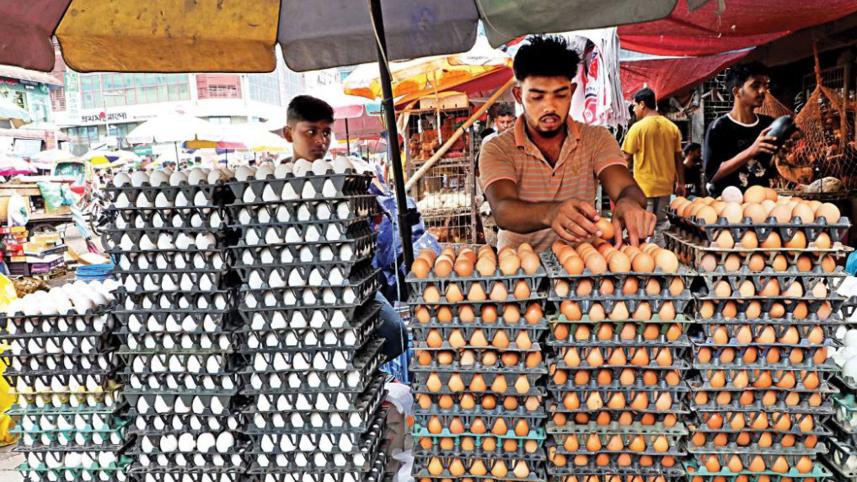
It's impractical to sell at a higher price to one customer and at a lower price to another customer on the same day; when all customers meet at our sales centre to collect the eggs, the customer who paid a higher price would obviously feel that he is being treated unfairly. To ensure that all buyers collecting eggs on the same day at the sales centre are happy, they all have to pay the same price. So the auction process ensures this by fixing the price at the bid at which the total quantity of eggs gets sold. This auction process results in satisfied customers who want to come back and bid the following day.
In fact, all of Kazi Farms' egg and chicken sales are a type of Vickrey-Clarke-Groves auction, named after Nobel Prize-winning economist William Vickrey. These auctions are characterised by multiple bids being accepted from multiple buyers until the quantity to be sold is exhausted). In economic terms, auctions are widely recognised as among the fairest and most transparent ways to sell goods of variable price.
Unfortunately, hitherto various Bangladeshi government officials have demonstrated a profound lack of understanding of auctions. In 2023, Kazi Farms was fined Tk. 5 crore by the Competition Commission for allegedly fixing high prices of eggs (although the fine was later stayed by the courts). Even leaving aside the absurdity of accusing a company of fixing the price of eggs when it produces only 4% of the supply; at that time, members of the Competition Commission remarked to the press how they found our auction process "strange" as it didn't set the price at the highest bid, and implied that our auction process was incorrect. But the property of all Vickrey-like auctions is that the highest bid doesn't set the price. This basic lack of understanding points to an urgent need to ensure that all members of regulatory bodies like the Competition Commission have a degree in Economics; otherwise it will be difficult to ensure that they have the theoretical background required to make proper judgements.
Bangladesh is a country where millions of people still suffer from poverty, and so food prices are a political issue. It's imperative that the government ensures that agricultural commodities are sold at fair prices, but until now there has been no uniform understanding of a mechanism which can ensure fair pricing. Based on the above analysis, the logical way forward is for the government to ensure that all large producers of perishable agricultural commodities set up daily auctions. Then government agencies can ensure fair prices by auditing the records of the auctions. Of course, this will require training for government personnel in the economic theories of different kinds of auctions.
Zeeshan Hasan is director at Kazi Farms Ltd
Send your articles for Slow Reads to slowreads@thedailystar.net. Check out our submission guidelines for details.

Can Bangladesh bring its hilsa back?
Can the new strategy achieve Bangladesh’s renewable energy targets?

André Wink speaks / What we get wrong about the Indo-Islamic world

Bengali Muslims and the ghosts of India's citizenship politics
Bangladesh’s solar growth: Will the incentives be enough?

The missing link in Bangladesh's innovation economy
Dhaka’s battery rickshaw problem is economic, not just about traffic

The staircase between our mothers and care
Is Bangladesh prepared for the next food shock?