


Panel formed to steer govt’s creative economy policy
The government has constituted a 27-member National Steering Committee on creative economy to coordinate policy implementation and drive sector-specific growth across public and private entities.
The high-level panel is chaired by Finance and Planning Minister Amir Khosru Mahmud Chowdhury, according to a notification released on August 9.

Other members include key cabinet ministers, senior government secretaries, institutional representatives, and sector specialists, including fashion designer Bibi Russell, the notification adds.
Under its terms of reference, the committee will approve and review implementation progress of sector-specific roadmaps, provide inter-ministerial and inter-agency coordination and policy direction, and review the activities of various sector-specific committees.
It will assess progress quarterly, with secretarial support from the Finance Division.
As defined by the United Nations Conference on Trade and Development (UNCTAD) in its Creative Economy Outlook 2024, the creative economy includes activities that generate and distribute goods and services rooted in creativity and intellectual capital, such as advertising, architecture, arts, design, music and film production, publishing and video games.
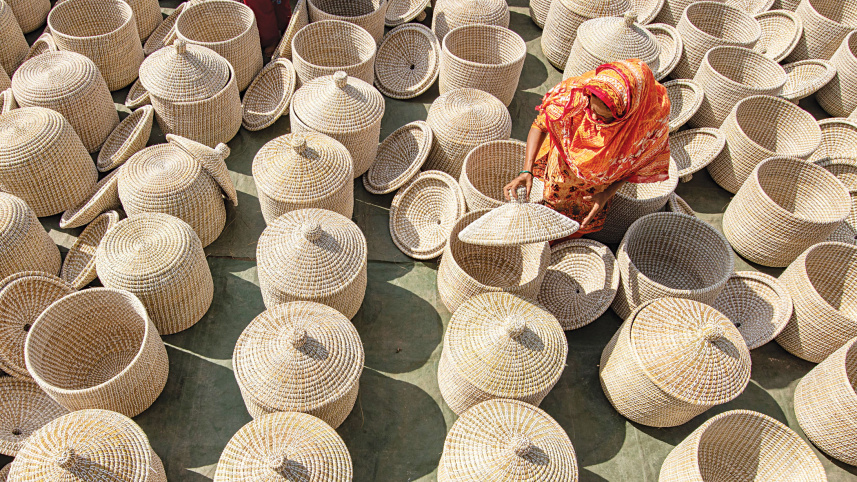
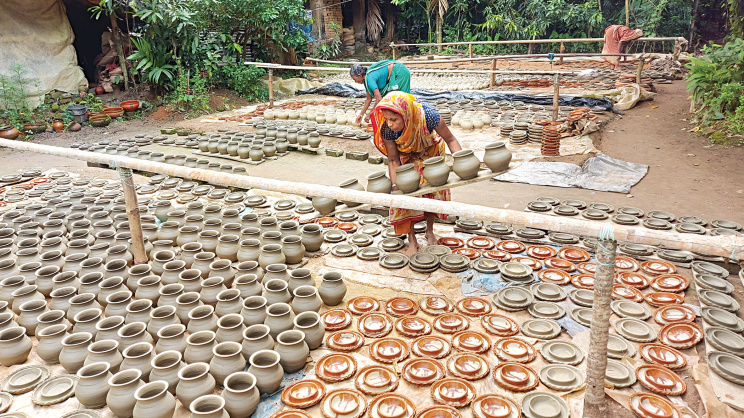
In Bangladesh, the sector has largely grown informally, driven by small craft entrepreneurs, independent filmmakers and boutique fashion brands, often with limited state support.
The steering committee’s formation follows calls from industry figures for a unified coordinating body for the sector.
At a virtual event organised by the Power and Participation Research Centre in July, film director and Chorki CEO Redoan Rony called for “a core strategy across all sectors, not just film or theatre, but crafts as well.” Bengal Foundation director general Luva Nahid Choudhury went further, calling a central commission essential for the sector’s sustainable development.
The move aligns with the government’s broader economic reform and deregulation package announced in the national budget, designed to diversify the economy, enhance business competitiveness, and support structural transformation as Bangladesh prepares for graduation from least developed country status.
Finance Minister Amir Khosru Mahmud Chowdhury, while delivering the fiscal year 2026–27 budget speech, announced that the government has set aside Tk 300 crore directly for creative economy development, with an additional Tk 500 crore expected from Bangladesh Bank’s corporate social responsibility funds.
“We have already prepared an action plan to implement coordinated activities involving the government, private sector and NGOs for the sustainable development of this sector,” he said at the time.
He separately mentioned plans for a dedicated 150-acre “theatre district” as part of the broader push.
UNCTAD data cited in the FY27 budget shows creative-sector contributions in developing countries ranging from 0.5 percent to 7.3 percent of GDP and employing between 0.5 percent and 12.5 percent of the workforce, depending on the country. Globally, UNCTAD estimates the creative economy at about 3 percent of world GDP, or roughly $2.25 trillion.
The government has set a goal, drawn from the ruling BNP’s election manifesto, to raise the creative economy’s contribution to GDP to 1.5 percent and generate 500,000 new jobs by 2035.
Khosru previously flagged a basic constraint the new committee will have to contend with: “there is little data available” on how much activities such as performing arts, design and stand-up comedy currently contribute to the economy.
 For all latest news, follow The Daily Star's Google News channel.
Comments