


Non-banks losing out to unfair rules
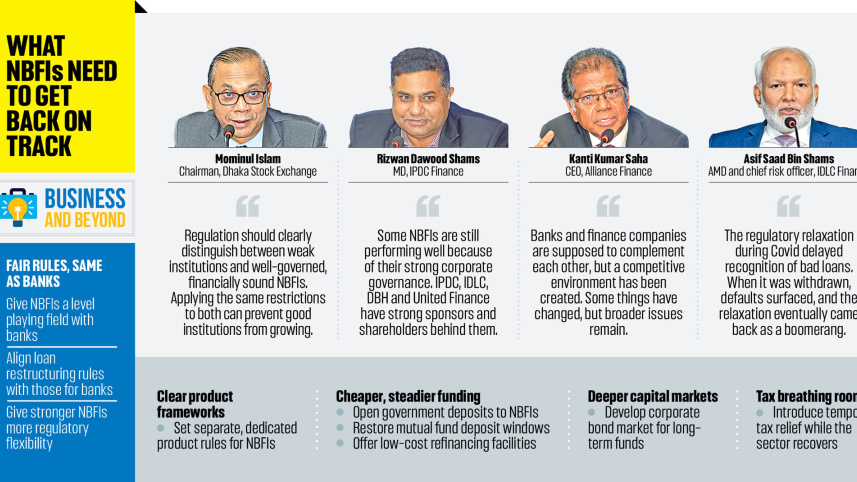
Although banks and non-bank financial institutions (NBFIs) operate under the same central bank, well-managed finance companies face tighter restrictions on deposits, lending and loan restructuring, while banks have steadily expanded into areas previously served by non-banks, top NBFI executives said yesterday.
They said the problem is no longer simply weak NBFIs or poor governance. Rather, regulations introduced in response to troubled finance companies are now making it harder for well-managed institutions to compete and expand.


Regulation should clearly distinguish between weak institutions and well-governed, financially sound NBFIs. Applying the same restrictions to both can prevent good institutions from growing.
Managing directors, CEOs and industry experts from the NBFI sector made the comments during a discussion titled “Challenges and Prospects of NBFIs” at the sixth episode of “Business and Beyond”, organised by The Daily Star at its office.
The country has 35 NBFIs, holding Tk 52,356 crore in deposits and Tk 78,114 crore in outstanding loans and advances. The sector is now facing a crisis after several finance companies failed. The central bank is liquidating four, while 16 others are in distress.
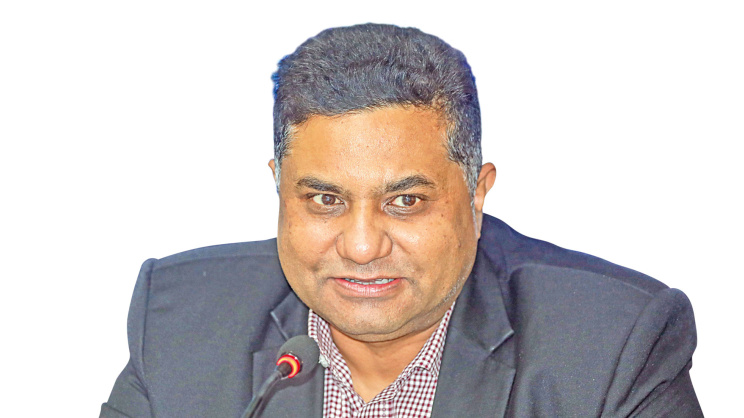
Some NBFIs are still performing well because of their strong corporate governance. IPDC, IDLC, DBH and United Finance have strong sponsors and shareholders behind them.
“The crisis is partly caused by regulatory lapses and failures by auditors and rating agencies to fulfil their roles,” said Mominul Islam, chairman of the Dhaka Stock Exchange (DSE) and a former managing director and CEO of IPDC Finance, where he served for more than a decade.
Amid the financial crisis in the NBFI sector, the government and the regulator have not provided liquidity support to troubled finance companies to help them repay depositors, unlike the support provided to shariah-based banks.

Banks and finance companies are supposed to complement each other, but a competitive environment has been created. Some things have changed, but broader issues remain.
This has dented public confidence in non-banks, as depositors have seen troubled banks receive support while people who had money with failed finance companies continue to wait for repayment.
Citing the Finance Company Act 2023, Mominul said, “Rules have been framed in a way that NBFIs do not have wings to fly.”
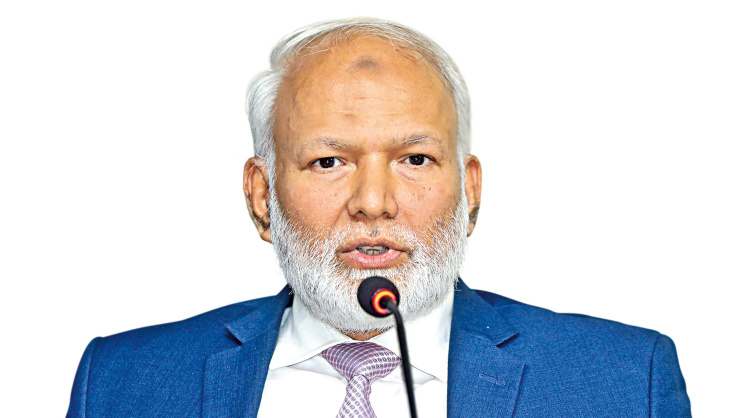
The regulatory relaxation during Covid delayed recognition of bad loans. When it was withdrawn, defaults surfaced, and the relaxation eventually came back as a boomerang.
He said the Finance Company Act had been framed largely around failed institutions rather than creating room for stronger companies to expand.
“There was a time when the governance structure and regulatory oversight needed in the sector were absent,” the DSE chairman said. “But later, regulation and regulatory oversight became so restrictive that NBFIs no longer have the ability to grow.”
“Now the NBFI sector makes the news mostly for the wrong reasons,” he said.
Mominul said stronger enforcement, rather than more stringent rules, is needed to address problems in the sector. “What we see is that the sector is overly regulated, which is why good firms cannot function properly,” he said.
The discussants said rules on deposit collection, lending and loan rescheduling have made finance companies competitors of banks, even though they are supposed to play complementary roles.
The disparity is particularly visible in retail and long-term lending, where banks have expanded their loan limits while NBFIs remain restricted.
Mominul said a major weakness is the sector’s limited access to long-term funding. Overreliance on banks has prevented NBFIs, housing finance and the capital market from flourishing, he said.
In India, bonds are a major source of funds for finance companies, with regulatory conditions defining capital, credit ratings and borrowing limits, he said. Bond issuance can take about two months there, whereas a Bangladeshi NBFI can take up to two years because of multiple approval requirements.
 For all latest news, follow The Daily Star's Google News channel.
 As a result, bonds account for less than 1 per cent of NBFIs’ funding in Bangladesh, Mominul said.
He added that regulators should focus on setting clear rules and enforcing them rather than becoming involved in routine operational decisions.
“If the regulator is involved at every operational level, where is the responsibility for compliance?” he asked.
He also called for greater accountability from auditors and credit-rating agencies, saying repeated failures among institutions audited or rated by the same firms should not be treated as isolated incidents.
“Enforcement should be the main focus, not more regulation,” he added.
In his speech, Kanti Kumar Saha, chief executive officer of Alliance Finance PLC, a Bangladesh-Sri Lankan joint venture, advocated for a level playing field so that non-banks can play complementary roles with banks.
Rizwan Dawood Shams, managing director of IPDC Finance, said NBFIs have been left with only part of the services that banks can offer.
Describing deposits as the raw material for business, Rizwan said finance companies cannot operate current and savings accounts (CASA), while banks can mobilise cheaper CASA deposits. NBFIs also cannot take certain government and mutual-fund deposits and have to rely heavily on relatively expensive term deposits.
He said depositors placing funds with an NBFI also generally cannot withdraw them before three months without prior approval from the Bangladesh Bank.
“That naturally makes our cost of funds higher,” Rizwan said. “Our cost of funds will decline if we are given the opportunity to collect deposits of government agencies and mutual funds.”
The funding disadvantage also makes it difficult for NBFIs to compete with banks in products such as home and auto loans. Banks now also offer home loans for longer terms, further limiting the scope for finance companies.
Rizwan said the issue is not about giving NBFIs preferential treatment.
“We are not asking for anything extra. We are urging for alignment of policies with banks where we operate at a similar level,” he said.
Asif Saad Bin Shams, additional managing director and chief risk officer of IDLC Finance, said non-performing loans at non-banks have risen to around 37 percent, with the deterioration reflecting both economic weakness and decisions taken by the authorities to tackle pandemic fallout.
Relaxations that allowed borrowers to remain labelled as regular despite missed instalments delayed recognition of bad loans, he said. When those relaxations were withdrawn, many accounts became classified as non-performing from 2023 onwards.
“The regulatory relaxation eventually came back as a boomerang,” said Asif.
He said weak economic activity has since compounded the problem, affecting corporate, SME and retail borrowers.
The discussants said depositors, at the same time, continue to perceive bank deposits as safer because of the support extended to troubled banks, while depositors of failed finance companies have not received comparable protection.
They said the issue is therefore not only about regulation but also about how the market perceives the two types of institutions. The difference is also evident when troubled borrowers seek to restructure their loans.
Kanti said that under a recent special guideline, banks can reschedule or restructure loans for up to 15 years, whereas finance companies remain subject to an eight-year maximum.
He said finance companies were originally established to provide long-term financing because banks themselves faced maturity mismatches in funding such loans. Over time, however, banks moved into many of the same businesses, helped by their access to low-cost deposits.
Finance companies now face a different funding structure while competing for many of the same customers, Kanti said.
The sector’s liquidity difficulties have also been aggravated by the underdeveloped bond market and banks’ reluctance to provide long-term funding to finance companies, he added.
Comments