


Narsingdi’s textile factories gasp for gas as fabric rots

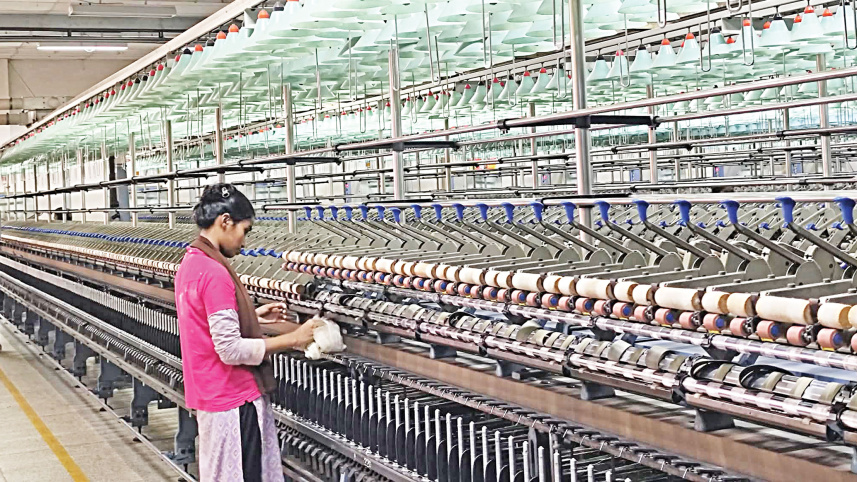
Around 2.5 lakh yards of chemically treated fabric have been damaged at Tithi Textile in Madhabdi, Narsingdi, after gas pressure remained at zero for the last four days, bringing production and generators to a halt, said Sonet Saha, the factory’s maintenance manager.
The damage is only part of the problem. Buyers from different countries are cancelling orders, while the factory is struggling to pay workers’ wages and may have to compensate buyers for their losses, said production manager Shihabul Islam.

Similar scenes are now common across Narsingdi, where a severe gas shortage is forcing many factories to shut down and leaving large quantities of chemically treated fabric unusable.
Narsingdi has more than 3,000 factories, including around 2,500 textile, dyeing, sizing, spinning and garment factories. Around 400 of them depend on gas and need an uninterrupted supply at 10-15 PSI (pounds per square inch), according to local businessmen.
The national gas crisis began on July 21 after a technical fault at a floating LNG terminal off Moheshkhali in Cox’s Bazar disrupted supplies. Repeated supply problems have since affected power plants and factories, hurting industries that serve both export and domestic markets.
Against daily demand of 3,800 mmcfd, gas supply fell from around 2,650 mmcfd (million cubic feet per day) before the disruption to 2,175 mmcfd on August 19. It rose slightly to 2,300 mmcfd on Saturday, according to Petrobangla.
The crisis in Narsingdi began in the first week of August and became much worse over the past five days. More than 100 factories have been forced to shut, said Abdullah Al Mamun, spokesperson for the Bangladesh Textile Mills Association (BTMA) and managing director of Abed Textile Processing Mills Ltd.
A visit to 11 industrial establishments in Narsingdi Sadar and Madhabdi found most boilers shut because of the gas shortage.
Technicians said chemically soaked fabric normally has to be processed within 16 hours. But in some areas, gas pressure has remained at zero for three to four days, stopping machines and making fabric left midway through processing unusable.
Nannu Molla, general secretary of the Chowala Textile Owners Association, said the pressure had not improved, leaving piles of chemically treated grey fabric on factory floors.
“The fabric has been lying there for a long time and has started to rot and smell bad. We want the government to resolve the crisis immediately,” he said.
Md Bipul Molla, proprietor of Moslem Weaving in Madhabdi, said production had fallen sharply because factory owners could not predict when gas and electricity supplies would be available.
At Bhai Bhai Sizing Mill in Chowala, only two employees were found during a visit. Owner Ataur Rahman Mithu said he had closed the factory indefinitely because of the lack of gas pressure.
“How can we keep workers idle and continue paying their wages? We have given them leave until further notice. We will resume operations as soon as we get gas,” he said.
“Many of us have taken bank loans to run our businesses. If this situation continues, we will have no choice but to sell our factories and end up on the streets,” he added.
Selim Ahmed, son of the owner of Habib Textile Mills in Madhabdi, said the industry was already struggling with a business slowdown, rising production costs, competition from modern machinery and growing debt.
“The gas and power crisis over the past month has made the situation even worse. Production may stop, but workers’ salaries, fixed costs and loan instalments continue,” he said.
Nizam Uddin Bhuiyan Liton, chairman of the Bangladesh Textile Dyeing and Printing Association, Narsingdi, and owner of Madhabdi Dyeing Finishing Mills Ltd, said Narsingdi supplies around 75 percent of the country’s fabric demand.
“Now that gas and electricity supplies are unavailable, around 80 percent of the mills in Narsingdi and Madhabdi have shut down. If the crisis continues, we will not be able to pay workers’ wages, gas and electricity bills or meet other expenses. We will be left with nothing,” he said.
He said saving the industrial units should be a top priority because thousands of workers and their families depend on them.
 For all latest news, follow The Daily Star's Google News channel.
 DAILY LOSSES MOUNT AS COSTS RISE
Abdullah Al Mamun said Narsingdi has gas infrastructure, but industrial factories are not receiving enough gas. As a result, 1-1.5 crore yards of fabric are being damaged during dyeing, printing and processing.
He estimated that industrial units in Narsingdi are losing Tk 400-500 crore a day, leaving factory owners who took bank loans in serious financial difficulty.
“Businesspeople were already frustrated by the natural and man-made disasters the country has faced in recent years. Now we are facing a severe gas and electricity crisis. Earlier, we talked about shortages, but now there is virtually no supply at all,” Mamun said.
“If this situation continues, factory owners will be unable to pay workers’ wages, bank interest, utility bills and other expenses as the end of the month approaches,” he said.
He also warned that prolonged uncertainty could increase worker dissatisfaction and create a risk of unrest and disruption.
Mamun urged the government to set a clear timeframe for restoring gas and electricity supplies to normal.
Rashedul Hasan Rintu, president of the Narsingdi Chamber of Commerce and Industry, said even alternative fuels had failed to keep factories operating at full capacity.
Mohammad Badrul Huda, deputy director of the Department of Environment in Narsingdi, said some factories use jhut, or textile waste, as fuel but are not allowed to use wood.
“Environmental laws require permission from the Forest Department to cut down any government or private tree. In reality, these laws are not being followed, causing environmental damage,” he said.
However, a visit to the Chowala industrial area found workers at some factories burning wood in steam boilers. Md Shakhawat, a boiler operator at Haque Textile, said factories had turned to wood because the price of textile waste had increased.
Each factory is spending more than Tk 12,000 a day on firewood, he said.
Maksudur Rahman, manager engineer of Titas Gas’s Narsingdi office, said the government had ordered priority gas supply to the Ghorashal-Palash Urea Fertiliser Factory. The factory was receiving gas at 200 PSI, while the remaining supply was being shared among CNG stations, industries and residential consumers.
Titas could not meet the demand of factory owners because of the ongoing gas crisis, he said.
“The situation may improve next week,” Rahman added.
Comments